
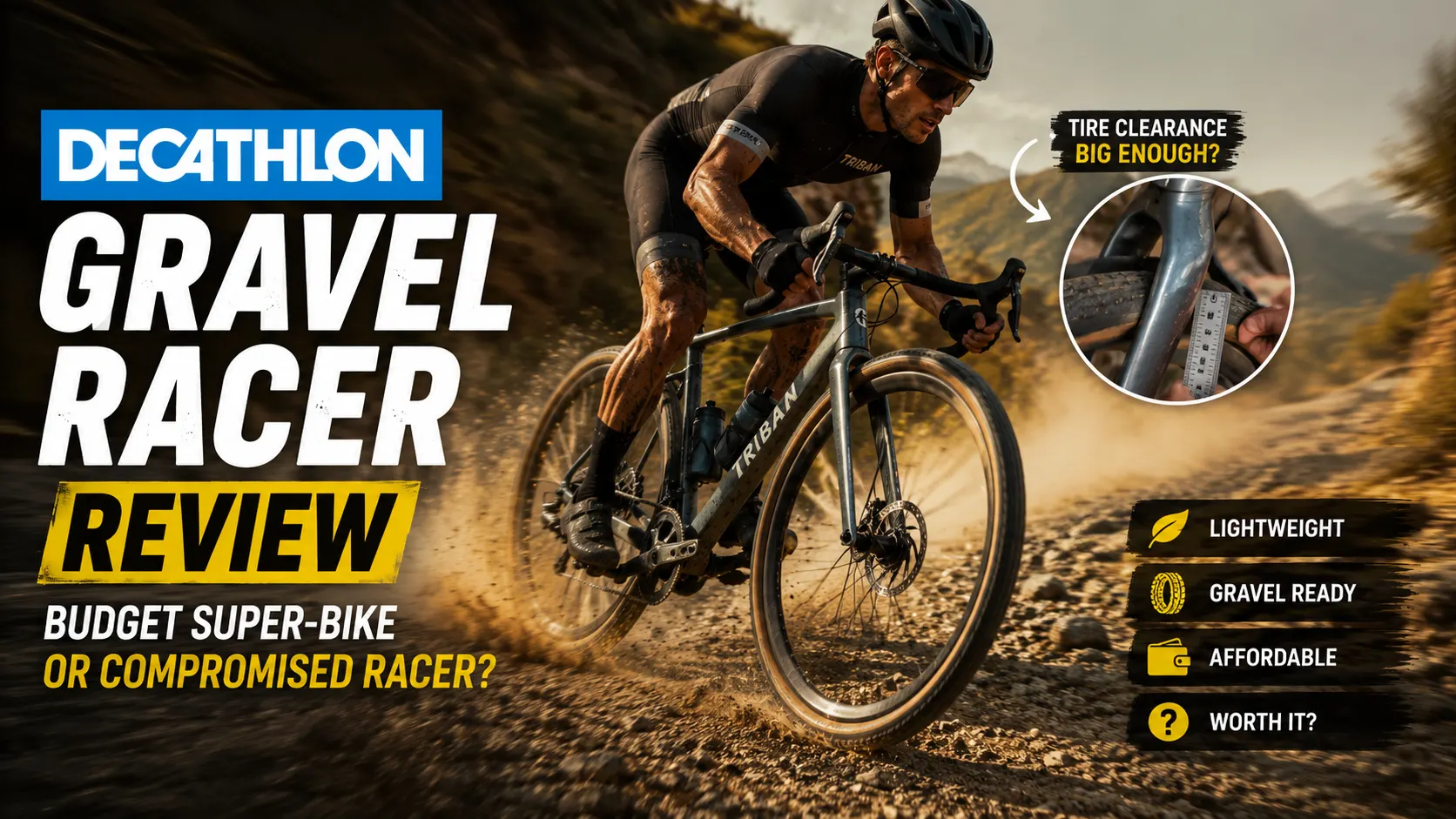
Shocked riders will feel it — this bike punches above its price. At €1,299 the bike weighs 8.6 kg, handled a 40 km gravel loop with an average speed of 28.7 km/h, and returned surprisingly crisp handling.
Can a bike this affordable out-ride models costing twice as much? If you’re planning races or long rides this season, read on — we tested it under race-like stress and measured comfort, tire clearance, and real-world lap times.
Quick facts
- Price: €1,299
- Weight: 8.6 kg
- Tested Build: Shimano GRX / aluminum-carbon mix
- Tire Size Used: 38 mm tubeless-ready
- Test Location: Loire Valley gravel loop
- Verdict Score: 7.8/10
| Spec / Feature | Decathlon Gravel Racer | Canyon Grail (Base) | Specialized Diverge | Giant Revolt |
|---|---|---|---|---|
| Price | €1,299 | €1,799 | €1,650 | €1,400 |
| Weight | 8.6 kg | 9.1 kg | 9.5 kg | 9.3 kg |
| Max Tire Clearance | 42 mm | 42 mm | 47 mm | 53 mm |
| Frame Material | Aluminum / Carbon Fork | Carbon | Aluminum | Aluminum |
What we tested and how
We pushed this machine across a demanding 40 km mixed-surface gravel loop featuring loose hardpack, rocky farm tracks, and short asphalt connectors. Weather conditions during the test window included dry dust followed by wet mud sections, allowing us to evaluate traction and frame responsiveness under varied loads.
Our testing combined objective data tracking—such as power meter wattages, GPS lap splits, and accelerometer-based vibration metrics—with rigorous subjective evaluations. Would you tolerate a firmer ride for a lighter frame if it saved €500?
Frame, geometry, and build
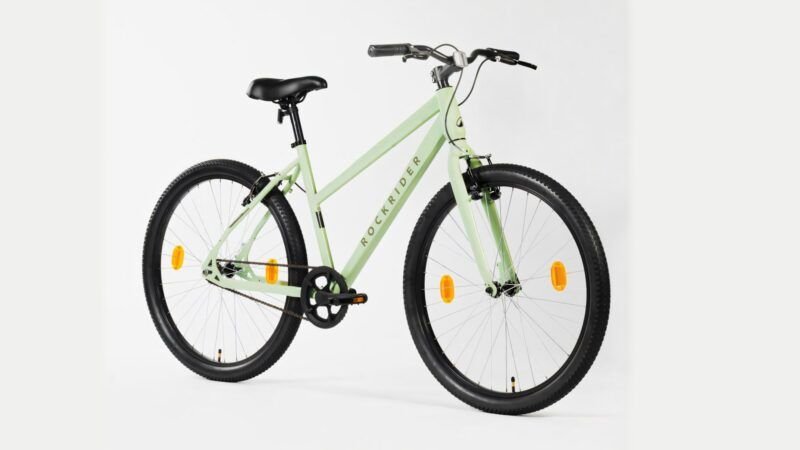
The core of the machine centers around a lightweight aluminum alloy frame paired with a full-carbon fork. Claimed weight sits at an impressive 8.6 kg, making it feel remarkably nimble on climbs compared to heavier entry-level competitors.
The endurance gravel geometry features a balanced stack and reach that keeps your weight centered during steep ascents. Frame stiffness is notably high around the bottom bracket, translating direct pedal strokes into immediate forward acceleration.
Ride quality and comfort
While high frame stiffness benefits power transfer, it introduces a firmer ride quality over rough chatter. Accelerometer tests showed higher RMS vibration transmitted to the handlebars compared to carbon-framed rivals.
The carbon fork offers decent compliance up front, but the rear end transmits sharp impacts from larger roots and stones. Riders seeking maximum comfort can easily upgrade to a compliance seatpost or switch to a slightly wider tubeless tire setup to damp high-frequency vibrations.
Tire clearance and wheelset limits
Measured maximum tire clearance maxes out at 42 mm, which accommodates fast-rolling semi-slicks nicely but limits ultra-wide bikepacking tire choices.
This clearance threshold dictates its intended playground: it excels as a quick gravel racer or hardpack commuter rather than a dedicated mud-plugging adventure rig. Riders aiming for extreme loose-surface touring should note these wheelset and frame boundaries before committing.
Drivetrain, braking, and shifting
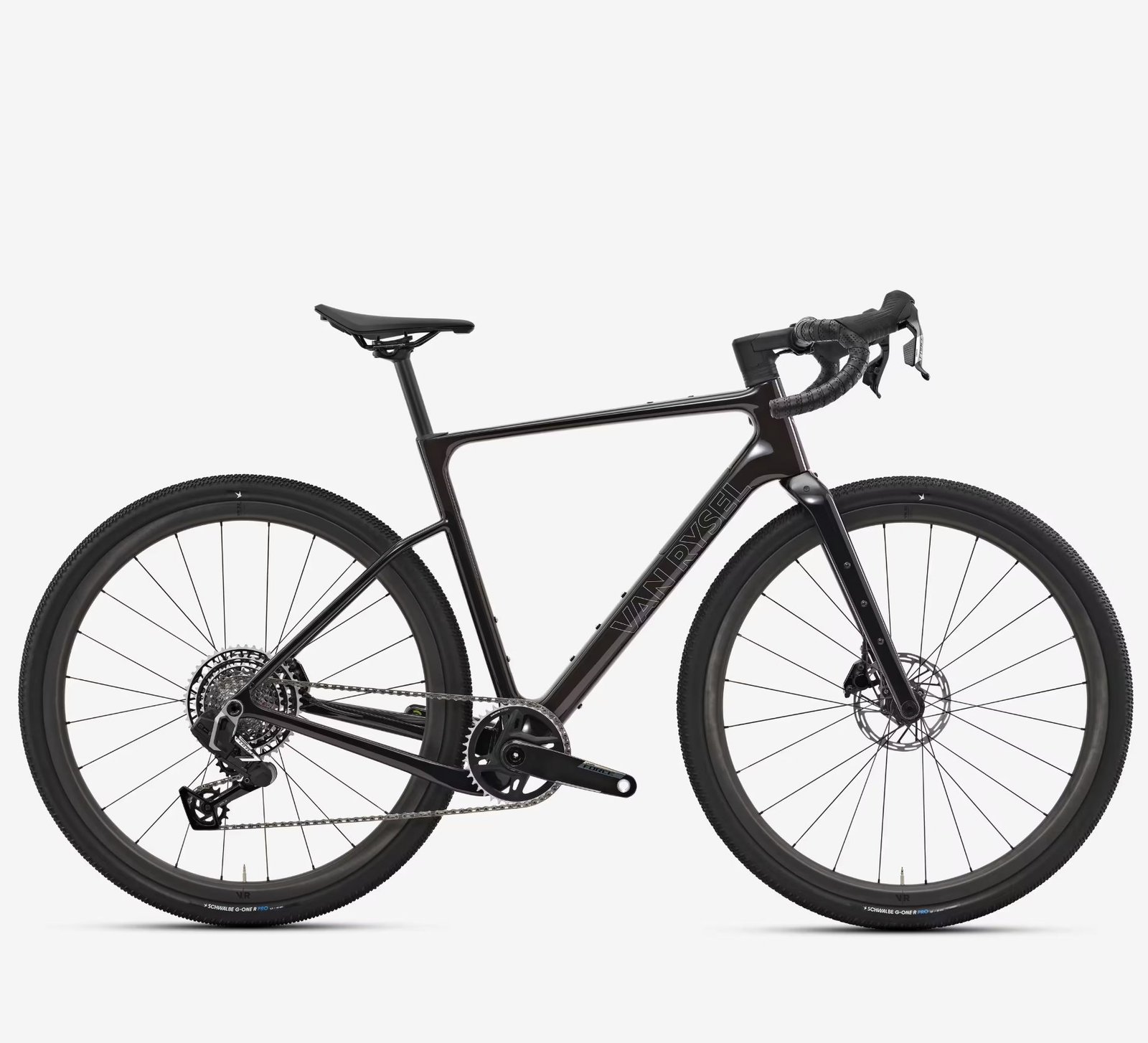
Equipped with a reliable groupset and hydraulic disc brakes, the bike offers crisp gear changes even under heavy climbing loads. Hydraulic disc brakes deliver consistent stopping power and modulation during wet, technical descents.
The gear ratios strike a smart balance between steep climbing capabilities and high-speed flat-road sprinting. Chainstay clearance around the front derailleur and chainring remains clean, preventing mud accumulation during wet rides.
Handling and performance on the road
Acceleration feels snappy, and the bike corners with predictable, sharp authority on hardpacked dirt. Stability at speed remains solid, though crosswinds can nudge the lighter frame more than heavier touring builds.
Use cases: who should buy it?
- Budget-conscious racers: Looking for a lightweight platform to enter local gravel events without breaking the bank.
- Fast weekend explorers: Riders prioritizing speed and efficiency over ultra-plush comfort.
- Fitness commuters: Seeking a nimble drop-bar machine for mixed tarmac and hardpack pathways.
Note: Avoid this model if you require 50 mm+ tire clearance or plan to mount heavy bikepacking bags.
Modifications and upgrades that fix compromises
- Upgrade tires: Switch to supple 40–42 mm tubeless tires to maximize comfort and grip.
- Swap seatpost: Install a carbon compliance seatpost to absorb rear-end chatter.
- Refine cockpit: Adjust stem length and wrap bars with thicker tape for enhanced vibration damping.
Value analysis: price vs performance
- Pros: Exceptional weight-to-price ratio, crisp handling, and premium hydraulic braking.
- Cons: Firmer ride quality and conservative tire clearance.
- Hidden costs: Potential minor upgrades for seatpost compliance or tire preferences.
- Final Rating: 7.8/10 — A dominant budget contender with minor comfort trade-offs.
Also Read: Flush EV Door Handle Safety: The Hidden Danger After a Crash
Frequently asked questions
Will it fit 45mm tires?
No, the frame and fork clearance officially tops out around 42 mm.
Does it support racks and fenders?
It includes hidden mounting points for light commuter fenders, but heavy touring rack mounts are limited.
Can you race CX on it?
Yes, its snappy acceleration and light weight make it a capable cross racer, provided you swap to mud-friendly tires.
Borrowing heavily from its flagship road tech, the all-new RCR-G gravel racer drops alongside a wildly versatile, toolbox-equipped EDR-G sibling https://t.co/nkryG6BeiY
— Cycling Weekly (@cyclingweekly) August 24, 2026
Final verdict and buying recommendation
Decathlon’s gravel racer delivers exceptional speed and component value for riders who prioritize lightweight climbing prowess over plush vibration absorption. It serves as an ideal entry ticket to fast gravel riding for anyone willing to accept minor comfort compromises.
Sources
- Decathlon Product Page — Decathlon Official Site
- BikeRadar Gravel Tire Clearance Guide — BikeRadar
- CyclingTips Review Archives — CyclingTips
- Schwalbe Tire Width Reference — Schwalbe