
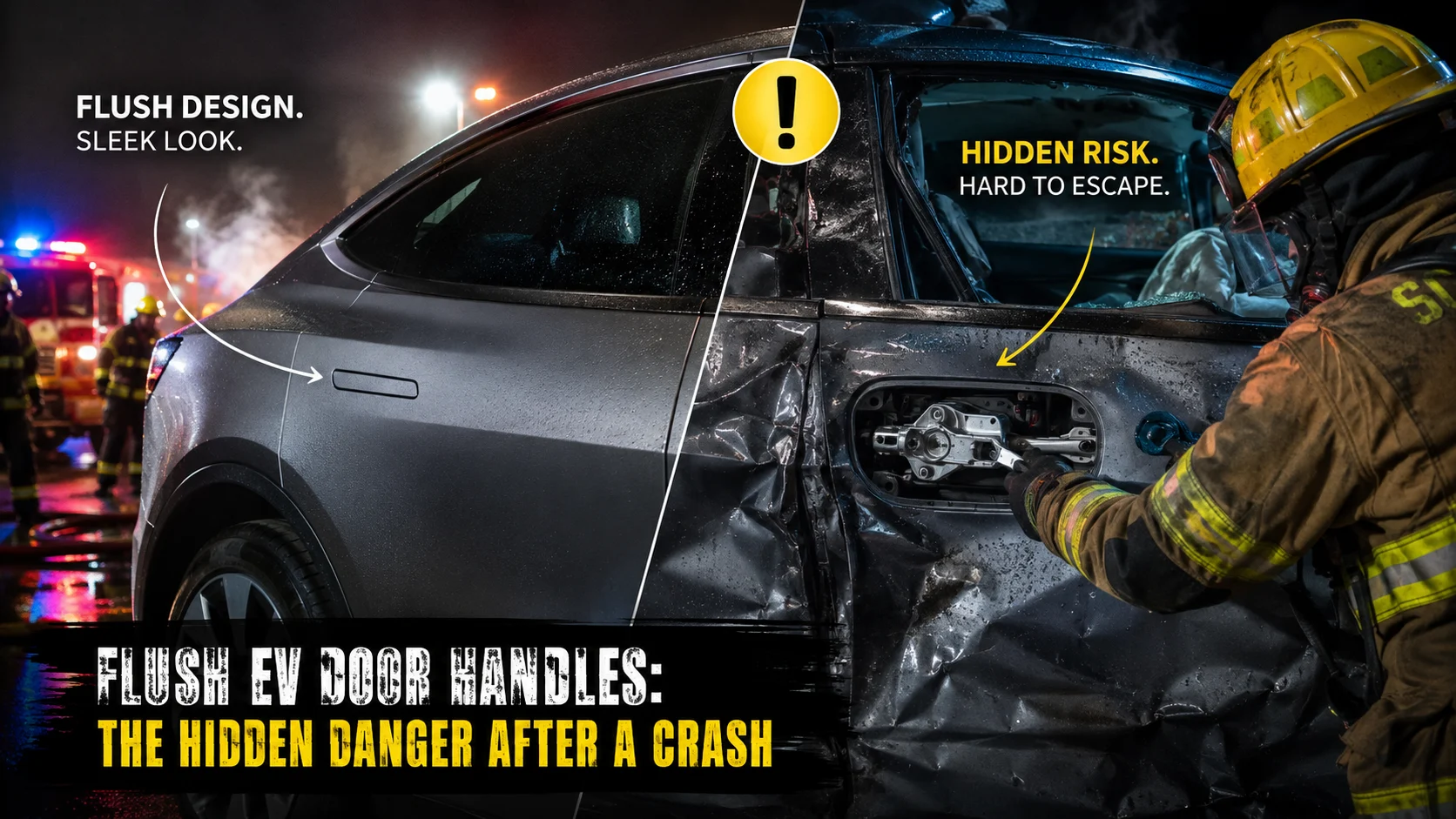
A crash can silence an electric car in seconds, but what happens when the doors fall silent too? Flush EV door handles look clean, modern and aerodynamic, yet a damaged low-voltage system, severed wiring or battery isolation event can turn a simple escape into a desperate struggle.
China’s new standard will require mechanical access to vehicle doors from 2027, with existing approved models receiving a longer transition period. The rule raises an urgent question: when technology fails after a collision, can passengers and rescuers still open the car quickly?
What are flush EV door handles?
Flush EV door handles sit almost level with the vehicle’s bodywork rather than protruding like a conventional handle. Many use a button, touch sensor, key-detection system or small electric motor to present the grip when the driver approaches. Tesla helped popularize the design, which was later adopted by several other EV manufacturers.

Why automakers use them
- A smoother exterior appearance.
- Potential aerodynamic benefits.
- Reduced wind noise and drag.
The safety question is not whether these handles work during normal driving. The real question is whether the mechanical path from the user’s hand to the door latch remains available after a severe impact.
Why power failure changes the physics
A conventional handle usually transfers a person’s pulling force through a mechanical linkage to the latch. An electronic handle adds more failure points: sensors, wiring, control modules, motors, batteries and software logic.
After a crash, several things can happen at once:
- The 12-volt system may lose power.
- High-voltage isolation may disable parts of the vehicle.
- Wiring or control modules may be damaged.
| Failure condition | What may happen | Why it matters |
|---|---|---|
| Loss of electrical power | The outside handle may not deploy | Rescuers may struggle to identify or operate it |
| Damaged wiring | The electronic command may not reach the latch | A button press may produce no response |
| Door deformation | The door may remain physically jammed | Even a working handle may not open the door |

How a post-crash escape can fail
A post-crash escape is not a single action. It is a chain of events:
- The occupant recognizes that the vehicle must be evacuated.
- The person identifies the internal release.
- The release is physically reachable.
Firefighters and emergency crews may approach a vehicle in poor visibility, heavy traffic or unstable crash conditions. They need to know where the exterior release is located and whether it works without vehicle power.
What China’s new regulation requires
China’s GB 48001-2026 standard, titled the Safety Technical Requirements for Automotive Door Handles, was approved and published in January 2026 and is scheduled to take effect on January 1, 2027. Reports on the standard require mechanical opening methods for interior and exterior vehicle doors.
| Vehicle category | Reported deadline |
|---|---|
| New models seeking approval from January 1, 2027 | Must begin complying with the standard |
| New vehicles | Full requirements by January 1, 2028 |
| Previously approved models | Full compliance by January 1, 2029 |
Why China acted first
China is the world’s largest electric-vehicle market and has seen rapid adoption of electronically controlled vehicle features. Its new standard makes emergency door access a design requirement rather than leaving the issue mainly to manufacturer instructions or consumer familiarity.
The policy reflects a wider regulatory concern: a vehicle should remain escapable even when its most sophisticated systems are unavailable.
How global safety bodies may respond
China’s move is likely to intensify questions for regulators and safety organizations elsewhere. However, it should not be described as proof that every international authority has already adopted an identical ban.
Euro NCAP’s rescue and extrication testing materials already recognize the importance of door-handle position and information supplied to emergency responders.
Are flush door handles actually dangerous?
The balanced answer is: the design creates a potential vulnerability, but the risk depends on the vehicle’s backup architecture and crash conditions.
Also Read: Tesla Semi May Have Solved the Night Delivery Problem Cities Hated
Questions buyers should ask
Before buying an EV with flush or retractable handles, check:
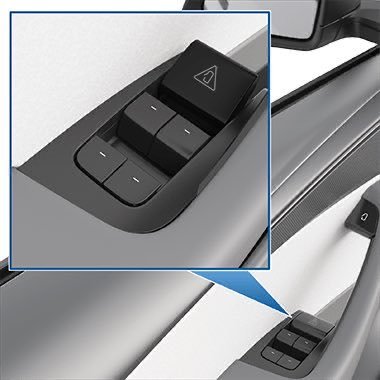
- Does every door have a mechanical interior release?
- Does the exterior release work if the 12-volt battery is dead?
- Where is the emergency release located?
The safety physics in plain language
The central engineering principle is redundancy. If one route fails, another route should still perform the same safety function. A mechanical handle is not automatically safe if the door is crushed, but an electronic handle requires rigorous backup systems to ensure passenger safety.
What this means for automakers
Automakers may need to redesign more than the visible handle. A compliant solution could affect door geometry, cable routing, low-voltage backup systems, crash testing, and rescue documentation.
Tesla and eight other automakers will recall about 4.3 million vehicles in China over concerns that doors may be difficult to open in an emergency, marking the country’s largest automotive recall https://t.co/ZPEOeOeeyL pic.twitter.com/IEqUvYJjVK
— Reuters (@Reuters) August 22, 2026
Frequently Asked Questions
Are all flush EV door handles being banned?
No. China’s rules primarily target fully hidden, power-operated mechanisms that lack dependable manual access. Semi-flush designs may remain possible if they meet safety conditions.
Can an electric car door open after the battery is disconnected?
It depends on the vehicle. Some models include mechanical emergency releases, while others rely on backup electrical systems.
What should EV owners do now?
Learn the location and operation of every interior emergency release, share the information with passengers, and keep the owner’s manual accessible.