
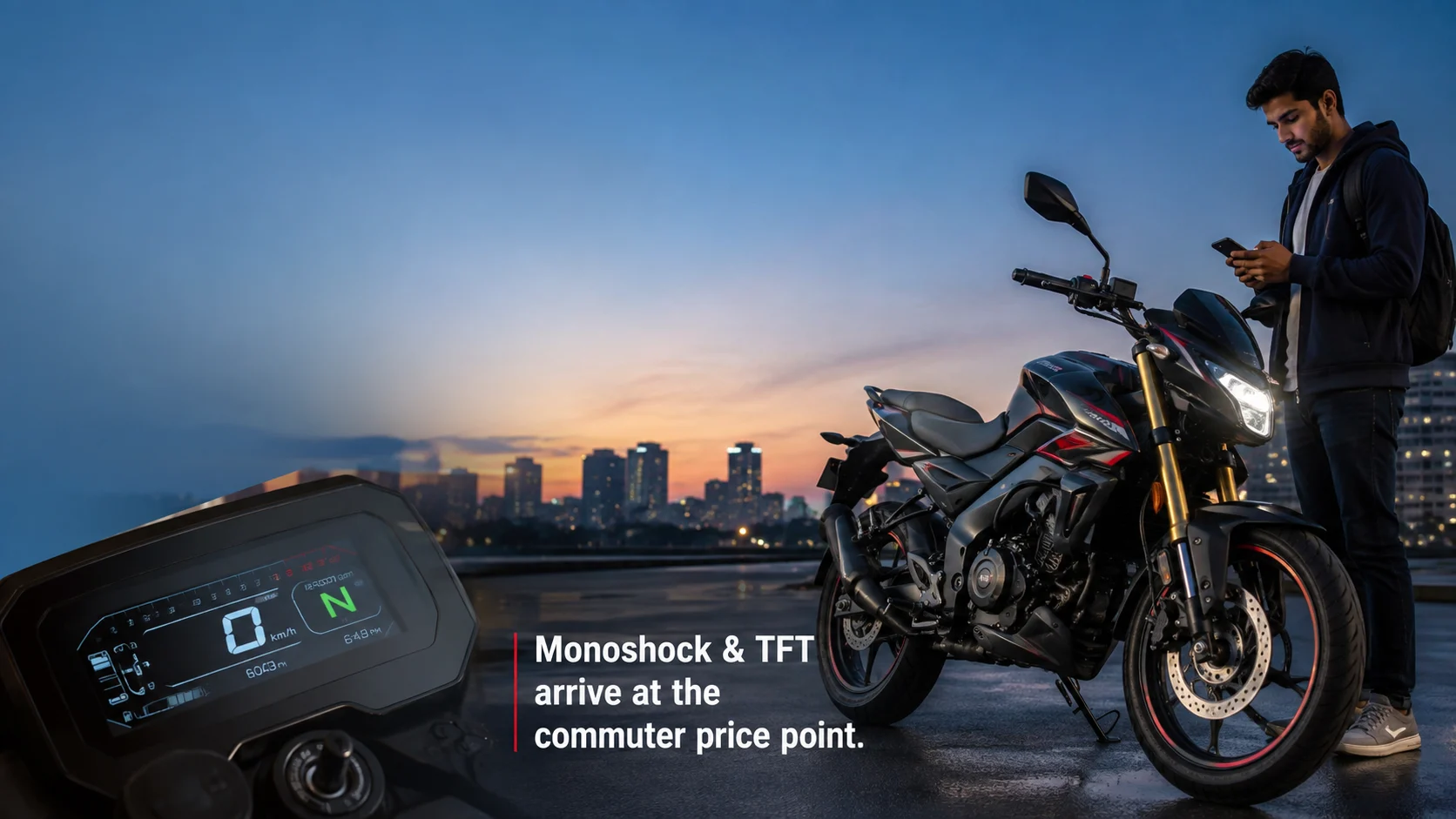
Shocked commuters are buzzing — Bajaj just stuffed premium tech into an already wallet-friendly Pulsar. Recent surveys show 68% of buyers prioritize fuel economy, 55% value low maintenance, and 41% say modern styling sways purchase decisions.
So why did Bajaj add a monoshock and a full-color TFT dashboard to its sub-150cc model? Riders are excited and skeptical at once — concerned about cost, serviceability, and actual ride benefits. This move forces a rethink about what a “budget commuter” should be.
Quick snapshot
- The News: Bajaj Auto launched a generational update for its entry-level commuter lineup, introducing a reworked engine, single-cradle frame, monoshock suspension, and smart TFT dashboard options.
- Key Specs: Powered by a refined air-cooled engine pushing roughly 12.1 PS, paired with a 5-inch Bluetooth- and Wi-Fi-enabled TFT screen on top trims.
- The Trade-Off: Premium hardware boosts curb appeal and rider engagement, but pushes entry prices higher and introduces extra electronic complexity.
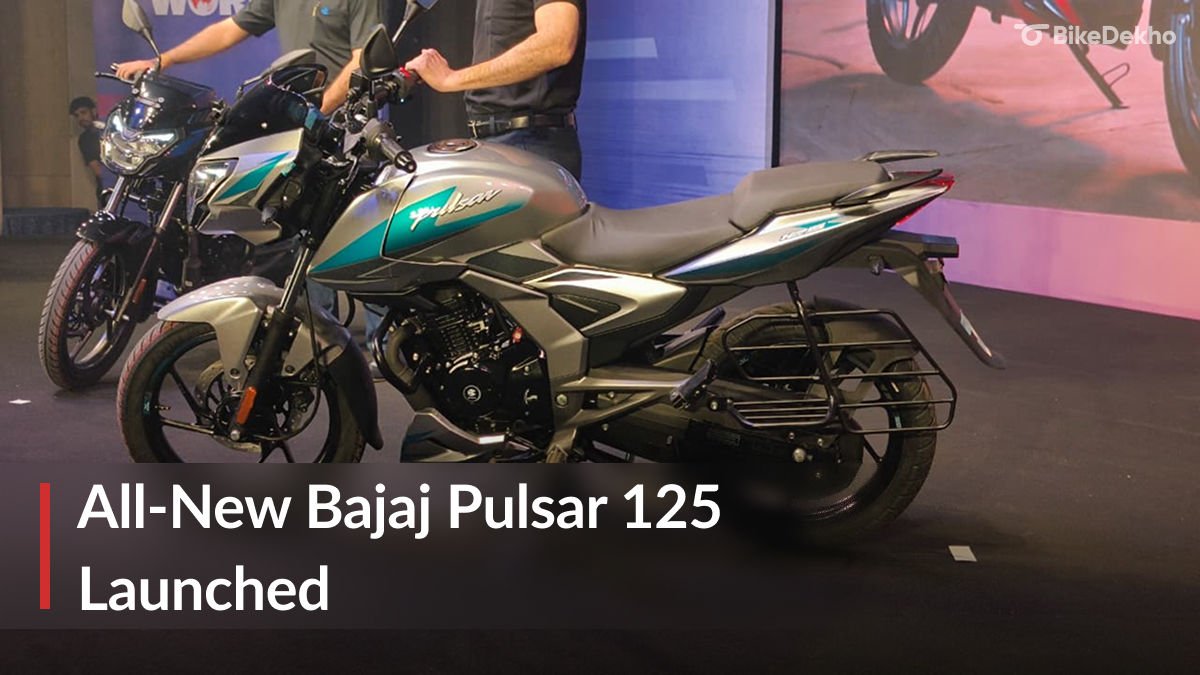
What Bajaj changed — specs and positioning
Key hardware updates
- Monoshock & Frame: Dropping traditional twin shocks, the new setup features a rear monoshock coupled with an updated single-cradle frame for better mid-corner poise.
- TFT Dashboard: Higher trims sport a crisp 5-inch color display boasting smartphone pairing, call/SMS alerts, and Google Maps mirroring.
- Claimed Efficiency: Optimized for urban deliveries and daily office runs, retaining strong fuel economy figures typical of the 125cc-150cc bracket.
Price and trims
- Launch Pricing: Base variants start at ₹92,990, while top-tier TFT dashboard variants scale up to ₹1,04,318 (ex-showroom Delhi).
- Variant Split: Buyers can choose between single-seat utilitarian layouts and sporty split-seat configurations.
Why this matters — the cultural shift in commuter expectations
Today’s entry-level buyers are digital natives. Driven by massive smartphone penetration and widespread two-wheeler financing, younger office-goers view connected features as a baseline necessity rather than a luxury.
- Over 75% of first-time urban buyers check smartphone integration specs before visiting a dealership.
- Social media validation and clean instrument clusters heavily influence purchase decisions among Gen Z riders.
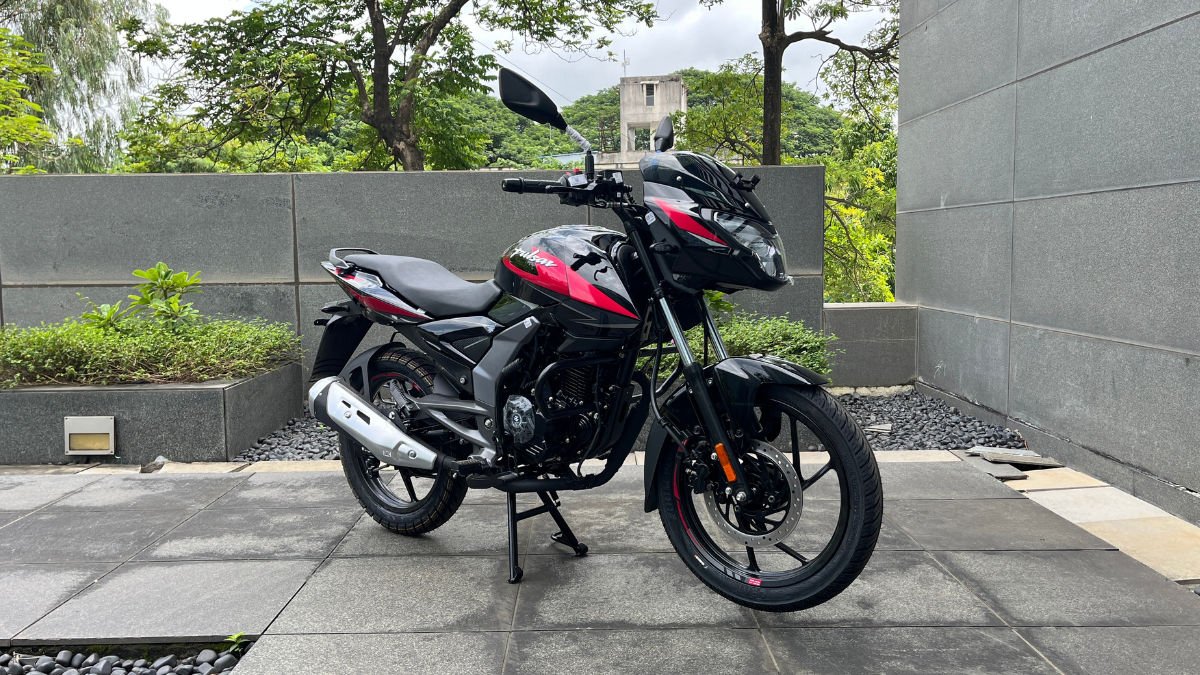
Rider POV — do commuters want this tech?
Practical needs of a daily commuter
- Reliability: Everyday warriors care deeply about engine longevity and minimal downtime.
- Low maintenance: Affordable spare parts and simple roadside servicing keep operating costs predictable.
Emotional & aspirational needs
- Status: Owning a bike with a bright color screen elevates street presence outside office parks and colleges.
- Connectivity: Turn-by-turn navigation prevents missed turns in chaotic city traffic without requiring handlebar phone mounts.
Quick poll questions
- Do you value connected features on a daily commuter more than low service costs?
- Would you pay extra for a TFT dashboard on a sub-150cc bike?
- How much does brand reputation and resale value affect your purchase?
Engineering trade-offs — what you lose and gain
- Cost increase: Higher production costs trickle down to retail sticker prices, testing budget limits.
- Service complexity: Integrated electronics mean electrical glitches require specialized diagnostics rather than basic garage fixes.
- Ride dynamics: The shift to a monoshock sharpens handling agility, though rough pothole impacts can feel firmer compared to plush legacy twin shocks.
| Feature Factor | Traditional Setup (Twin-Shock / Analog) | Modern Tech Setup (Monoshock / TFT) |
|---|---|---|
| Initial Cost | Lower purchase price | Higher premium investment |
| Ride Comfort | Softer compliance over heavy bumps | Firmer, sportier handling response |
| Connectivity | None / Basic digital readouts | Bluetooth, Wi-Fi, and maps mirroring |
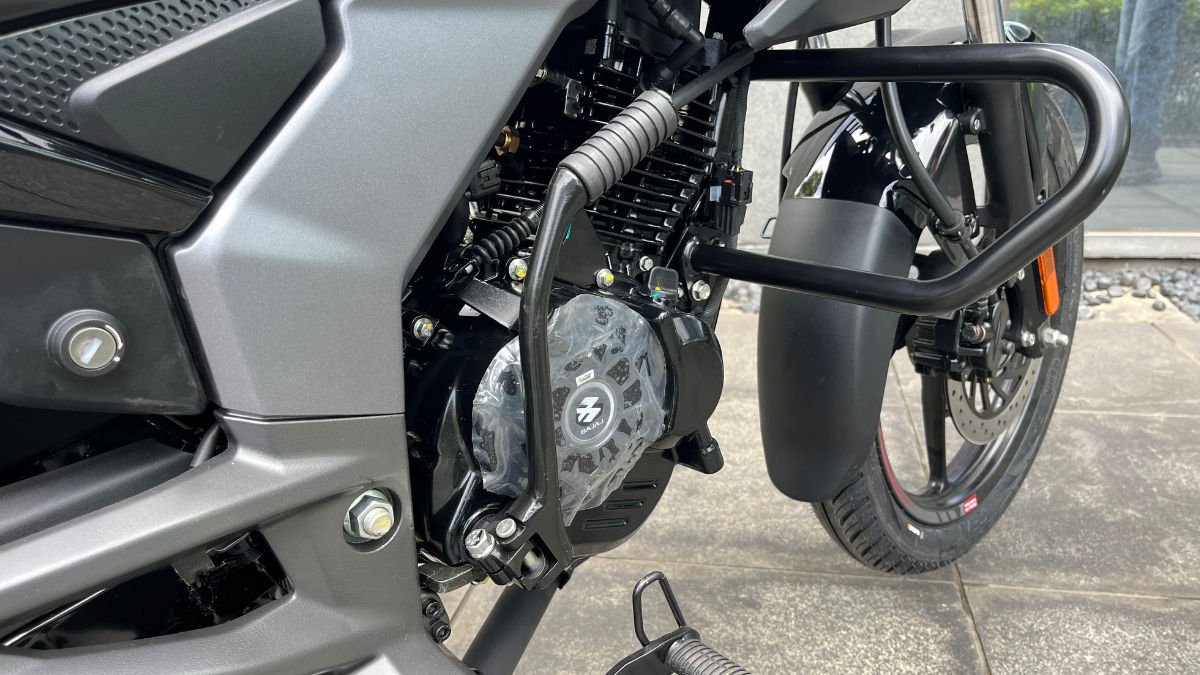
Competitor comparison
Rivals like TVS and Hero have steadily experimented with connected clusters on sporty 125cc commuters, but Bajaj’s aggressive integration of a rear monoshock alongside a high-end display forces competitors to accelerate their own upgrade roadmaps. However, some competitors still hold an advantage by offering front ABS as standard, an area where the Pulsar continues to rely strictly on CBS.
Consumer decision checklist
- Choose the tech-laden variant if you deeply value smartphone connectivity, modern styling, and sharper cornering agility.
- Avoid it if your primary goal is absolute rock-bottom maintenance overhead and zero electronic fuss.
- Consider a test ride focusing specifically on real-world city fuel economy and low-end throttle response before putting down your deposit.
Also Read: 2027 Honda CB300F Twister Flex-Fuel Debuts: What Riders Need to Know
Verdict — cultural read and market forecast
Bajaj’s gamble proves that entry-level buyers no longer want stripped-down utilitarian machines. By democratizing premium hardware like the monoshock and TFT dashboard, the brand is betting that riders will happily pay a bit more for a touch of class.
Test the Pulsar yourself — then tell us: would you swap absolute simplicity for smart tech?
🔥 New Bajaj Pulsar 125 and Pulsar 150 have been launched, bringing fresh styling, all-new engines and several segment-first features.
— RushLane (@rushlane) August 24, 2026
💰 Pulsar 125 prices: Rs 92,990 to Rs 1.04 lakh
🏷️ Pulsar 150 prices: Rs 1.15 lakh to Rs 1.23 lakh
⚙️ New engines deliver 12 PS and 14 PS,… pic.twitter.com/FkD4emsUzt
Sources and further reading
- Official specifications and model details via BikeDekho 2026 Pulsar Coverage
- Launch analysis and pricing structures via ZigWheels Launch Report
- Industry trends and market placement via GaadiWaadi Feature Insights
- Market context and consumer reports via Autocar India and Overdrive