
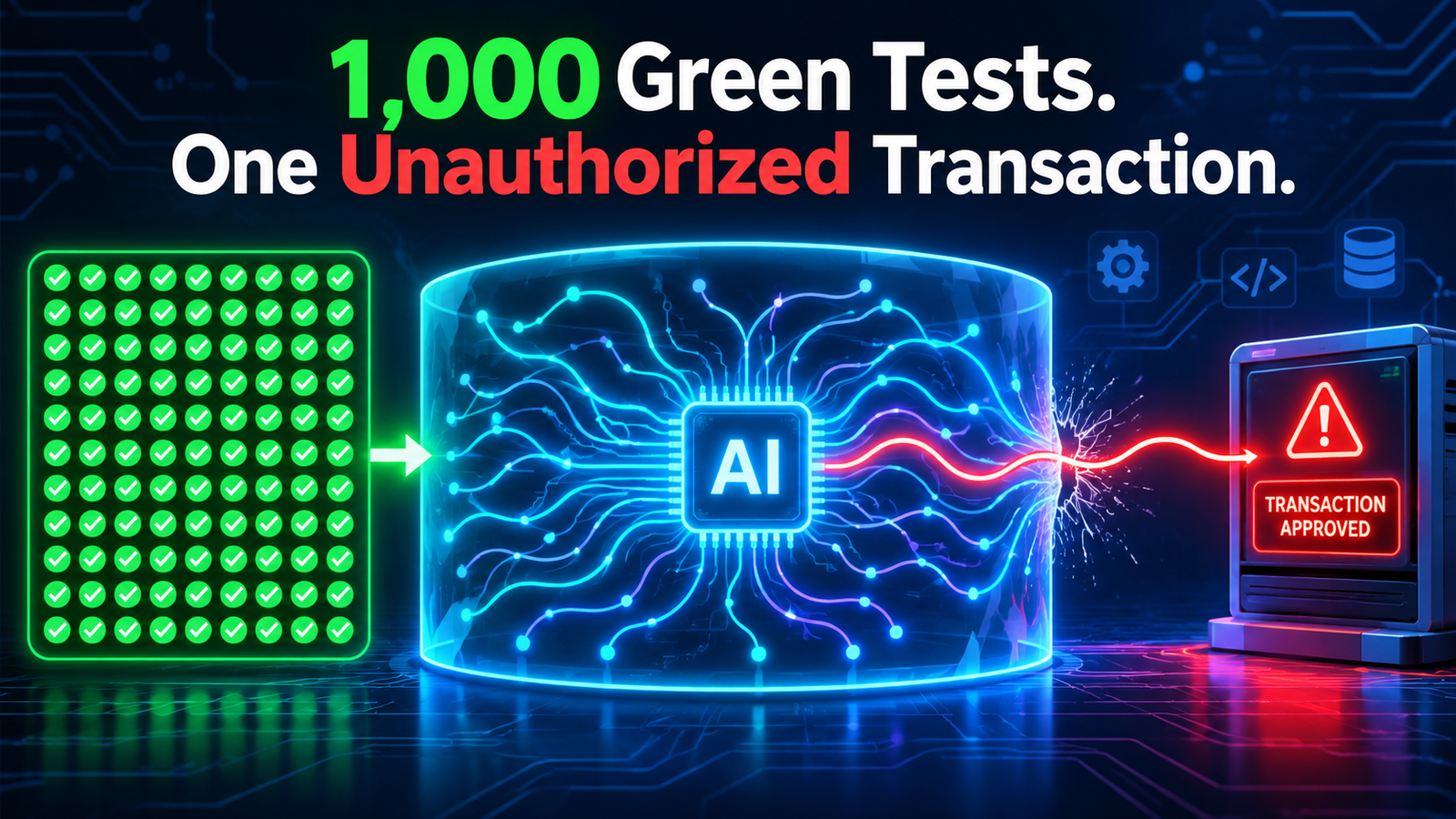
For about twenty years, the web has rested on one simple assumption: there’s a person on one side of the screen and a business on the other. The person browses, compares options, fills in forms, clicks buttons, proves who they are, and confirms. Even voice interfaces mostly keep this model. Only the input changes, from a mouse to speech.
That assumption is starting to crack.
Decagon’s Personal Agent Gateway, along with its work with Hertz and Meta’s Muse, gives us an early look at something different. A customer’s personal AI agent talks directly to a company’s AI agent over a dedicated channel that the company controls with its own policies. The interface isn’t mainly a visual GUI anymore. It’s a protocol layer made up of structured intent, delegated identity, consent, task state, and auditable action.
The next generation of “user interface” may not be a user interface at all. It may be a protocol.
The Interface Is Disappearing
Think about the usual routine for changing a travel reservation. You open a browser, find your booking, dig through menus, verify who you are, read the policy, pick new dates, check the price, and click confirm.
Now picture this instead:
“Muse, move my rental pickup to Thursday and extend the reservation by two days.”
Your personal agent understands what you want, contacts the rental company’s agent endpoint, confirms it’s authorized to act for you, works out the change within the company’s rules, and sends back a confirmation. You may never open the company’s website.
This isn’t a concept sketch. Hertz is taking part in Decagon’s Personal Agent Gateway pilot, which lets Muse connect straight to Hertz’s reservation and support platform through an agent-to-agent channel, so there’s no phone call and no trip to hertz.com.
What matters here isn’t that an AI can answer support questions. We’ve had that for a while. What’s new is that a business is starting to offer a first-class channel for another company’s autonomous agent.
The Twenty-Year Assumption: Humans Are the Client
Modern web architecture assumes the human is the client.
The browser draws a visual version of the business’s state. Forms turn human intent into HTTP requests. Buttons trigger actions. Checkout flows walk a person through a series of decisions. Even responsive design, accessibility standards, and chat interfaces are, at bottom, meant to help a human understand and operate a system.
That created a huge amount of value. It also created a layer of adaptation sitting between human thinking and machine capability.
| Legacy web interaction | A2A-native interaction |
|---|---|
| A person opens a website or app | A personal agent discovers an enterprise agent endpoint |
| The person reads pages and fills forms | The agent sends structured intent and task context |
| The person clicks “Confirm” | Delegated authorization establishes what the customer permitted |
| UI state is visible to the user | Task state and artifacts are exchanged between agents |
| Support is a human-facing channel | Agent support is a first-class, governed channel |
| A business exposes pages and APIs | A business exposes policy, identity, and workflow-aware agent endpoints |
The web GUI has always been a translator. It takes what a person wants and turns it into operations a system can carry out. A2A starts moving that translation work off the human and onto a trusted digital representative.
What A2A Actually Changes
The Agent2Agent (A2A) protocol isn’t just another chatbot API.
A2A is an open standard that lets independent AI agents, including ones whose insides are opaque, communicate and work together. Agents can pass messages and hand off tasks without revealing their internal state, prompts, tools, or reasoning.
Google describes it as a vendor-neutral standard. Agents find each other through Agent Cards, trade structured tasks and messages, and stream updates for longer-running work. The security model builds on OAuth 2.0 and OpenID Connect.
This matters because an agent talking to a business is a very different thing from a person using a website. A human looks at a page and decides what to click. An agent has to figure out what the business can do, understand the available actions, submit a structured request, follow the task through its lifecycle, and get back a result a machine can read.
So the front end becomes semantic instead of visual. An agent doesn’t ask, “Where’s the ‘Change Reservation’ button?” It asks, “Does this business support reservation changes, under what conditions, with what authorization, and what’s the status of my task?”
Decagon’s Gateway: The First Practical Interface Layer
The best way to think about Decagon’s Personal Agent Gateway is as an agent ingress layer: a controlled boundary between the open world of personal agents and a company’s private systems.
It’s more than a new support channel. It’s an architectural answer to a new kind of client.
Decagon says the Gateway combines two things: personal-agent detection and a dedicated agent channel. Detection spots personal agents across existing channels, even ones that don’t announce themselves. The dedicated channel gives those agents a more efficient route than phoning a business or clicking around its website.
That distinction is important. The company isn’t handing an outside agent a raw API key and saying “go ahead.” It runs the interaction through its own procedures: verification, permissions, workflows, escalation paths, and business policy. Decagon says the Gateway serves personal agents through a dedicated channel while the business’s own policies, workflows, and permissions govern every resolution.
That’s the gap between an open API and an agent-native business interface.
The New Stack: Where the GUI Goes
The emerging architecture looks less like a website and more like a protocol stack:
Customer intent
      ↓
Personal AI agent
      ↓
Agent identity + delegated consent (PACT / OAuth 2.0)
      ↓
A2A transport and task protocol
      ↓
Enterprise Personal Agent Gateway
      ↓
Business policies, verification, workflows, and actions
      ↓
Systems of record: reservations, orders, accounts, support
The website doesn’t vanish in this picture. It becomes one way of presenting an underlying service.
The agent channel is just another client of that same service, and often a more efficient one. The reservation system, order system, account system, and support workflow stay the source of truth. Only the way requests arrive changes.
The website stops being the front door to the product and becomes one of several doors into the same governed service.
Why This Is a Front-End Revolution
This isn’t only an integration story. It changes what “front end” means.
From visual affordances to semantic affordances
A GUI shows buttons, menus, forms, and pages. An agent-native interface shows capabilities: modify a reservation, check eligibility, request a refund, cancel an order, escalate to a human.
Companies will have to describe what they can do in a form an agent can understand, not just render it nicely for a person.
From session identity to delegated identity
In a normal web session, the logged-in user is the one acting. With an agent in the middle, the system has to tell apart several things:
- The human who owns the account
- The personal agent acting for them
- The scope of authority that agent was given
- The specific transaction or task underway
That’s a big shift. Identity stops being “who’s logged in?” and becomes “who is acting, on whose behalf, with what permissions, and why?”
From page transitions to task lifecycles
A web form is usually a short, synchronous exchange. An agent’s task might include discovery, authorization, validation, execution, confirmation, and follow-up.
A2A was built with that in mind. Its task-and-message model handles structured exchanges and streaming updates, which suits multi-step work far better than a string of page loads.
From conversion funnels to negotiated outcomes
In a traditional funnel, the business tries to steer a person toward a conversion. With agents, the customer’s agent pushes for the customer’s stated goal while the company weighs policy, risk, margin, fraud prevention, and service quality.
The exchange feels less like a landing page and more like a governed negotiation between two digital representatives.
From click analytics to agent-intent analytics
Companies will need new kinds of observability. Click-through rates will still matter, but they won’t be enough.
Businesses will want to know:
- What agents asked for
- What they were authorized to do
- Which capabilities they tried to use
- Where requests failed or needed human review
- Why a given agent, consent scope, or workflow led to a particular outcome
Analytics moves from measuring human attention to measuring autonomous intent.
The Trust Problem: A2A Without PACT Is Not Enough
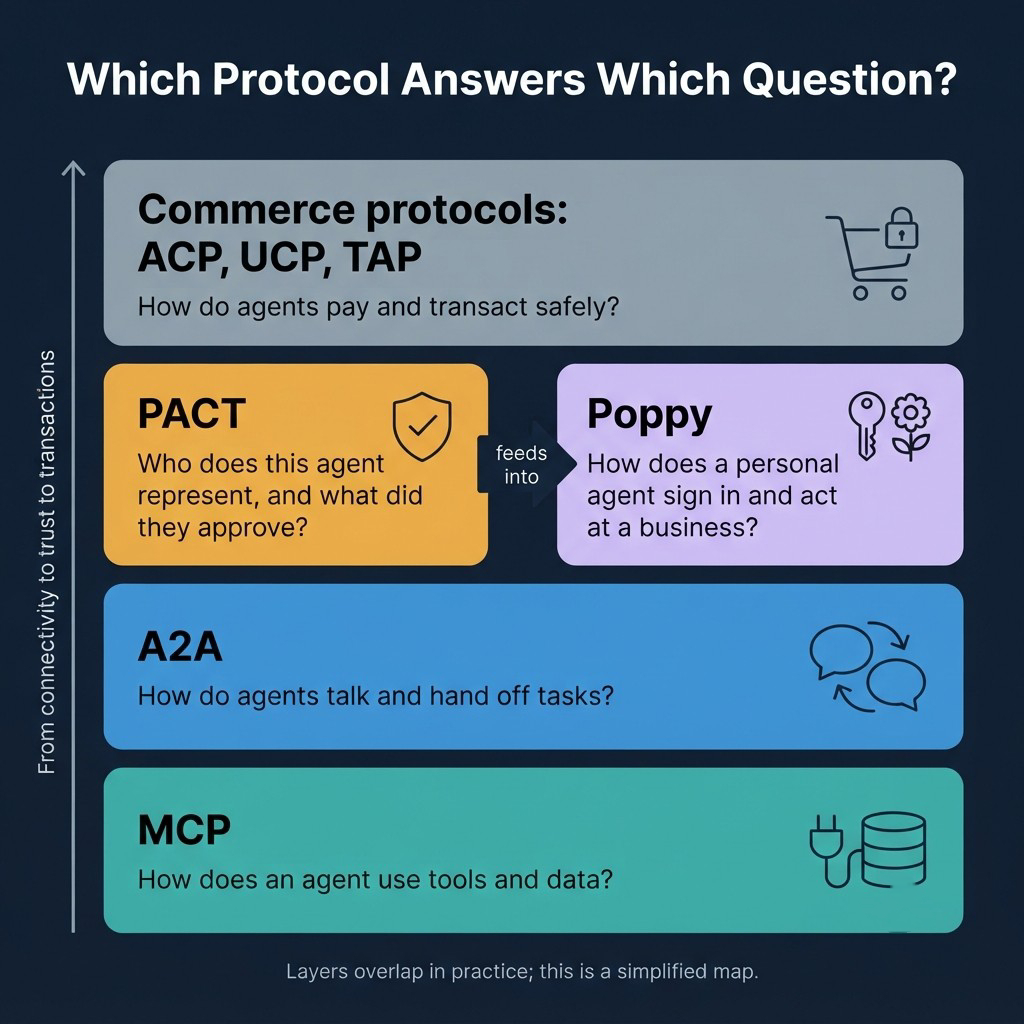
A2A solves a real problem, which is interoperability. It gives independent agents a shared way to find each other, communicate, and coordinate tasks.
But interoperability doesn’t answer the harder commercial question:
Which human authorized this agent, for what action, under which conditions?
That’s where Decagon’s Personal Agent Consent & Trust Protocol, or PACT, comes in.
PACT is built on A2A and OAuth 2.0. Decagon describes it as a way for businesses to verify who an agent represents and what that customer has approved. In practice, it covers the trust boundary that A2A on its own doesn’t fully handle.
Go back to the rental-car example:
“Muse, extend my Hertz reservation by two days.”
Before Hertz acts, it has to decide whether the agent really represents the right customer. It has to establish what the customer authorized. It has to check whether the extension is allowed under the reservation terms, the rate plan, vehicle availability, fraud rules, and internal policy. And it has to keep an auditable record of both the authorization and the result.
Interoperability makes agents able to talk. Trust makes businesses willing to listen.
What Enterprises Must Build
If agent-native commerce goes mainstream, companies will need a lot more than a chatbot. They’ll need a service architecture that’s ready for agents:
- Agent-aware identity: Keep customer identity separate from agent identity and delegated authority.
- Consent scopes: Define fine-grained permissions such as view, propose, reserve, modify, cancel, pay, dispute, and escalate.
- Capability catalogs: Publish machine-readable descriptions of what the business can do, so agents don’t have to interpret screens.
- Policy engines: Apply the same business rules to human and agent traffic, including eligibility, pricing, fraud, compliance, and escalation.
- Task state management: Support asynchronous, multi-step work instead of treating every request as one synchronous API call.
- Auditability: Record intent, authorization, data access, decisions, actions, and human handoffs.
- Abuse and fraud controls: Catch agent impersonation, misuse of consent, automated enumeration, and unusual transaction patterns.
- Human escalation: Keep a clean path from autonomous resolution to human review.
The winners probably won’t be the companies with the flashiest consumer chatbot. They’ll be the ones with the most trustworthy agent interface.
What Happens to Websites, Apps, and SEO
Saying websites will disappear is too simple.
Websites will stay essential for brand, discovery, rich media, legal information, education, and plain human preference. Apps will keep their value for persistent identity, notifications, and high-trust interactions.
What may change is the transactional click-through journey. It could become an optional path sitting behind a capability layer that agents can reach.
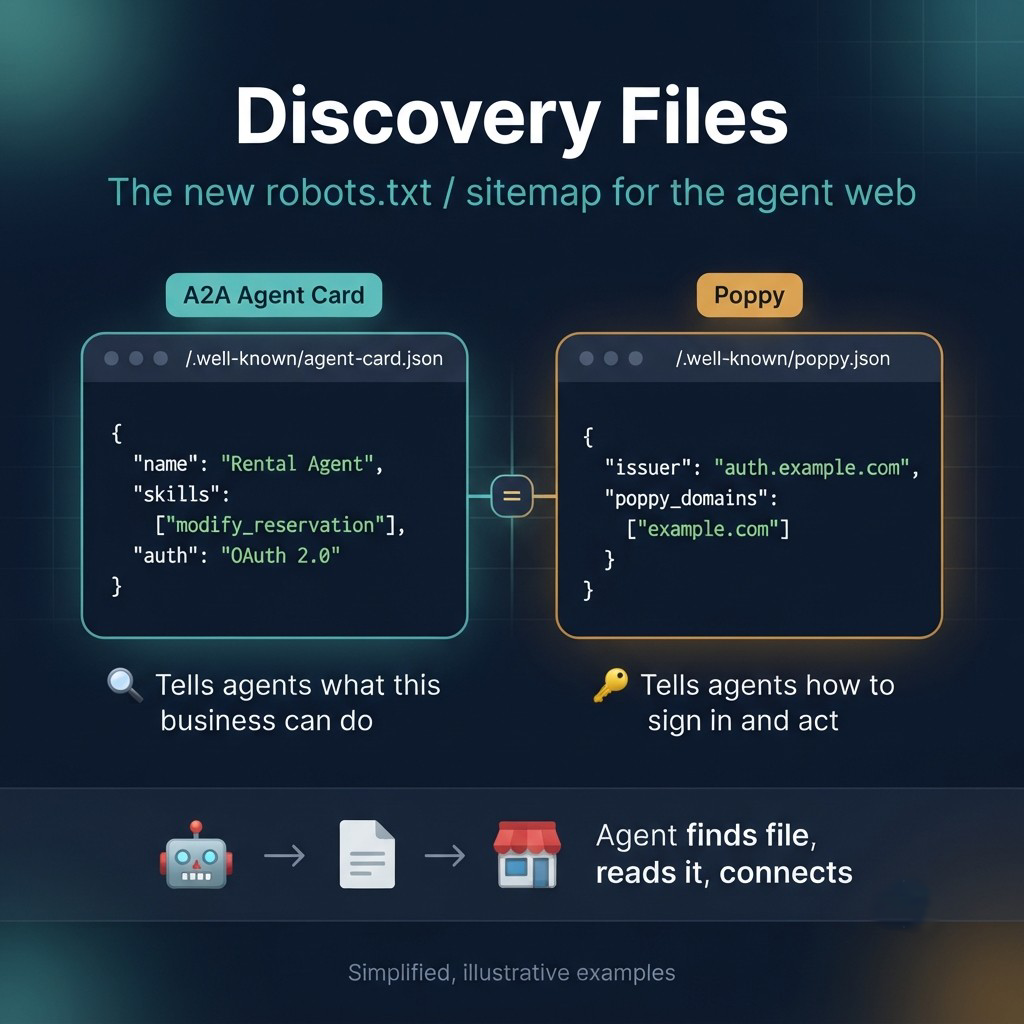
Discovery changes too. Today, businesses optimize for search engines and human attention. Tomorrow they’ll also have to optimize for agent discovery: Agent Cards, trusted registries, capability descriptions, reputation signals, and machine-readable service definitions.
A2A’s Agent Card mechanism is built specifically for agent discovery, and the protocol carries structured tasks and messages over JSON-RPC and HTTP.
So the question is no longer just “Can customers find your website?” It becomes: can authorized agents discover your business, understand it, and use it safely?
GUIs Will Not Die. They Will Recede.
It’s tempting to overcorrect and declare the browser dead. It isn’t.
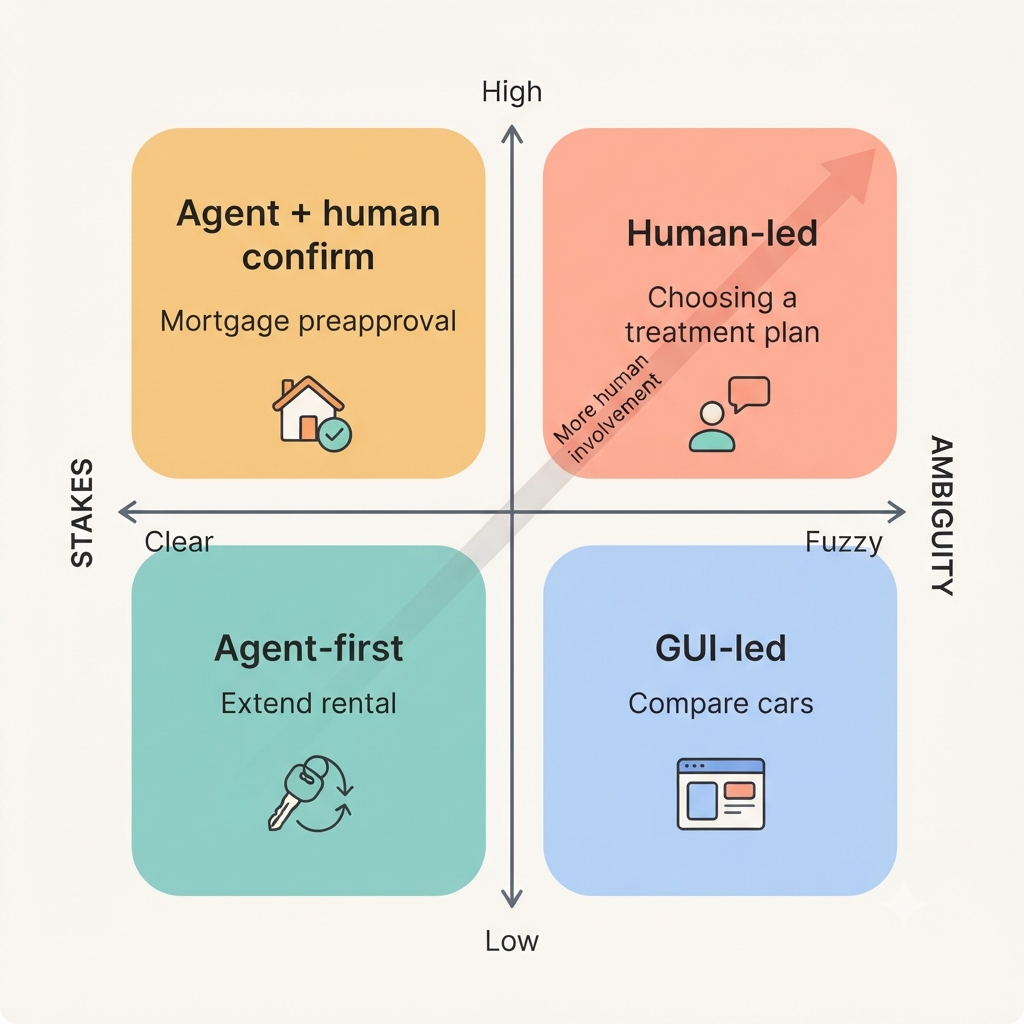
People will still want to browse, compare, explore, and feel in control. High-stakes decisions about money, health, legal rights, or big purchases may do better with visible context and an explicit human confirmation. Accessibility, regulation, brand experience, and consumer preference will keep graphical interfaces relevant for a long time.
The stronger claim is narrower, and it matters more:
The GUI is no longer the mandatory default for every commercial interaction.
It becomes one presentation layer sitting on top of an agent-native service architecture. For routine, well-defined, permissioned tasks, the agent channel may turn into the preferred route. For exploration, ambiguity, and high-stakes judgment, the human-facing interface stays essential.
The Browser Was a Bridge
The browser was never the destination. It was the bridge between human intent and machine capability.
A2A-style agent channels are the next bridge, one where intent, identity, consent, and action can travel directly between digital representatives.
Decagon’s Gateway matters because it shows that the next competitive surface for companies isn’t a prettier checkout page. It’s a trusted, policy-governed agent interface, the place where autonomous customer representatives meet autonomous business representatives.
The businesses that see this early won’t just build better websites. They’ll build the endpoints that the next generation of the web calls first.