
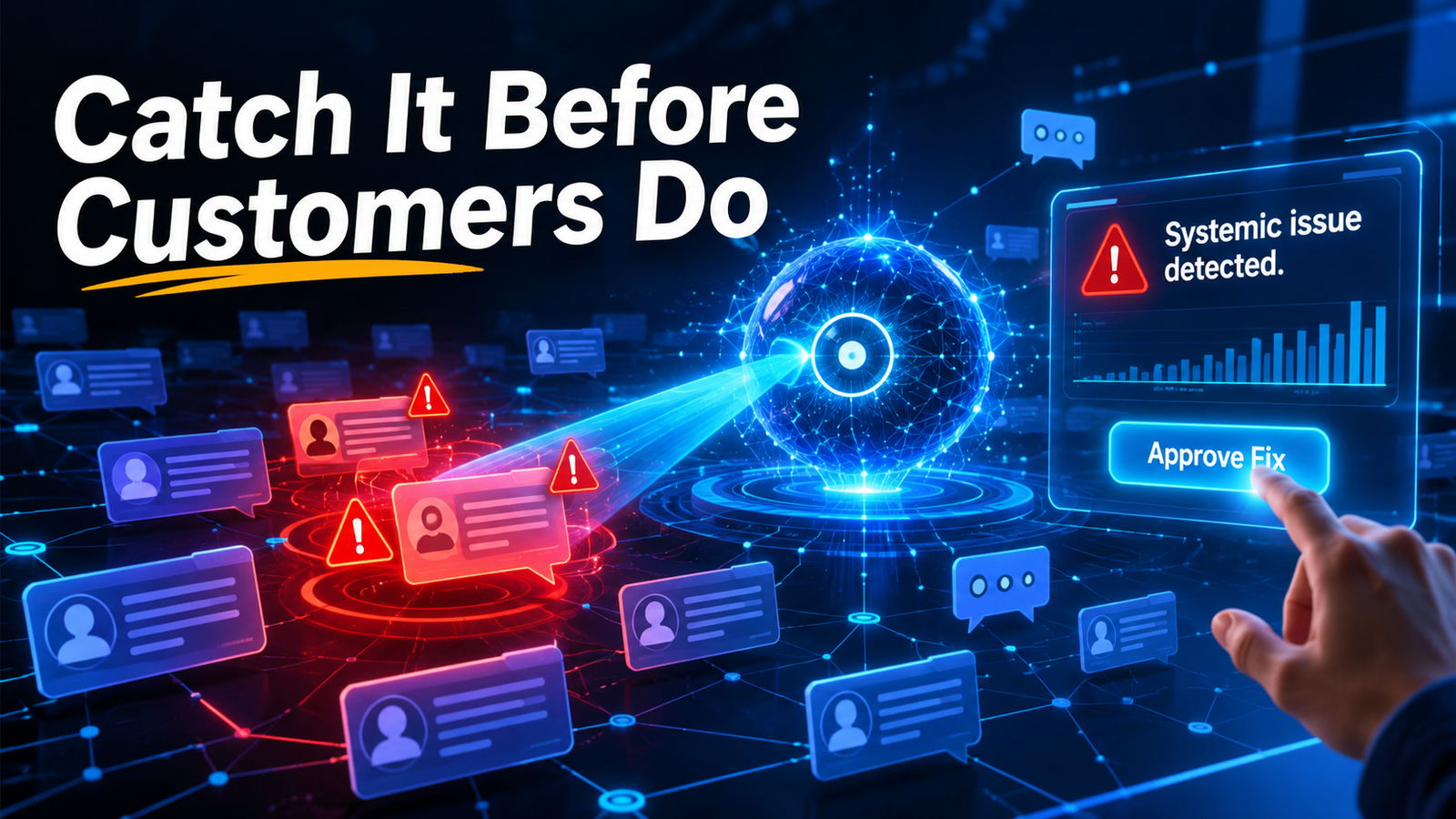
Think of every support ticket as a message from the future, if your team treats it as more than something to close.
A customer reports a failed payment. An agent sorts it out and marks the ticket “Closed.” Everyone moves on. Three days later the same failure shows up again, and then again. By the time anyone sees the pattern, dozens of customers have been hit, the queues are backed up, and the product team is putting out a fire instead of preventing one.
Most talk about AI in customer support stops at faster replies and automated ticket handling. Zoho’s autonomous AI agents suggest something more interesting. They can work less like chatbots facing customers and more like silent observers: always-on sentries that spot recurring failures, hold on to what the team has learned, and alert the right people while a problem is still small.
Zoho Desk’s Zia agents are built to work alongside human support teams. They handle defined tasks on their own, and humans stay in the loop wherever a workflow needs them.
AI answers tickets faster
You’ve heard the usual story. A customer asks a question, the AI searches the knowledge base, drafts a reply, and the support team saves some time.
That’s real value. Zoho’s Support Specialist, for example, reads incoming email tickets and drafts replies based on your knowledge base. If it can’t find a relevant article, it doesn’t make something up. It leaves a private comment and unassigns itself, so the ticket goes back to the queue for a human.
But that story treats the ticket as the end. It isn’t. A ticket is a signal. It might point to a broken integration, a confusing onboarding flow, an outdated help article, a misconfigured payment gateway, or a bottleneck somewhere in operations. The companies that get the most from AI won’t just automate replies. They’ll treat every interaction as information.
From support rep to system sentry
A traditional support AI answers the question in front of it. A system sentry asks a different one: why does this keep happening, and what would stop the next one?
| Traditional support AI | Zoho-style autonomous sentry |
|---|---|
| Responds when a customer asks | Watches for recurring signals across tickets |
| Resolves one case at a time | Identifies clusters and systemic patterns |
| Documents the fix after closure | Turns resolution knowledge into reusable assets |
| Escalates when overwhelmed | Flags emerging operational risks early |
| Optimizes support metrics | Improves product, operations, and customer experience |
Zoho’s agents work as digital agents inside Desk, and you can build them into automation rules. You might route high-priority tickets to a Support Specialist, or send closed tickets to a Resolution Expert.
The real difference isn’t the automation itself. It’s the orientation: you stop managing cases after the fact and start looking for problems before they spread.
Inside the agentic loop
The silent observer runs a continuous loop:
- Observe: Take in tickets, customer messages, resolution notes, and knowledge-base context.
- Interpret: Classify the issue, judge how urgent it is, work out what the customer wants, and check whether it looks like something seen before.
- Act: Reply to routine issues, triage or route work, and suggest next steps.
- Learn: Once a ticket closes, pull out the issue, root cause, diagnostic path, and the fix that worked.
- Institutionalize: Turn that outcome into a reusable resolution record or a draft knowledge-base article.
- Escalate: Tell a human when confidence is low, the case is unusual, or the pattern points to something bigger.
Zoho’s Resolution Expert is a good concrete example. After a ticket closes, it reviews the conversation, identifies the issue and its root cause, records the fix, and folds the result into the resolution tab.
That might sound like paperwork. It’s actually memory.
Sentry one: Detecting systemic product failures
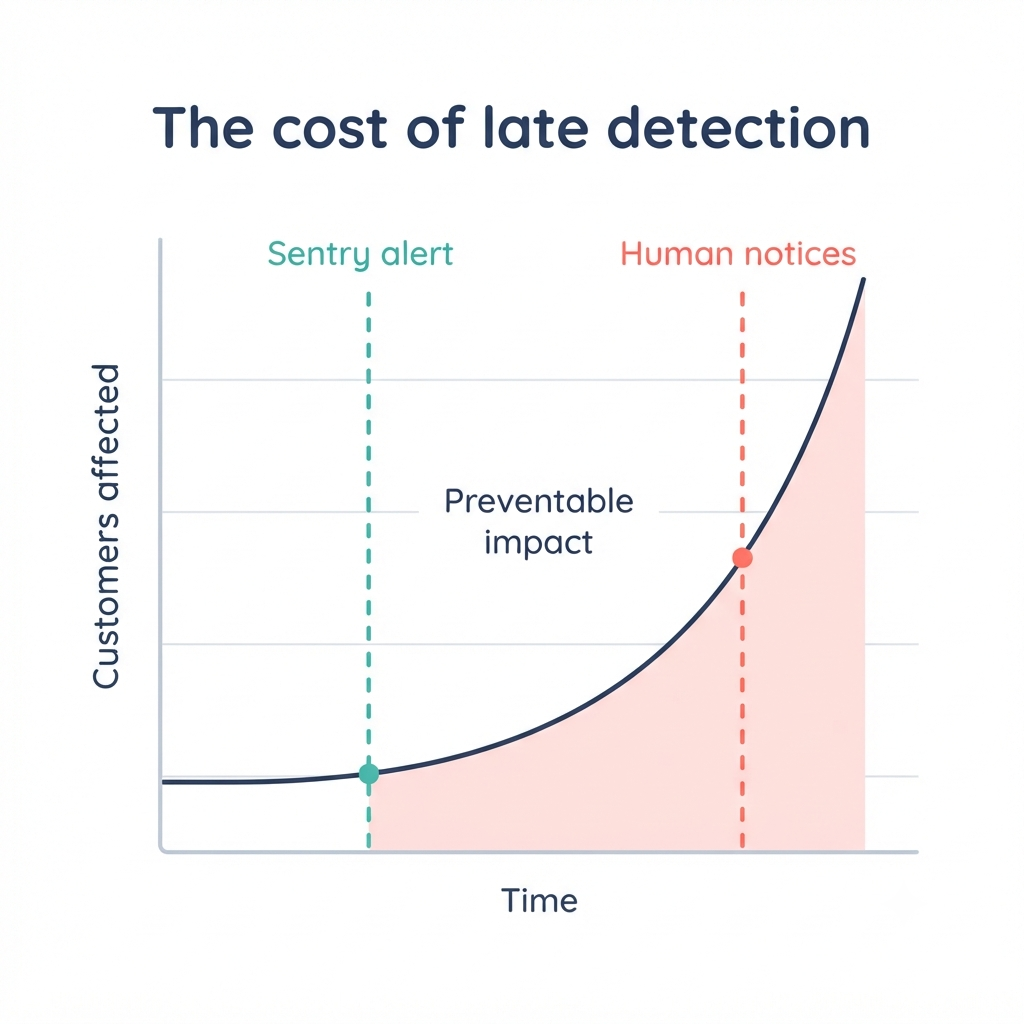
One ticket is customer service. A pattern of tickets is product intelligence.
Say a SaaS company ships a small update. Within hours, customers start reporting that report export is broken. Each ticket looks ordinary on its own: “Export is not working.” “I can’t download my report.” “The file won’t open.”
An autonomous sentry can see what they share:
- The same feature is involved.
- The same error message keeps appearing.
- The failures started after a recent release.
- Multiple customer segments are affected.
- Ticket volume is climbing faster than normal.
Instead of waiting for 50 customers to complain, the system can raise the alarm early. It can send product, engineering, and support leads the evidence: the affected tickets, the error patterns, the segments involved, and a suggested severity.
That’s the move from incident response to early warning.
Zoho’s Support Specialist only replies from the knowledge base, which turns out to be a handy guardrail. It handles known issues and hands unfamiliar or unsupported ones back to people instead of guessing. The same limit helps with proactive discovery, because “no relevant article found” is a signal in its own right. It may mean you’re looking at a new or poorly documented problem.
Sentry two: Closing the knowledge gap automatically
Most organizations don’t lack knowledge. What they lack is knowledge that’s easy to find, up to date, and written down in a consistent way.
A support agent can solve a problem perfectly, but if the fix only lives in a closed ticket, the next agent starts from scratch. Zoho’s Resolution Expert tackles this by creating a standard resolution record. It covers the customer’s query, the timeline of the interaction, a summary of the solution, the root cause, the diagnostic steps, the fix applied, the customer’s confirmation, and SLA adherence.
What you end up with is a living operational memory:
- Faster resolution, because similar past cases are easier to find.
- More consistent answers from both human agents and AI.
- Fewer repeat escalations for known issues.
- A knowledge base that grows out of real customer conversations.
- Less reliance on what any one support rep happens to remember.
Zoho also pitches the Resolution Expert as a way to improve the knowledge base by surfacing resolution details and making past cases easier to understand.
The best setup isn’t “AI publishes whatever it learns.” It’s knowledge that the agent drafts, a human approves, and the team keeps updating. The agent captures the raw insight. People supply the judgment, the accuracy checks, the tone, and the final say.
Sentry three: Flagging operational conflicts
Not every system weakness is a product bug. Sometimes it’s a process failure.
Support data can show problems that never make it into a bug tracker:
- A ticket surge during a maintenance window may mean customers weren’t properly told about it.
- Repeated escalations to one team may point to unclear ownership or thin coverage.
- A jump in onboarding issues may mean the implementation workflow is broken.
- High-priority tickets routed to specialists who aren’t available can expose an SLA or staffing conflict.
- Seasonal spikes can inform workforce planning, training, and release schedules.
In these cases the agent’s value isn’t in answering the customer. It’s in noticing the condition that made the ticket likely in the first place.
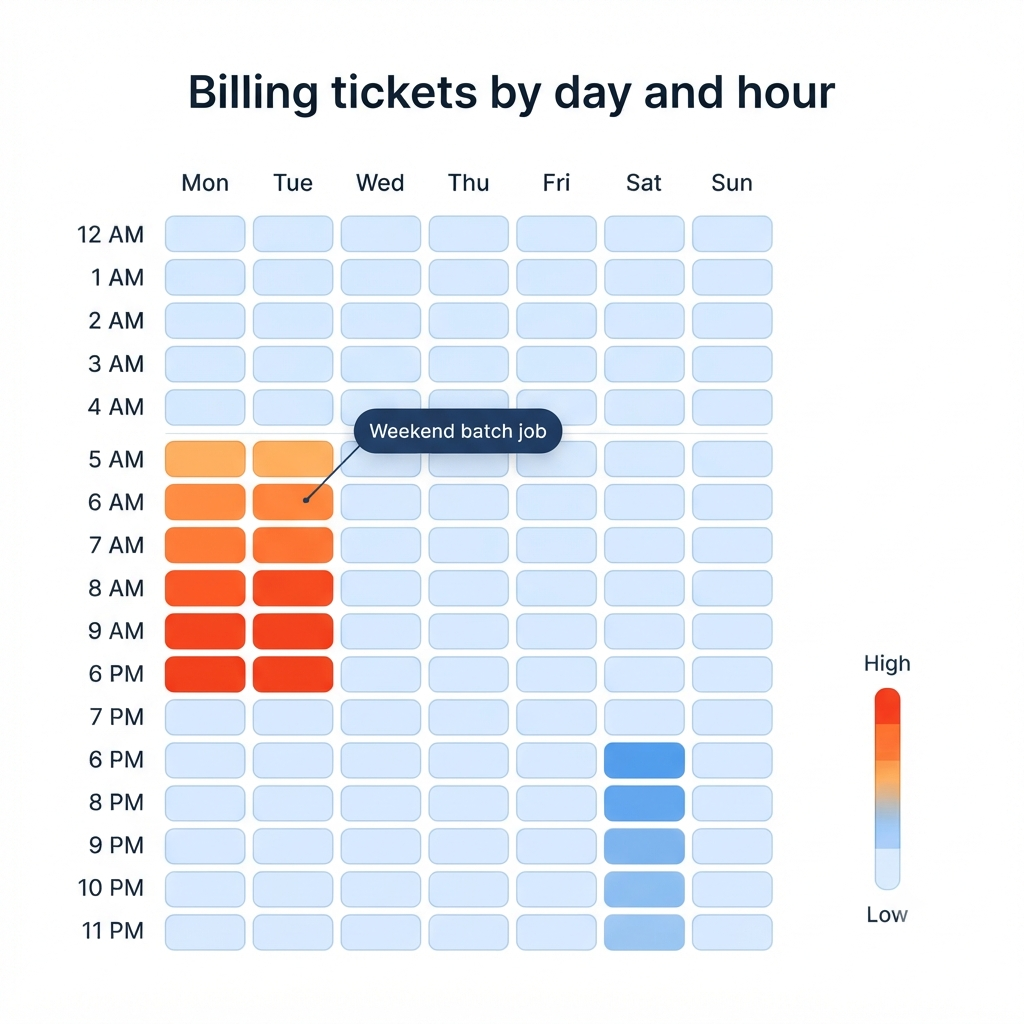
Suppose an agent sees a pile of billing tickets arriving every Monday morning, right after a weekend batch job. It can flag that to finance operations. The fix might not be a support macro at all. It could be a failing scheduled job, a delayed data sync, or a gap in customer communication.
The silent observer doesn’t stop at “how do I close this ticket?” It asks what operational condition produced the ticket, and what needs to change so the next one never gets created.
Why human-in-the-loop matters
Autonomy without oversight isn’t intelligence. It’s risk.
Zoho is upfront about this. It advises organizations to review and validate AI outputs before relying on them, monitor agent behavior after deployment, tell end users when AI is involved, manage permissions carefully, and keep human oversight in sensitive situations.
A practical governance model looks something like this:
- Agents observe, classify, draft, and recommend.
- Humans approve anything consequential, especially public knowledge-base updates.
- Ambiguous, high-risk, or low-confidence cases go to people.
- Every automated action should be auditable.
- Alerts should come with evidence, not just a conclusion.
- Start with narrow, high-volume use cases before giving agents more freedom.
This matters even more because Zoho notes that its digital agents work within predefined scopes and can’t do anything outside their configured permissions. That limit isn’t a weakness. It’s what makes responsible autonomy possible.
The business impact: prevention over resolution
The real payoff from autonomous support AI isn’t just tickets resolved per hour.
| Area | Reactive model | Silent Observer model |
|---|---|---|
| Ticket volume | Grows with recurring issues | Declines as root causes are addressed |
| Knowledge base | Updated sporadically | Continuously refreshed from real cases |
| Product teams | Learn late from escalations | Receive earlier, evidence-backed signals |
| Support team | Repeats the same fixes | Focuses on complex and strategic work |
| Customer experience | Issues recur before they are fixed | Problems are detected and mitigated earlier |
| Operations | Reacts to backlog spikes | Acts on leading indicators |
Zoho designed the Resolution Expert to keep resolution documentation accurate, consistent, and easy to retrieve, which helps people share knowledge and resolve future tickets faster. The Support Specialist is meant to lighten agent workload and give customers immediate help based on knowledge-base training.
The bigger opportunity, though, is prevention: fewer repeat contacts, fewer escalations, fewer avoidable product failures, and fewer nasty surprises in operations.
Build your first sentry
You don’t need a fully autonomous, company-wide monitoring system on day one. Start with a single recurring failure.
- Choose a high-frequency issue: Login errors, failed exports, integration sync failures, billing disputes, or onboarding confusion all work.
- Define the signal: Decide which ticket attributes, error messages, product areas, customer segments, and resolution patterns point to the issue.
- Give the agent a job: Have it classify, cluster, draft a knowledge-base update, and flag anomalies.
- Define the human action: Decide who gets the alert, what evidence they need, and what they’re allowed to decide.
- Set guardrails: Put in confidence thresholds, escalation rules, approval workflows, and audit logs.
- Measure prevention: Track recurrence rate, repeat contacts, knowledge-base coverage, time to detection, and escalations avoided, not just resolution time.
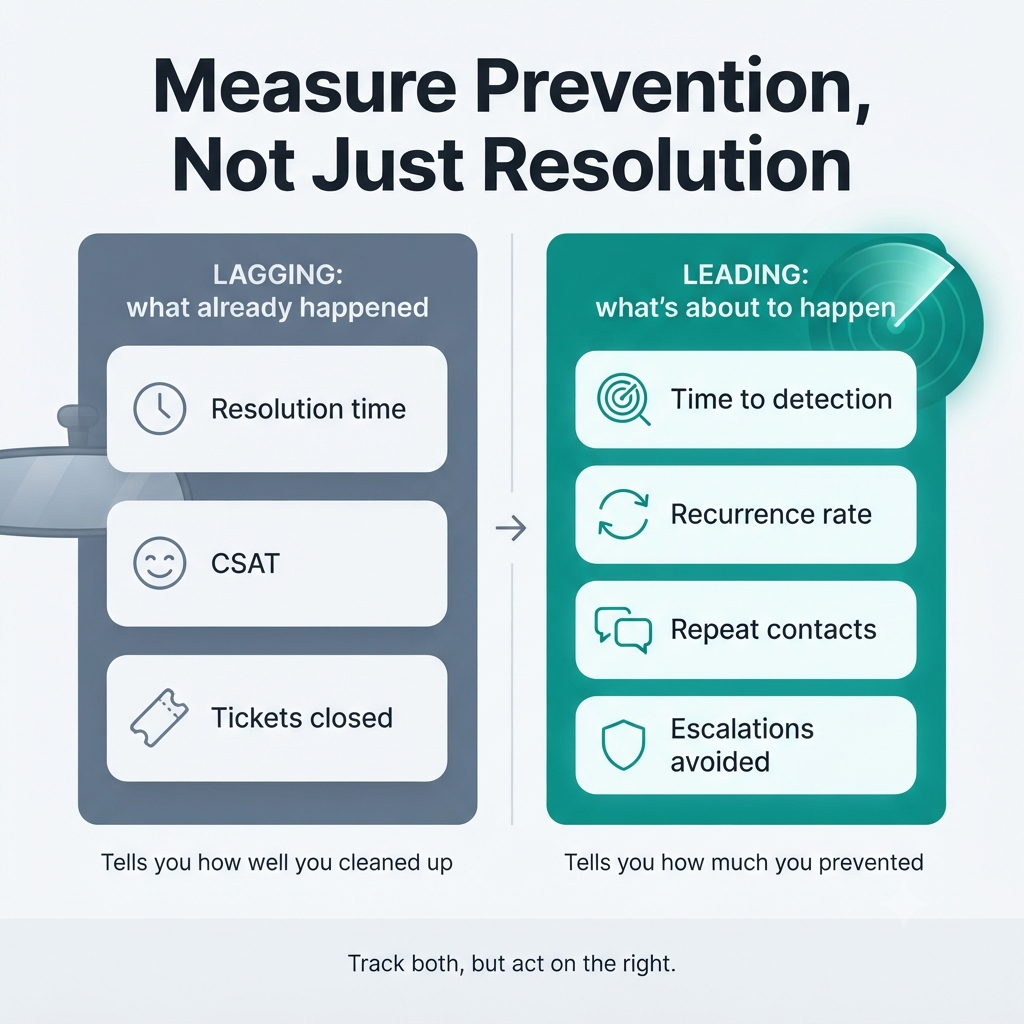
The point isn’t to take humans out of support. It’s to hand them earlier, better-organized signals so they can step in before customers feel it.
The future support team is a sensor network
The best AI agent isn’t the one that answers the most tickets.
It’s the one that helps your organization spot the pattern before customers have to report it.
Zoho’s autonomous agents don’t just resolve the complaint in front of them. They listen for the next one, and that gives the organization a chance to fix it first.