
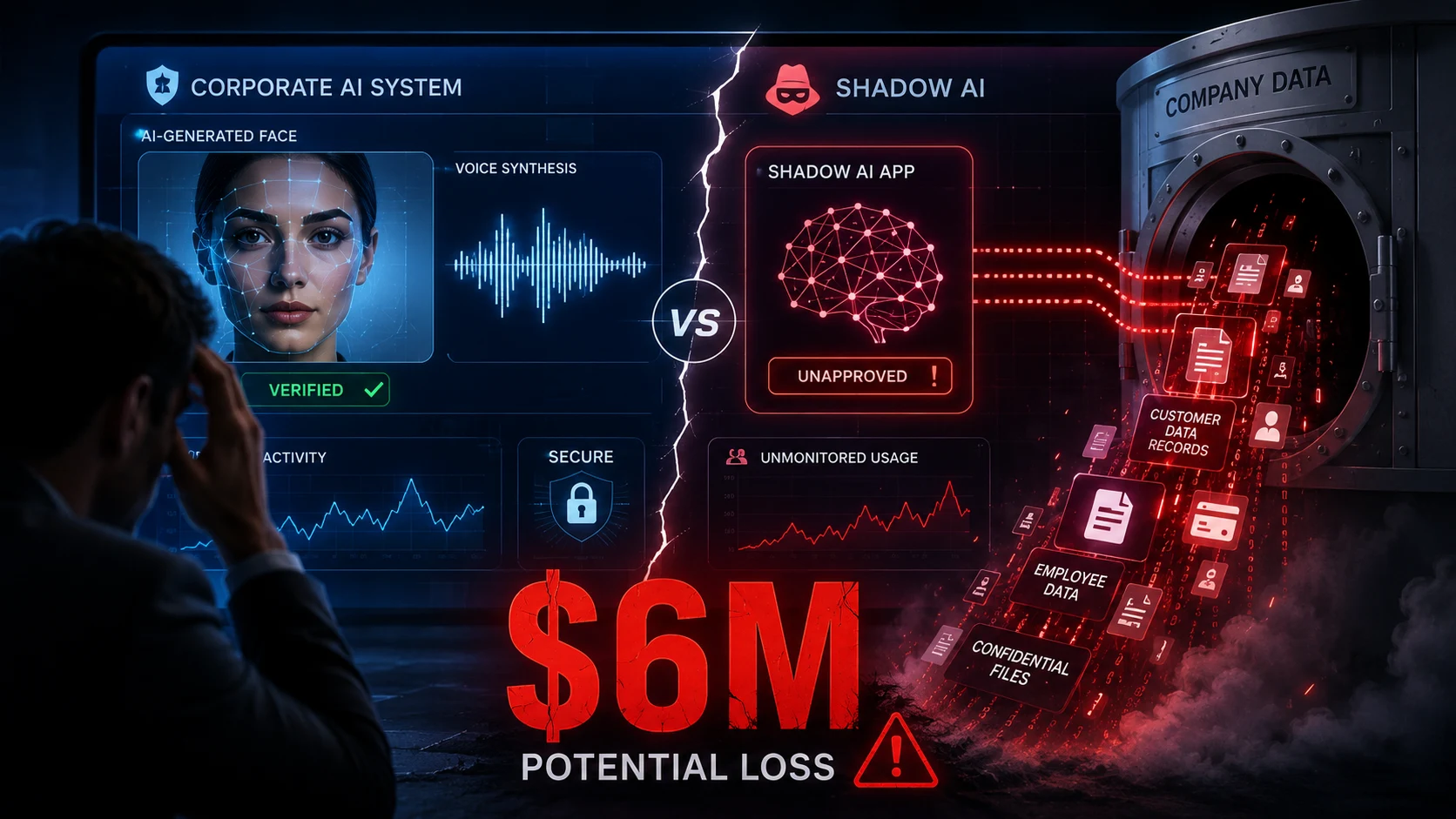
Deepfakes have stopped pretending to be a gimmick — and in 2026, they are violently exposing corporate vulnerabilities. With 1 in 4 data breaches now powered by artificial intelligence and the average cost of AI-enabled incidents surging past $6 million, cybersecurity defenses are buckling under machine-speed attacks.
Can your organization detect a breach when the attacker sounds, looks, and writes like your CEO? Without urgent oversight, the twin expansion of deepfake vishing and unsanctioned shadow AI will leave corporate networks defenseless.
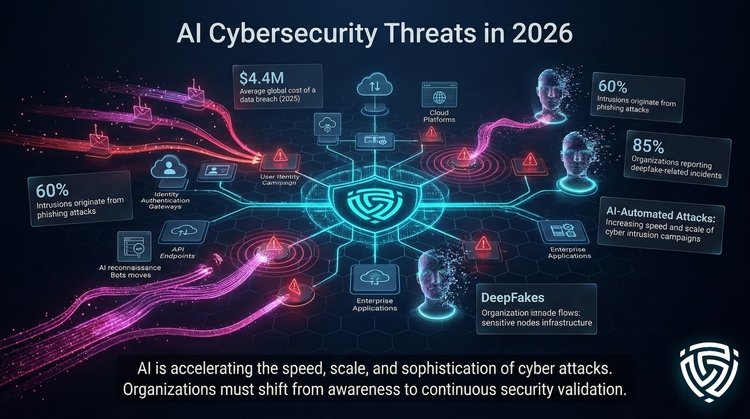
1. What Changed in 2026: The New Threat Ecosystem
Deepfake impersonation is exploding across enterprise channels, while unsanctioned “shadow AI” apps quietly leak sensitive corporate records into public models.
Threat actors are no longer relying on clumsy malware attachments. Instead, they leverage real-time voice synthesis and automated social engineering to bypass traditional identity controls.
When employees feed proprietary data into unauthorized AI productivity utilities, they inadvertently create unmonitored backdoors. Together, these vectors are deceiving staff, bypassing perimeters, and accelerating financial losses.
The danger isn’t just fraud. It’s confidence. Once employees trust a synthesized voice or an unvetted AI app, the breach is already underway.
2. Why the Attack Surface Grew Exponentially
The shift toward AI-native corporate environments has opened fresh vulnerabilities that conventional firewalls cannot catch:
- Deepfake Voice Impersonation (Vishing): Attackers clone executive voices to trick finance teams into executing urgent wire transfers.
- Synthetic Video Calls: Scammers generate fake video avatars during live video conferences to verify false credentials.
- Unsanctioned Shadow AI Tools: Employees upload confidential source code and legal files into unauthorized online AI tools.
- Automated Contextual Phishing: AI bots generate hyper-personalized lure emails based on leaked internal metadata.
- Degraded Identity Verification: Security teams struggle to differentiate genuine human interactions from machine-generated media.
3. The Real Cost of an AI-Driven Breach
Recent industry data highlights a massive cost divergence between legacy security incidents and modern AI-fueled intrusions. Unsanctioned AI tools alone add an estimated $670,000 in hidden escalation costs per incident.
| Threat Vector | Legacy Breach Pattern | AI-Driven 2026 Threat Model |
|---|---|---|
| Phishing Lures | Generic email templates | Cloned voice, synthetic video, and context-aware scripts |
| Shadow IT | Unapproved desktop software | Hidden AI utilities ingesting proprietary customer data |
| Average Cost | ~$4.99 million global baseline | $6.00 million for AI-enabled incidents |
| Identification Lag | Manual log reviews | Extended 247-day detection window |
Once attackers hijack internal trust, recovery costs escalate rapidly.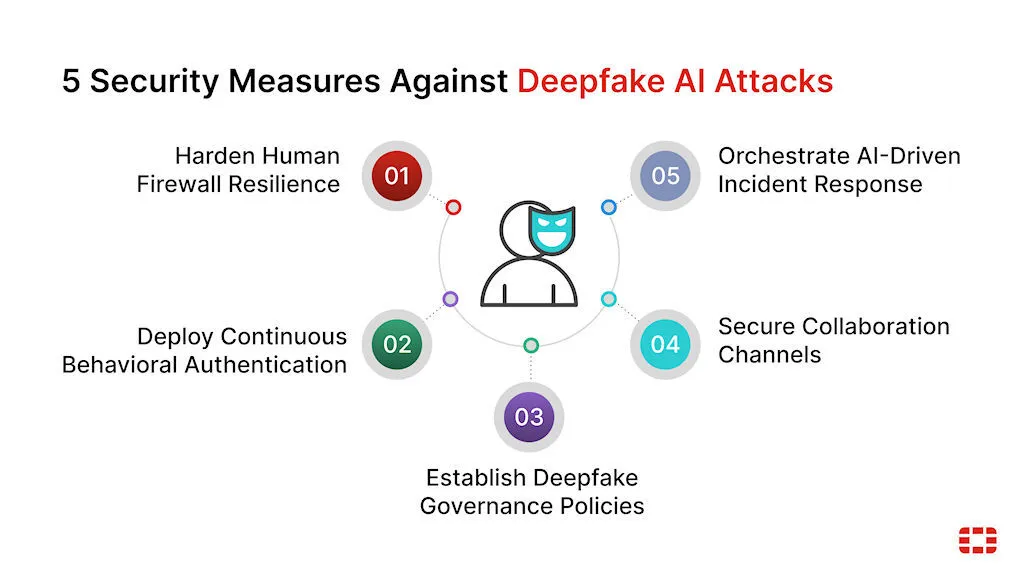
4. How Security Teams Must Respond
Organizations cannot rely solely on annual security awareness training to stop synthetic media attacks. Effective mitigation requires strict technical controls:
- Enforce Strict AI Governance: Deploy discovery software to track and block unauthorized shadow AI applications.
- Mandate Out-of-Band Verification: Require multi-channel phone calls or physical tokens for high-value financial requests.
- Train on Synthetic Media Detection: Educate employees to recognize robotic vocal cadence, video artifacts, and unnatural urgency.
- Implement Runtime Access Controls: Restrict API access and apply zero-trust authentication to all internal data repositories.
- Monitor Data Exfiltration: Set automated alerts for large data transfers moving toward external AI model endpoints.
“What’s changing is the economics of cyberattacks. AI is making attacks faster and cheaper, while breaches keep getting more expensive… The priority now is to secure identity at runtime and fix risks at the speed attackers are already moving.” — Suja Viswesan, Vice President at IBM Security Software
Nvidia forms industry alliance for open AI security after Hugging Face hack@aayush_a6 pic.twitter.com/iMYVgUognG
— NDTV (@ndtv) July 30, 2026
5. What Readers Should Watch Next
As AI capabilities evolve, corporate resilience depends on asking the hard questions today:
- Are your employees currently pasting proprietary data into unvetted public AI apps?
- Would your finance department double-check a payment transfer request made by a synthetic voice?
- Does your security operations center have the tools to detect deepfakes before a breach occurs?
Full research findings and security breakdowns are available via the IBM 2026 Cost of a Data Breach Study, ASIS Security Management, and AONA AI Enterprise Risk Analysis.