
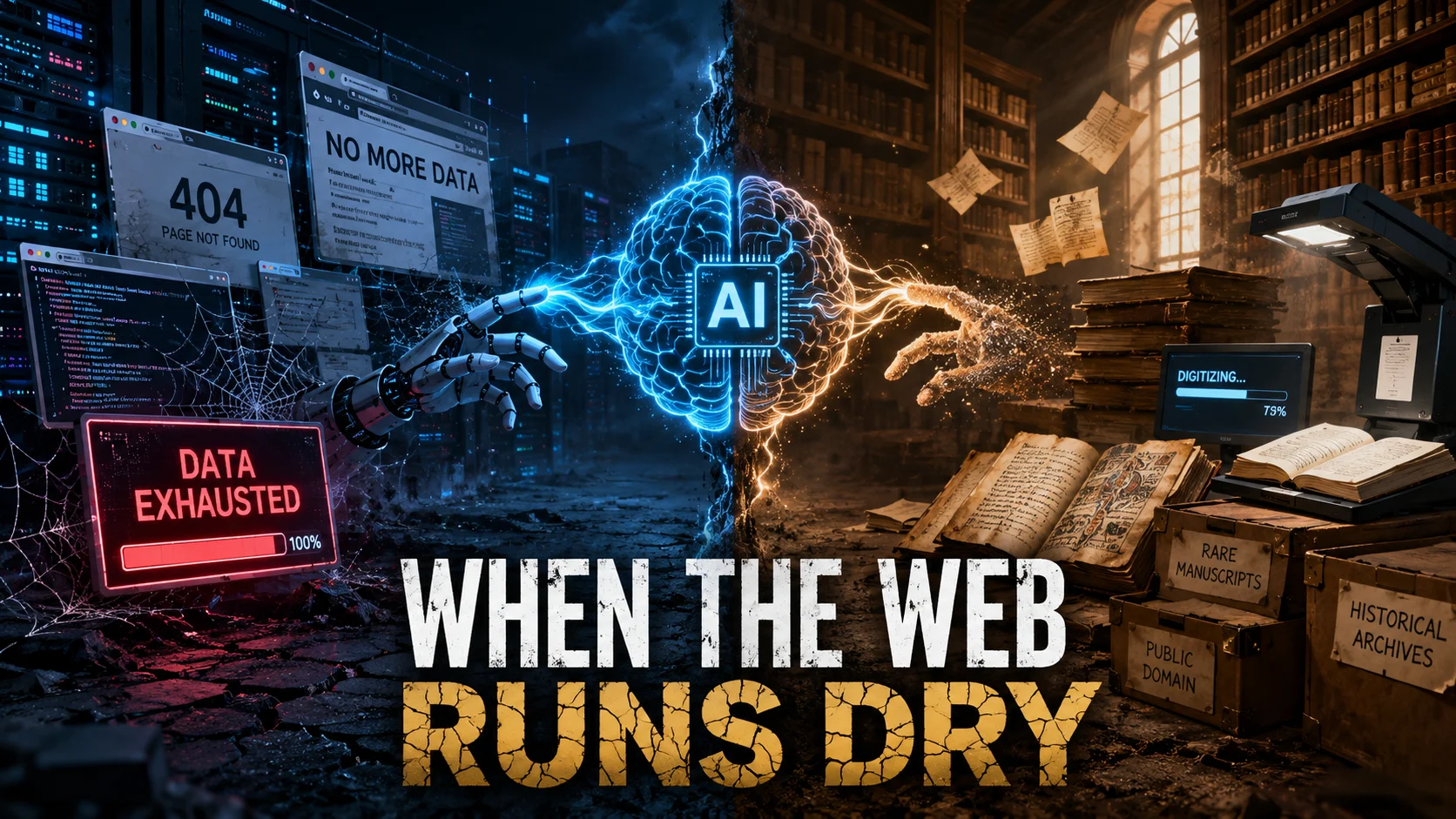
AI companies are scrambling. Epoch AI estimates that publicly available high-quality web text could be fully exhausted, forcing major labs to devour 100+ years of offline paper records.
So what happens when the internet runs dry, and the next frontier of artificial intelligence depends on physical archives? Tech giants are quietly pivoting from web scraping to physical book scanners.
1. Why the Internet Isn’t Enough Anymore
For years, frontier models learned human language by crawling blogs, social media posts, and online news outlets. But that digital well is drying up.
Much of the new content uploaded to the public web today is AI-generated noise, creating a feedback loop of synthetic data degradation.
| Data Source | Availability Status | Quality Level |
|---|---|---|
| Public Web Text | Nearing exhaustion | Mixed / AI-polluted |
| Social Media Feeds | Heavily paywalled / licensed | Casual / Conversational |
| Physical Archives | Massive untapped volume | High-density human prose |
2. The Data Problem Facing Tech Giants
Language models improve when fed massive amounts of unique, high-quality human writing. Duplicated web pages and automated SEO articles lower model quality rather than boosting it.
If the open web is tapped out, where does the next generation of AI training data come from?
“When you train an AI on AI-generated text, it’s like photocopying a photocopy — you steadily lose fidelity and precision.” — AI Research Fellow
This dynamic makes original, human-authored print history invaluable for long-term model scaling.
WTF
— Shruti (@heyshrutimishra) July 29, 2026
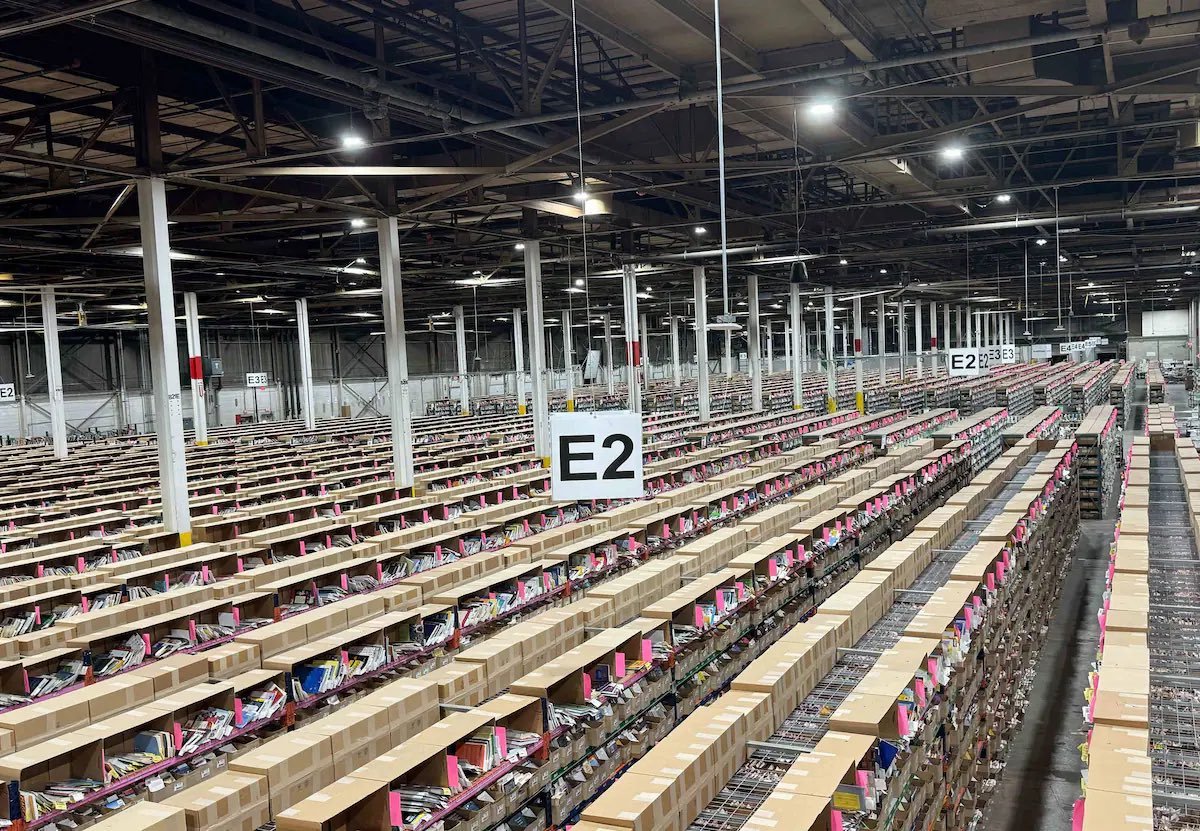
AI companies are purchasing large quantities of used and rare books. Scanning their contents to train models. Then turning the originals to pulp.
The sum of human thought, digitized and shredded.
Every book that gets scanned disappears from the physical world permanently.… pic.twitter.com/zCDV0tFaci
3. Why Libraries Matter Now
Libraries, university vaults, and national archives represent centuries of curated human thought.
- Historical Depth: Deep collections of newspapers, technical manuals, and local records.
- Clean Syntax: Expertly edited, long-form human prose free from spam.
- Specialized Knowledge: Domain-specific scientific and legal literature not indexed online.
Will the next AI moat be model size or archive access? Labs that secure exclusive digitization rights will possess a distinct training edge.
4. Who Benefits and What Could Go Wrong
The rush to digitize physical print introduces new winners and complex structural challenges:
- Key Beneficiaries: Higher education institutions, digitization contractors, and legacy publishing houses holding vast back-catalogs.
- Copyright Battles: Tensions are surging over copyright ownership, out-of-print book rights, and fair-use boundaries for AI training.
- Preservation Risks: Mass physical scanning requires proper handling of delicate historical manuscripts.
Are libraries becoming the new battleground for AI scaling? As cloud networks run short on original words, the future of machine learning is returning to paper and ink.
Research on data trends can be reviewed at Epoch AI, with media coverage from PBS NewsHour.