
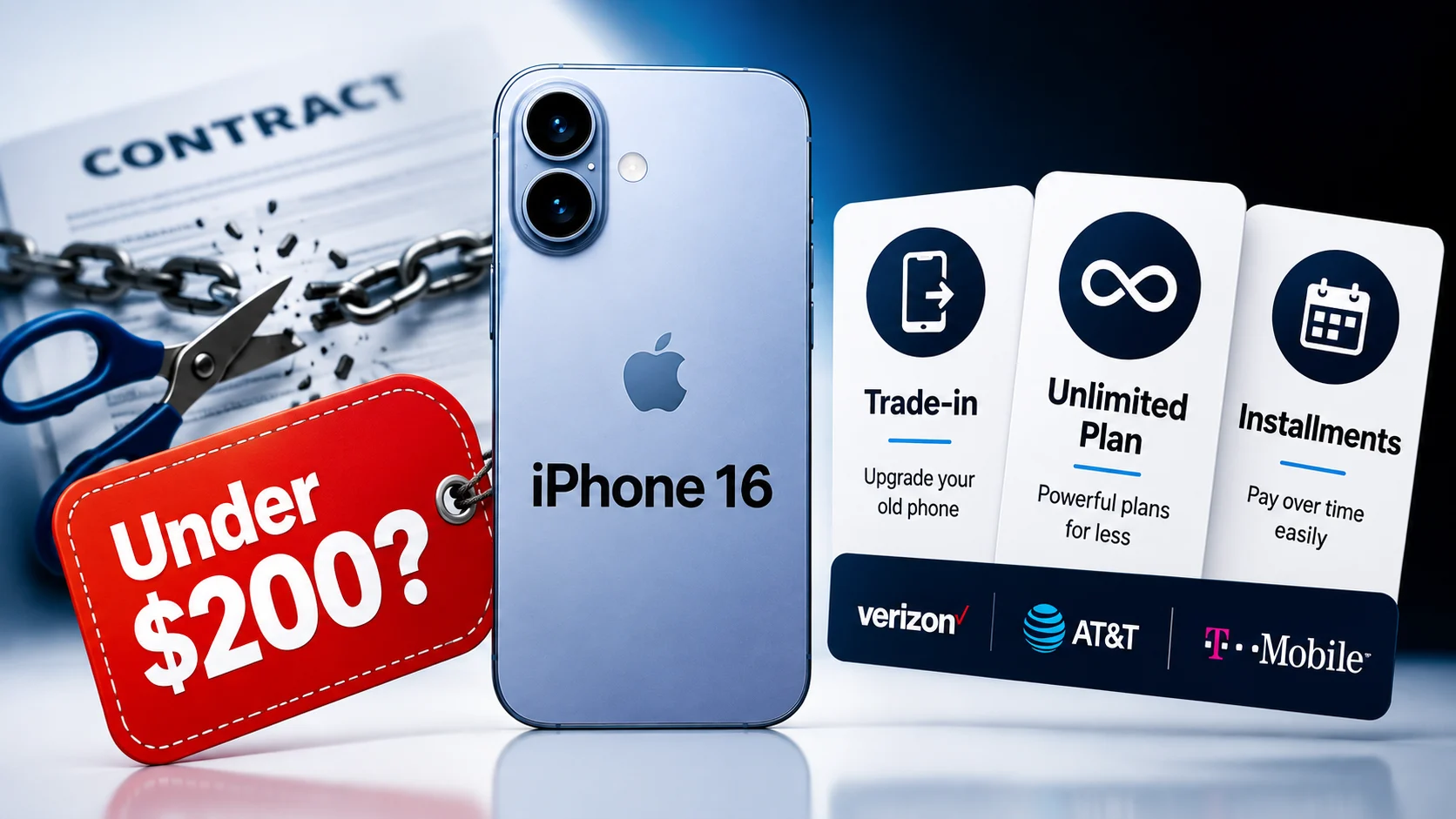
An iPhone 16 for under $200 sounds impossible, but aggressive carrier promos just shattered retail pricing norms. While the standard base model costs $799 retail, major networks are offering up to $830 in bill credits over 36 months.
So how do carriers make a flagship phone look so cheap without losing money? Unwary buyers slashed their initial bill only to find hidden terms trapped them in pricey monthly plans.

What the Deal Really Means
Upfront discounts rarely mean instant savings. Instead, carriers spread total promotional values across monthly billing statements.
| Deal Type | Upfront Cost | Hidden Condition | Best For |
|---|---|---|---|
| Trade-In Promo | Very Low | 36-month bill credit commitment | Users trading modern iPhones |
| New Line Offer | Near $0 | Requires activating new premium lines | Carrier switchers |
| Installment Plan | Moderate | Partial credits requiring account activity | Predictable monthly budgets |
How Carrier Subsidies Work
Why are carriers willing to cover most of the hardware cost?
To qualify, buyers must trade in an eligible device and sign up for high-tier unlimited data plans. The network pays off the device through monthly bill credits over a fixed period.
- Trade-In Valuation: Older flagship models yield maximum promotional value.
- Plan Tier Requirements: Promos often require top-tier unlimited data plans.
- 36-Month Lock-In: Credits cancel immediately if you switch carriers or cancel early.

Eligibility Checklist
Before signing, double-check that your existing device and current plan qualify for maximum savings.
| Requirement | Why It Matters |
|---|---|
| Eligible Device | Determines whether you unlock $800 vs $300 in credits. |
| Qualifying Plan | Unlocks full promotional credit rates. |
| Account Standing | Late payments can disrupt automatic monthly credits. |
- Verify if your old phone’s model unlocks full promotional value.
- Confirm whether “any condition” covers cracked screens or battery degradation.
- Check how many billing cycles it takes for credits to apply.
- Review early payoff rules before making additional payments.
Hidden Terms to Watch Out For
What happens if you want to leave your carrier early?
If you exit before 36 months, remaining credits are forfeited instantly, making the remaining balance due.
“The advertised discount is only half the story,” explains a Consumer Finance Analyst. “The real savings depend on monthly credits, plan cost, and whether you keep the line long enough to collect them.”
- Plan Upgrades: Lower-tier unlimited plans receive reduced monthly credits.
- Early Termination: Leaving early acceleration charges your balance.
- Condition Disputes: Warehouse inspections can downgrade your trade-in value post-purchase.
Total Cost-of-Ownership Comparison
A “cheap” phone can become expensive if tied to an overpriced monthly line.
| Option | Upfront Cost | Monthly Plan Cost | Total 24-Month Cost | Good Choice? |
|---|---|---|---|---|
| Carrier Promo | Under $200 | High ($70–$90/mo) | Moderate to High | Best if already on premium plans |
| Unlocked Purchase | Full Retail ($799+) | Low ($25–$45/mo) | Lowest Overall | Best for flexibility and light users |
| Refurbished Model | Discounted | Low ($25–$45/mo) | Balanced | Best for strict budget buyers |
Who Should Use This Deal?
Is a carrier trade-in right for your situation?
- Existing Premium Users: Subscribers already paying for top-tier unlimited lines.
- Long-Term Buyers: Users who keep their smartphones for 3+ years.
- Carrier Switchers: Customers taking advantage of port-in bonuses and credits.
Official Verification & Deals
Official Portals & Coverage: • Apple Official Trade-In Portal • Verizon Wireless Promotions • AT&T Wireless Deals • FCC Consumer Advisory Guide