
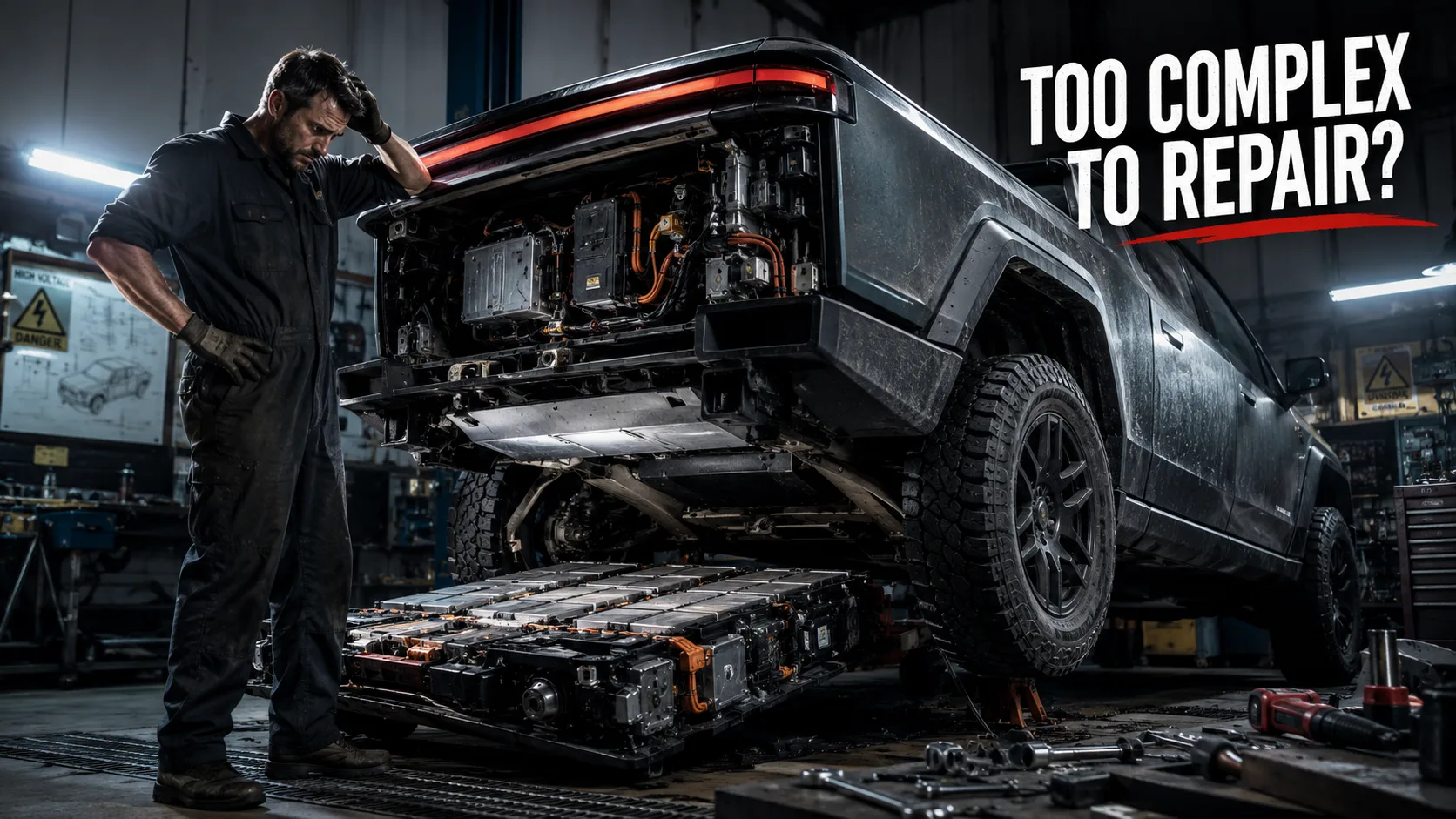
Independent mechanics are panicking as high-voltage heavy EVs invade local repair bays. Over 70% of independent auto shops currently lack the specialized tools required for 800V battery systems, while training costs top $10,000 per technician.
Independent mechanics are sounding the alarm. Over 70% of independent auto shops currently lack the specialized tools required for 800V battery systems, while training costs top $10,000 per technician.
When factory warranties expire, who will fix these massive electric trucks affordably? An impending 300% surge in second-hand heavy EV sales over the next three years threatens to crush small repair businesses that cannot adapt fast enough.
Why This Matters Right Now
The automotive industry faces a quiet reckoning that isn’t about anti-EV sentiment, but pure repair economics. Heavy electric trucks weighing over 6,000 pounds are rapidly aging out of original manufacturer coverage.
- Massive volume shift: Early-generation electric pickup trucks and haulers are hitting the used market in record numbers.
- Capital barriers: Outfitting a single shop bay for heavy EV repair requires $30,000 to $50,000 in isolated lifts and diagnostic software.
- Time compression: Independent shops must decide today whether to invest heavily or risk turning away 1 in every 4 truck owners by 2028.
If local garages refuse complex EV work, where will secondary buyers turn when something breaks?
What Makes Heavy EVs Uniquely Difficult to Repair
Fixing a 7,000-pound electric pickup isn’t just about changing oil or swapping brake pads—it requires a complete overhaul of shop protocols.
- High-Voltage Risk: Systems operating between 400V and 800V can deliver lethal electric shocks without specialized PPE and de-energizing procedures.
- Dense Packaging: Engineers prioritize battery capacity, packing wiring harnesses and cooling lines into impossibly tight underbody spaces.
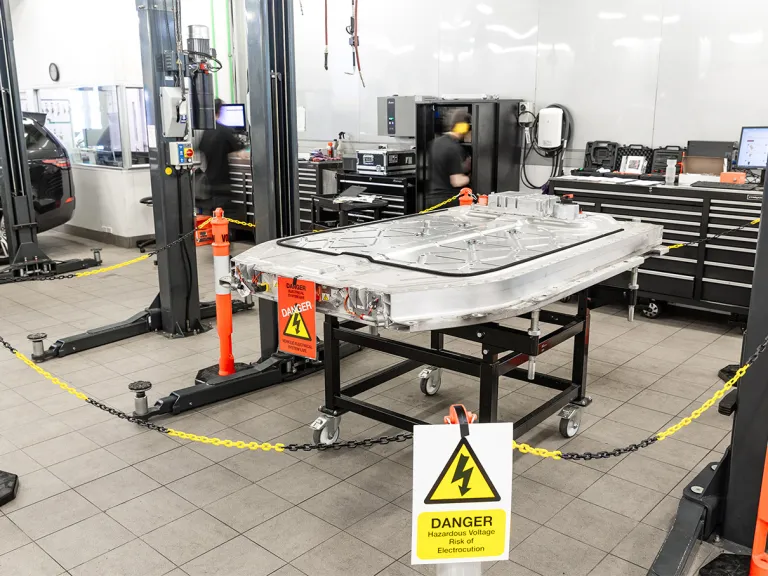
- Heavy Equipment Requirements: Removing a 1,500-lb battery tray requires heavy-duty hydraulic table lifts that standard 2-post shop hoists cannot handle.
- Proprietary Software Lockout: Manufacturers often restrict full diagnostic access behind expensive paywalls or proprietary scan tools.
Gas Truck vs. Heavy EV Repair Breakdown
| Repair Factor | Traditional Gas Truck | Heavy EV Pickup |
|---|---|---|
| Component Access | Open engine bay, modular parts | Dense packaging, tightly sealed trays |
| Safety Hazard | Low (flammable fluids) | High-voltage electrocution risk |
| Specialized Tools | Standard mechanic set (~$2,000) | Insulated tools & lifts ($15,000+) |
| Diagnostic Access | Standard OBD-II port | Gated cloud software / paywalls |
“The challenge is not whether EVs can be repaired. The challenge is whether independent shops can afford to repair them profitably.” — Technical Training Director, Automotive Service Association
Why Independent Shops Are So Vulnerable
Small, family-owned repair shops operate on tight profit margins, usually between 5% and 8%. When a single EV job stalls in a bay for weeks waiting for proprietary firmware updates, revenue plummets.
Can independent shops survive without access to OEM-level factory tools?
- Higher Liability: Insurance premiums spike up to 40% for shops handling high-voltage battery disassembly.
- Extended Bay Times: Jobs that take 2 hours on a gas truck can stretch into 12+ hours due to safety discharge protocols.
- Technician Shortage: Less than 5% of certified mechanics nationwide hold high-voltage certification.
What Happens When They Hit the Used Market?
This is where the real crisis unfolds for everyday consumers. When a second-hand heavy EV suffers a battery module imbalance or thermal cooling valve failure outside warranty, dealer quotes can easily exceed $12,000.
If independent mechanics are forced to decline these jobs, millions of used EV buyers could end up with undriveable financial paperweights.
Here’s a draft of my intro for the Silverado EV Trail Boss video.
— ChargePozitive ⚡️➕ (@ChargePozitive) August 4, 2026
What do you think so far?
Stay tuned for full video! https://t.co/j4RwrDYy4L pic.twitter.com/iGmvnRq2YF
Industry Response & Right-to-Repair Battle
Federal regulators and advocate groups are stepping up pressure on auto manufacturers:
Official Coverage & Portals: • Federal Trade Commission Right-to-Repair Portal • National Institute for Automotive Service Excellence (ASE) • Automotive Service Association (ASA) Official Site
Is the repair gap becoming the next big EV obstacle for used truck buyers?