
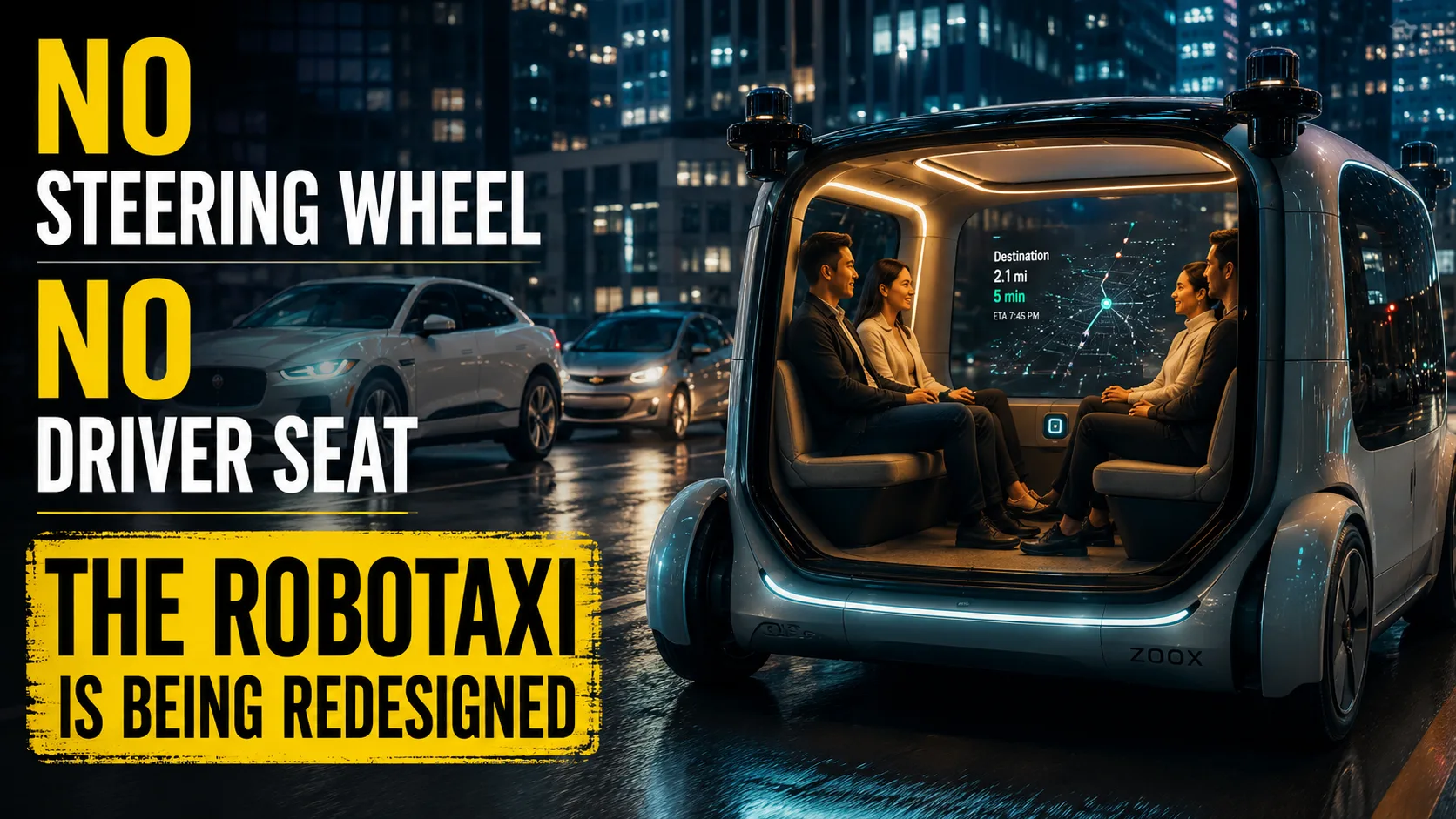
Amazon-backed Zoox has completely discarded the traditional car cabin, eliminating both the steering wheel and the driver’s seat.
With over 1,500 employees developing its custom-built autonomous technology across testing grounds spanning more than 3 major US cities, the company is gambling that riders want a brand-new type of transport.
Would you feel safer riding inside a familiar car with no driver, or a vehicle that was never designed for a human driver at all? Because robotaxi operators are racing not just to master autonomous driving, but to secure everyday passenger acceptance, this design gamble changes everything.
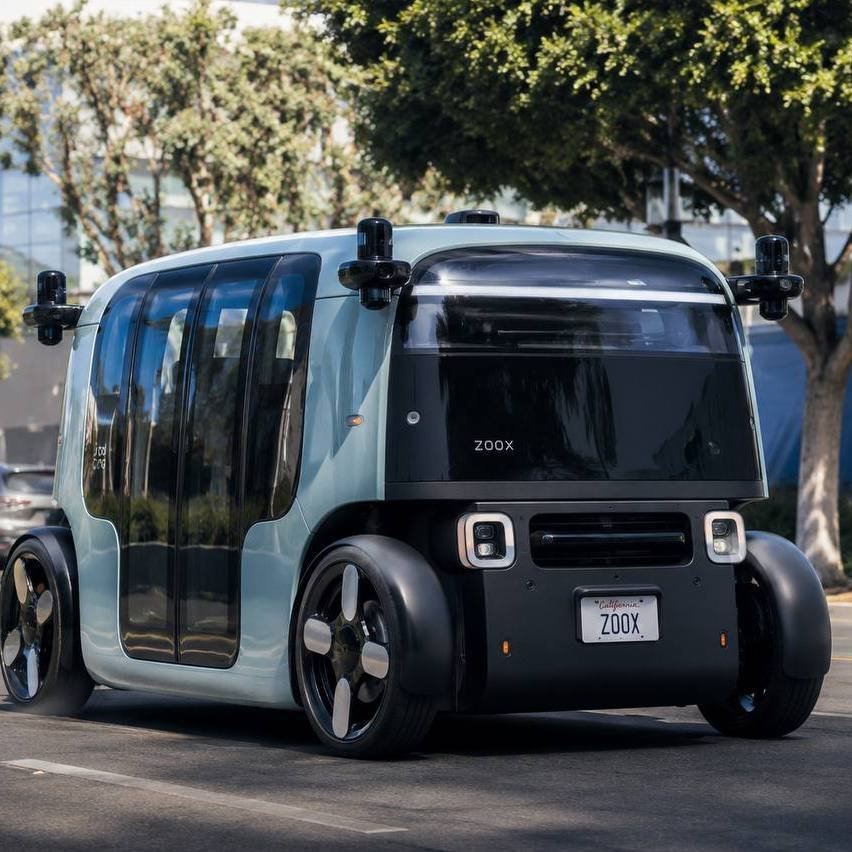
The Car Disappears
Zoox has removed every traditional control, overturning the standard cabin layout. Its robotaxi is built entirely from scratch for autonomous travel rather than adapted from a conventional passenger vehicle.
Autonomous vehicles are testing in multiple markets, leaving the industry with a major question: Should a robotaxi feel like a normal car without a driver—or like an entirely new type of transport? Zoox is betting on the second option.
That wager matters because passengers are not simply testing technology. They are paying for a ride, surrendering control, and deciding whether a machine-built cabin feels safe, comfortable, and trustworthy.
Retrofit Versus Reinvention
Waymo and Cruise have generally demonstrated autonomous driving through vehicles based on familiar consumer-car platforms. Waymo has deployed models such as the Waymo Jaguar I-PACE Fleet, while Cruise utilized modified Chevrolet Bolt vehicles.
- A forward-facing cabin.
- A conventional front and rear seating arrangement.
- Controls associated with human driving.
- A vehicle body originally designed around a human driver.
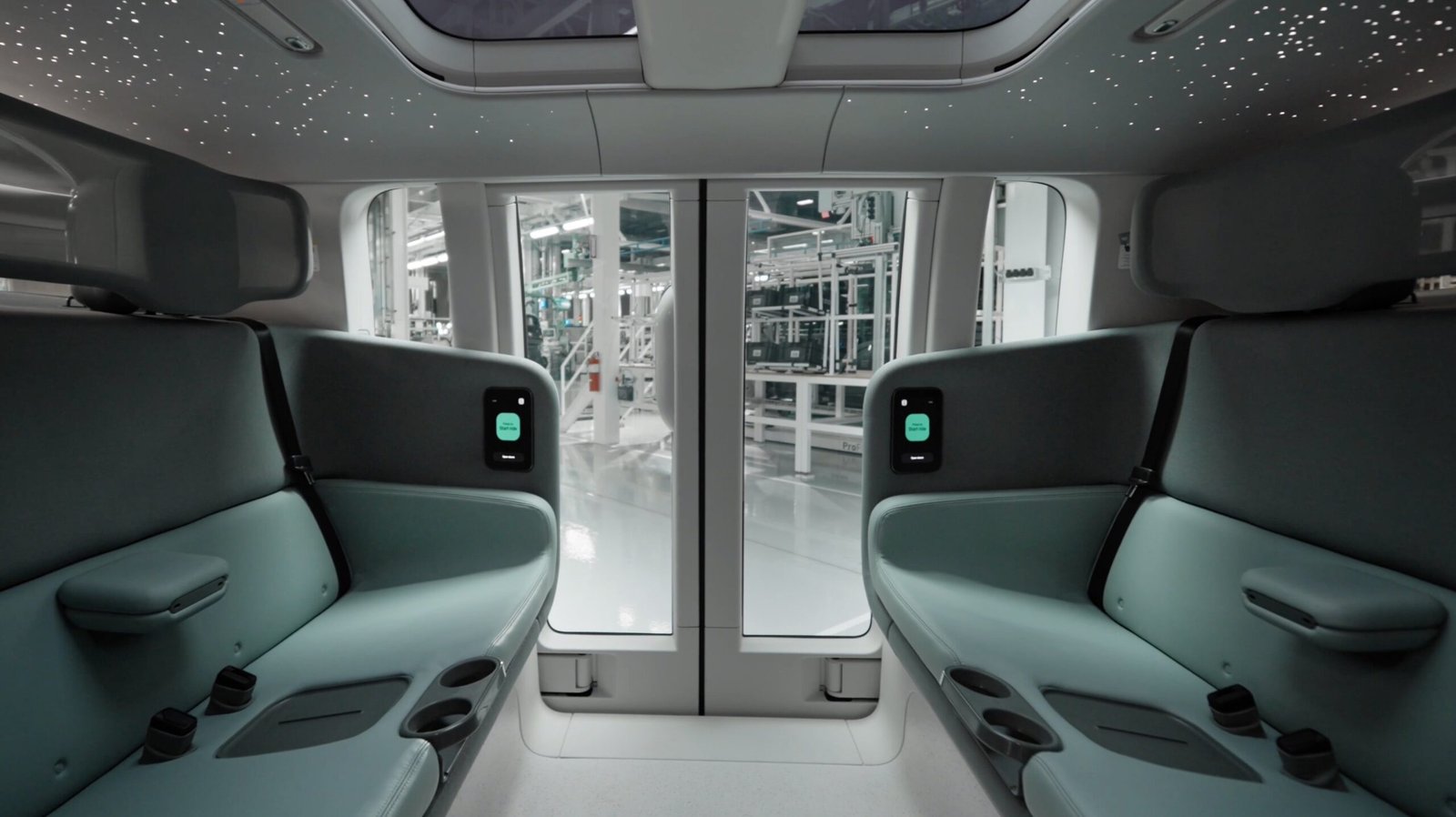
Zoox takes a different approach. Its vehicle is bidirectional, meaning it can travel in either direction without turning around. The cabin places passengers in facing seats, creating a layout closer to a carriage or lounge than a sedan.

Feature Comparison
| Feature | Zoox Pod | Waymo/Cruise-Style Retrofit |
|---|---|---|
| Vehicle origin | Purpose-built autonomous pod | Modified conventional vehicle |
| Seating layout | Face-to-face lounge seating | Mostly forward-facing |
| Driving controls | Zero steering wheels or pedals | Familiar cabin controls often remain |
| Design priority | Passenger movement and comfort | Autonomous operation within an existing platform |
Zoox treats the passenger cabin as the product. Retrofit strategies preserve more of the car passengers already know.
From Driver’s Seat to Passenger Space
A conventional car silently tells passengers how to behave. One person faces forward, someone sits behind the driver, and everyone shares a cabin organized around human driving.
Zoox removes that hierarchy. There is no privileged driver position, no dashboard to monitor, and no steering wheel reminding passengers a human should be in control. The result is a psychological reset.
Questions to Engage Readers
- Does a face-to-face cabin make autonomous travel feel more social—or more exposed?
- Will passengers relax faster when there are no driving controls, or feel less secure without them?
- When a ride costs money, do people judge comfort and trust more harshly than novelty?
The design could make short trips feel more communal. It could also create new questions about privacy, personal space, and how passengers summon help during an emergency.
Novelty Does Not Equal Trust
A free demonstration can make unusual technology feel exciting. A paid ride creates a demanding relationship: the passenger expects reliability, comfort, safety, and value every time.
That changes the meaning of Zoox’s unusual design. The missing steering wheel is a promise that the vehicle has been optimized around the customer rather than a driver.
| Passenger Expectation | What Zoox Must Prove |
|---|---|
| Safety | The vehicle responds predictably in complex traffic |
| Comfort | Face-to-face seating remains pleasant during long journeys |
| Privacy | Passenger data and cabin cameras are handled responsibly |
| Reliability | Pickup, routing, and drop-off work seamlessly |
The biggest challenge may not be teaching passengers that the robot can drive. It may be teaching them that they no longer need to think about driving at all.
According to research from the NHTSA Automated Vehicles Safety Guidelines, consumer trust remains the primary hurdle for widespread commercial robotaxi deployment.
What Each Design Signals
The difference between Zoox and retrofit competitors reflects two distinct strategies.
Retrofit vehicles reduce the distance between today’s car and tomorrow’s robotaxi. Passengers enter a recognizable vehicle, lowering the psychological barrier to adoption.
Zoox increases that distance deliberately. Its pod makes autonomy visible in every detail, from the symmetrical body to the carriage-style seating.
Strategic Trade-Offs
- Consumer EV Retrofit: Offers familiarity and an existing manufacturing ecosystem, but leaves a cabin organized around an absent driver.
- Dedicated Pod Design: Delivers better passenger packaging and a clear autonomous identity, but its unfamiliar shape may initially increase rider anxiety.
Why Purpose-Built Design Could Matter
A purpose-built robotaxi uses interior space more efficiently because engineers do not need to package steering columns, foot pedals, or traditional dashboards.
- More flexible passenger seating.
- Easier entry and exit.
- Dedicated storage for small bags.
- A consistent cabin experience across every ride.
However, a new vehicle architecture also brings significant challenges. Manufacturing scale, regulatory approval, insurance, and public acceptance determine whether the design becomes commercially viable.
Can the Cabin Win the Customer?
Zoox’s design helps passengers understand they are entering a new transport category. But clarity cuts both ways: the more visibly different the vehicle is, the more passengers scrutinize every movement and sound.
The company must create a calm, legible, and reassuring experience for passengers who may be nervous or traveling alone.
Expert Perspective
“The important question is not whether the vehicle looks futuristic. It is whether the design reduces passenger uncertainty at the moments when trust matters most.” —Dr. Sandra Vance, Urban Mobility and Human Factors Analyst at the Transportation Research Board
To review official vehicle specifications and developmental milestones, explore these authoritative resources:
- Zoox Official Technology Overview
- Waymo Autonomous Driver Documentation
- Autonomous Vehicle Safety Compliance via NHTSA
After years of testing, Zoox is taking the next step and getting ready to launch paid robotaxi rides.
— Bloomberg TV (@BloombergTV) August 5, 2026
CEO Aicha Evans discusses the company’s expansion plans across the US, and why it is focused on building a long-term transportation business https://t.co/Fun7JyazsS pic.twitter.com/AOb8dCCF2O
The Real Robotaxi Question
Zoox’s pod is not simply a car that learned to drive itself. It is an attempt to remove the physical assumptions of human driving from the passenger experience.
That makes the vehicle both its strongest asset and its biggest test. If passengers associate the unfamiliar cabin with comfort and reliable service, Zoox’s ground-up approach could win. If they associate it with vulnerability, the familiar retrofit may prove easier to trust.
The robotaxi war may ultimately be decided not by who removes the driver first, but by who makes passengers forget the driver was ever there.