
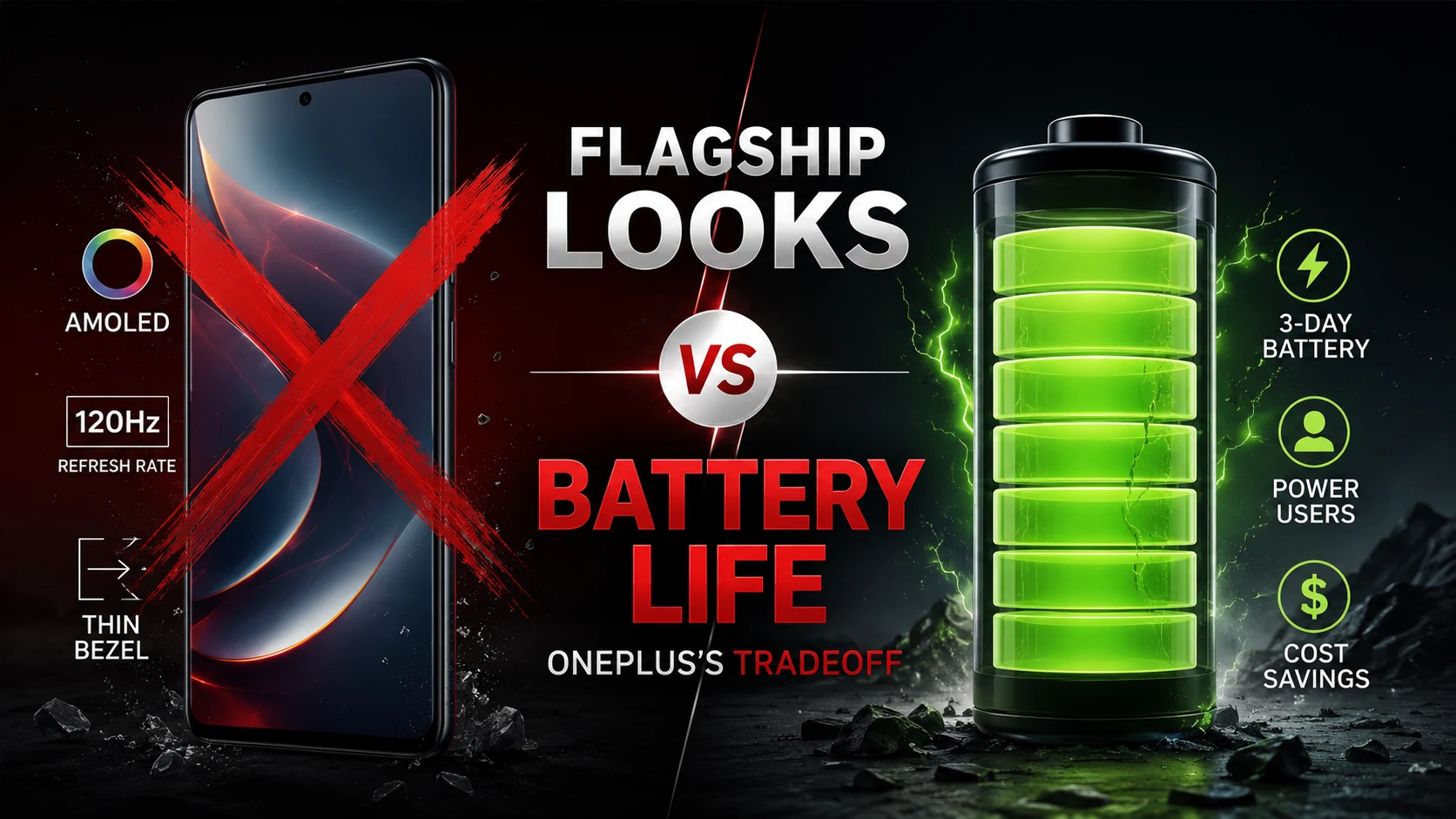
OnePlus is making a brutal tradeoff. As component costs rise and memory prices climb by over 20% year-over-year, the company is abandoning OLED/AMOLED display ambitions in its entry segment to pack in a staggering 7,000mAh to 8,000mAh silicon-carbon battery. But will buyers choose a device that lasts up to 2.5 days on a single charge over one with deeper blacks on paper?
This is not a compromise by accident. It is a calculated economic strategy designed to fight surging hardware costs while delivering the single feature budget users value most: unbreakable battery life.
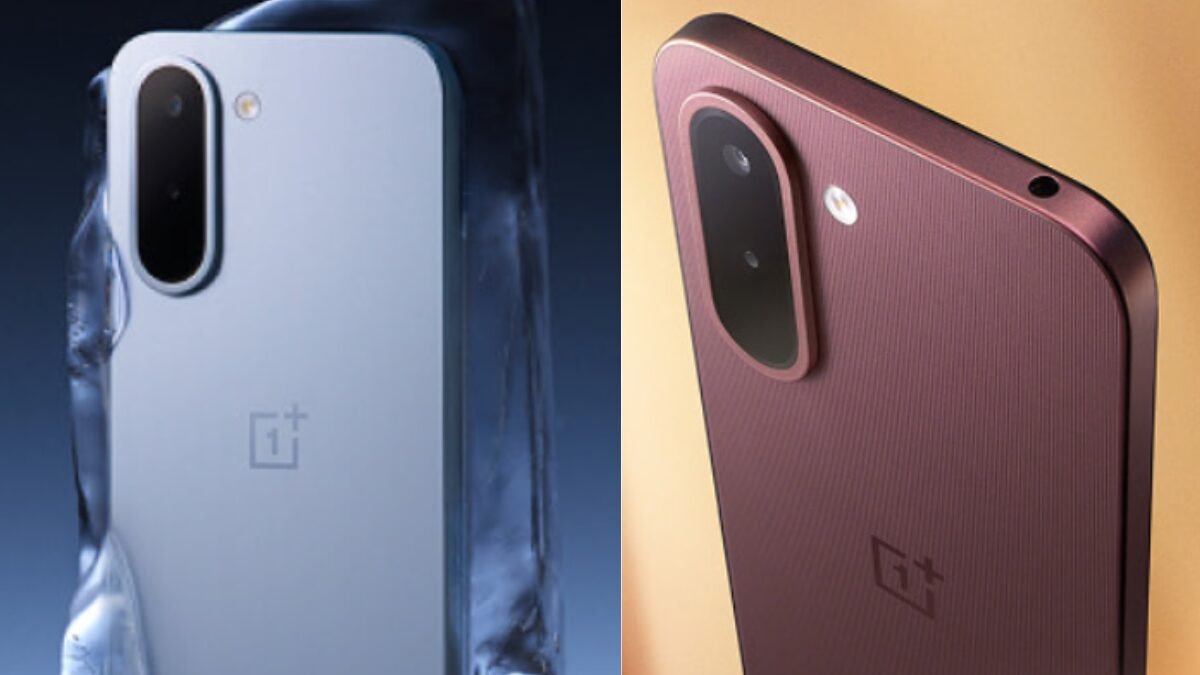
Will rivals follow suit, or will AMOLED remain a non-negotiable requirement for budget buyers?
Why OnePlus Is Repositioning
The budget smartphone market under ₹20,000 ($250) is feeling severe cost pressure. Display panel prices, mobile chipsets, and memory modules have steadily increased in cost, forcing smartphone manufacturers to make tough decisions about their bill-of-materials (BOM).
Instead of raising retail prices or cutting corners on build quality, OnePlus is shifting to an anti-flagship strategy. By ditching expensive flexible AMOLED panels, OnePlus frees up critical budget to integrate high-density silicon-carbon batteries and faster charging controllers.
- Cost Offset: Reallocating screen costs absorbs surging storage and processor prices.
- Marginal Utility: Most entry-level buyers prioritize multi-day battery over pixel density or absolute contrast ratios.
- Hardware Longevity: Silicon-carbon batteries maintain capacity longer over extended charge cycles.
“This is not a downgrade by accident. It’s an aggressive cost strategy designed to solve real-world range anxiety.”
What Specs Are Being Sacrificed
To achieve multi-day endurance without increasing retail prices, OnePlus is swapping out display specs that were previously considered mid-range staples.
| Feature Category | Standard Mid-Ranger | OnePlus Battery-First Approach |
|---|---|---|
| Display Panel | AMOLED / OLED | High-Brightness IPS LCD (120Hz) |
| Resolution | Full HD+ (1080p) | HD+ (720p) / Optimized 1080p |
| Battery Capacity | 5,000 mAh | 7,000 mAh – 8,000 mAh |
| Primary User Priority | Visual prestige & slim bezels | 2.5 to 3 days of heavy usage |
While purists may bemoan the loss of AMOLED contrast ratios, an IPS LCD running at 120Hz consumes significantly less power when paired with lower-resolution graphics rendering.
Why Battery Matters More Than Resolution Here
Would you trade AMOLED for three extra days of battery life? For gig workers, commuters, students, and power users who spend long hours away from wall outlets, the answer is increasingly yes.
- Reduced Charging Frequency: Charging your phone twice a week instead of daily reduces overall battery degradation over two years.
- Resource-Heavy Use: Navigation apps, continuous 5G streaming, and background delivery services drain batteries far faster than standard standby.
- Thermal Efficiency: Lower-density LCD displays run cooler during prolonged screen-on sessions, reducing overall processor throttling.
Is a slightly punchier display screen still worth paying extra for if your phone dies by dinner time?
A 120Hz Refresh Rate built for everyday responsiveness. #OnePlusN6x
— OnePlus India (@OnePlus_IN) July 27, 2026
Get notified: https://t.co/vxFOKfyrc3 pic.twitter.com/zNkhqQgt45
Who This Phone Is Really For
The target market for this hardware pivot isn’t tech enthusiasts hunting for flagship-killing display specs. It is explicitly tailored for pragmatic buyers who demand absolute reliability.
- Field Workers & Drivers: Users relying on continuous GPS, brightness, and mobile data for 10+ hours a day.
- Budget Gamers: Mobile gamers who care more about continuous 120Hz frame rates than deep color saturation.
- Travelers & Commuters: Anyone who frequently forgets their power bank or travels long distances without charging access.
According to product breakdowns on GSMArena and official specifications via 91Mobiles, upcoming devices like the OnePlus N6x pack up to 7,000mAh to 8,000mAh batteries paired with 120Hz panels to hit sub-₹20,000 price points. Meanwhile, industry analysis from TelecomTalk confirms that multi-day endurance is rapidly becoming the main battleground for budget hardware.
What Rivals Will Do Next
OnePlus’s battery-first bet challenges competing brands like Realme, Xiaomi, and Samsung, who have spent years pushing AMOLED panels into budget tiers.
If buyers overwhelmingly prefer three-day battery life over vibrant displays, expect rivals to follow suit by paring back panel costs in favor of 7,000mAh+ silicon-carbon cells.
In the budget arena, endurance is taking over as the ultimate feature—and display specs are taking a back seat.