
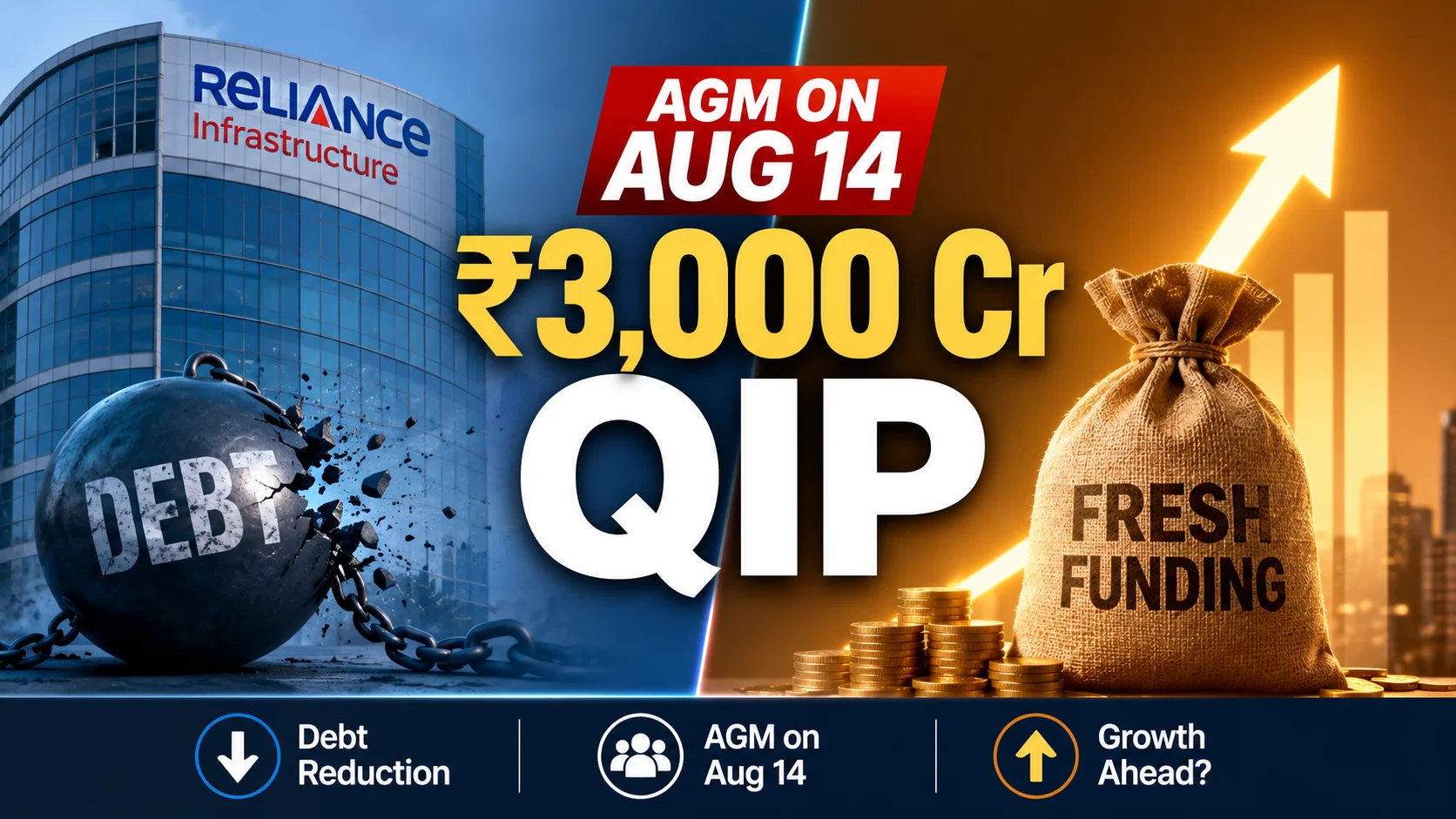
Reliance Infrastructure is jolting equity markets as its upcoming Aug 14 AGM could set the stage for a ₹3,000 crore QIP proposal. After trimming external debt from ₹3,831 crore down to ₹475 crore, can this fresh capital raise shake off lingering liability pressures for good?
How much shareholder dilution is acceptable if the ultimate goal is long-term balance sheet stability? This critical vote pressures retail investors to closely weigh corporate governance against capital expansion.
What the AGM May Decide
Shareholders will gather on Aug 14 to vote on enabling authorizations for raising capital up to ₹3,000 crore through a Qualified Institutions Placement (QIP) or other eligible securities. Management seeks permission to issue fresh equity to institutional buyers to fund growth and fortify cash reserves.
- Capital Approval: Authorization to issue equity or convertible instruments aggregating up to ₹3,000 crore.
- Institutional Allotment: Placement targeted at Qualified Institutional Buyers (QIBs) to boost institutional holdings.
- Director Re-appointments: Voting on corporate board composition and key governance resolutions.
Can the QIP meaningfully reduce debt pressure? Replacing expensive borrowings with fresh equity helps lower interest costs, though it increases total share count.
Why the ₹3,000 Crore QIP Matters
The proposed ₹3,000 crore QIP represents a major liquidity event following previous preferential issues that successfully raised ₹3,014 crore. Capital infusions directly expand the net worth base from ₹9,000 crore to over ₹12,000 crore.
| Key Parameter | Pre-Fundraise Status | Post-QIP Target |
|---|---|---|
| External Debt | Decreased from ₹3,831 Cr to ₹475 Cr | Targeted zero standalone debt |
| Net Worth | ~₹9,000 Crore | ~₹12,000+ Crore |
| Capital Route | Preferential Allotment | Institutional QIP |
Will retail shareholders face dilution if the issue is fully subscribed? Fresh equity issuance expands total share capital, which slightly reduces individual retail ownership percentages while improving solvency.

Debt Servicing and Balance-Sheet Pressure
Reliance Infrastructure has systematically settled obligations with major financial institutions like ICICI Bank, Edelweiss ARC, and Union Bank. Lowering finance expenses allows the engineering and infrastructure giant to redirect operating cash flows toward active projects.
“De-leveraging through equity issuance provides necessary balance-sheet flexibility, turning legacy debt traps into sustainable operational cash flows.” — Senior Capital Markets Analyst
What Retail Investors Should Watch
Retail market participants need to evaluate both immediate pricing volatility and long-term capital allocation plans. Management commentary during the AGM will clarify how proceeds will be divided between working capital and new ventures like electric vehicles.
- Dilution Impact: Compare the issue price against current market valuation to gauge pricing fairness.
- Use of Funds: Verify how much capital goes toward growth projects versus liability clearance.
- Institutional Demand: Track which global and domestic funds participate in the QIP book-building process.
Does this AGM mark a real turnaround, or just a financing stopgap? Sustained profitability and execution in power, roads, and defense sectors will determine long-term stock trajectories.
#BTInfrastructureSummit | @sumant_sinha, Founder, Chairman & CEO, ReNew (@ReNewCorp), talked about how expanding electrification across transportation, steel, cement, and industrial heating will be equally important for strengthening energy security and achieving India’s… pic.twitter.com/qUbkoa3wzW
— Business Today (@business_today) July 31, 2026
Possible Upside and Risks
A strengthened balance sheet unlocks credit rating upgrades and opens doors for bidding on larger government infrastructure tenders. However, execution delays or regulatory disputes could still weigh on profit margins.
Official Disclosures & Resources: • BSE India Reliance Infrastructure Corporate Portal • NSE India Company Filings Page • Reliance Infrastructure Investor Relations Desk