

SpaceX is about to do something it has never done before — and investors are bracing for the reveal. The company’s first public earnings report could expose the true scale of Starlink revenue, launch economics, and the profitability behind one of the most valuable names in tech.
With Wall Street targeting $6.82 billion in Q2 sales following a $4.7 billion Q1 revenue print, why has the market had to guess for so long? The answer may reset expectations for space stocks, private valuations, and the future of satellite internet. This is the kind of report that can surprise, reframe, and ignite investor debate.
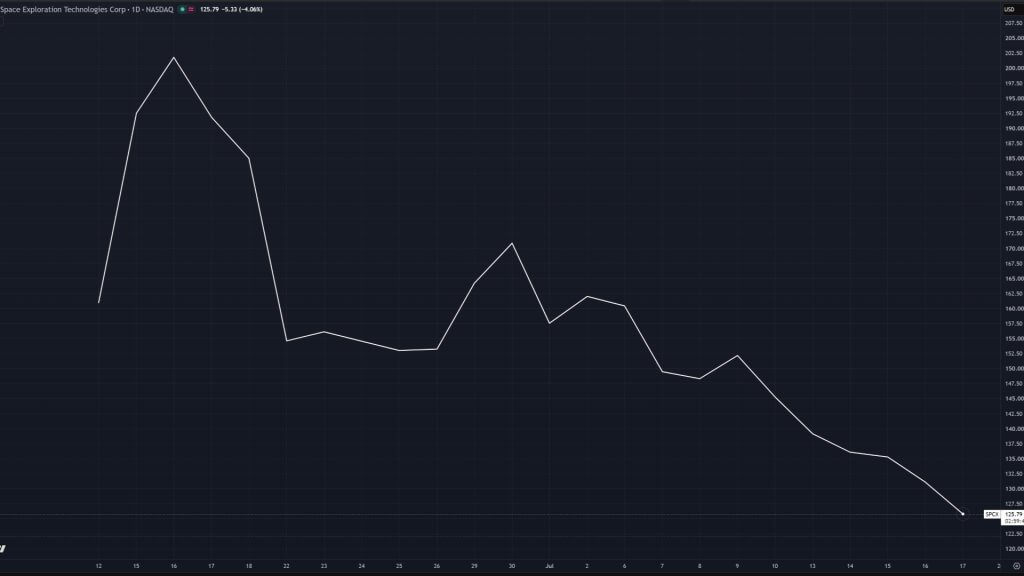
Why This Report Matters Now
For years, retail and institutional investors relied on leaked internal memos, secondary share tender offers, and rough satellite estimates to value SpaceX.
Now, following its historic public listing, Wall Street gets its first official look at audited financials. This landmark release provides an unprecedented window into the operational realities of a company valued at over $1.4 trillion.
- Market Validation: Tests whether space infrastructure can generate tech-like operating margins.
- Valuation Impact: Sets a clear baseline for competing space startups and aerospace giants.
- Transparency Era: Moves the conversation from private market speculation to public quarterly accountability.
The Numbers Investors Will Watch
| Metric | Why It Matters | What Readers Should Look For |
|---|---|---|
| Starlink Revenue | Shows whether satellite broadband is scaling profitably | Growth rate beyond $1.2B baseline, churn, and ARPU |
| Launch Costs | Indicates efficiency of core Falcon and Starship operations | Margin improvements driven by rapid booster reusability |
| Gross Margin | Reveals underlying profitability as subscriber count grows | Expanding margins vs. hardware subsidy pressures |
| R&D Spend | Signals future capital allocation into next-gen tech | Heavy spending on Starship, lunar payload, and AI compute |
| Cash Flow | Demonstrates if top-line revenue converts to cash strength | Free cash flow inflection toward positive territory |
Starlink: The Biggest Wildcard
Is Starlink becoming a real earnings engine, or is it still primarily a high-growth bet?
While rocket launches built the SpaceX brand, Starlink generates the recurring revenue required to fund deep-space ambitions. Analysts will dissect whether subscriber additions in enterprise, aviation, and maritime sectors are outpacing consumer hardware subsidies.

Launch Costs and Margin Pressure
Are launch costs falling fast enough to support aggressive planetary scale?
SpaceX’s reusability model has long promised unmatched cost advantages over legacy defense contractors. Investors will scrutinize whether higher launch cadence translates into higher net margins, or if capital expenditure for next-generation Starship development eats up operating income.
“The real story isn’t whether SpaceX grows — it’s whether it can convert unmatched technical advantage into durable margin expansion.” — Aerospace Equity Analyst
Three Investor Scenarios
- Bull Case: Starlink growth beats estimates, launch economics improve significantly, and market confidence pushes shares higher.
- Base Case: Strong top-line revenue growth meets consensus targets ($6.82B), but heavy reinvestment keeps net margins tight.
- Bear Case: Heavy capital burn across deep-space projects and AI infrastructure draws scrutiny over near-term profitability.
$SPCX – SPACEX FACES LOCK-UP SELLING PRESSURE
— *Walter Bloomberg (@DeItaone) August 3, 2026
SpaceX shares are under pressure as insider lock-up expirations begin on August 6.
Around 20–30% of locked shares will become eligible for sale initially, with staggered unlocks lifting tradable shares to roughly 40% by December…
The Bigger Question for Tech Investors
Can SpaceX balance aggressive frontier expansion with public-market financial discipline?
Market Coverage & Official Filings
Official Portals & Analysis: • SEC EDGAR Public Database • SpaceX Official Investor Relations • Nasdaq Market Activity & Filings • Bloomberg Technology Market Insights