
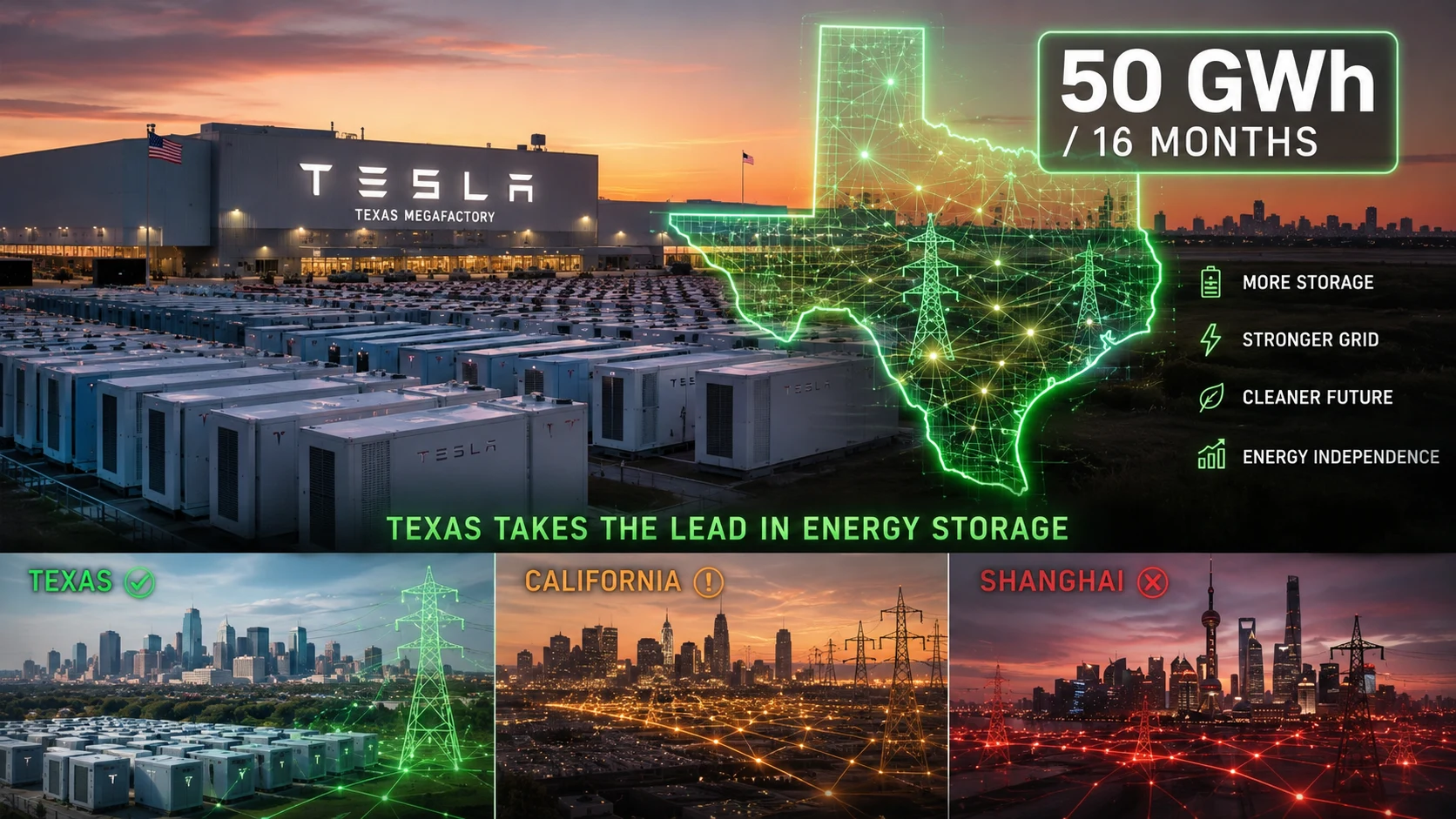
Tesla’s Texas battery operation has stunned the storage industry, reportedly producing 50 gigawatt-hours in just 16 months.
That massive output matches or exceeds the standalone design capacity of major facilities in places like Lathrop, California, or Shanghai—but how much electricity can that actually support? As heat waves, renewable-energy bottlenecks, and grid instability intensify, the race to build batteries is becoming a race to protect the power system.
The figure represents more than factory scale. It raises a larger question: Can faster battery manufacturing solve the storage shortage before unreliable grids become a bigger economic and public-safety threat?
The 50 GWh Question
A battery’s gigawatt-hour capacity measures how much energy it can store, while gigawatts describe how quickly it can deliver that energy. Fifty gigawatt-hours is therefore a storage measure—not a single fixed amount of electricity supplied to homes.
| Measure | What it means |
|---|---|
| 1 gigawatt | Power delivered at a specific moment |
| 1 gigawatt-hour | One gigawatt delivered for one hour |
| 50 gigawatt-hours | Theoretical stored energy capacity before accounting for losses, operating limits, and reserve requirements |
| Grid value | Depends on duration, location, discharge rate, and connection to transmission infrastructure |
Fifty GWh might support 5 GW for 10 hours, or 10 GW for 5 hours, before system losses and reserve constraints are considered.
Question for readers: Is the most important number the factory’s annual output—or how much of that storage can reach the grid when demand peaks?
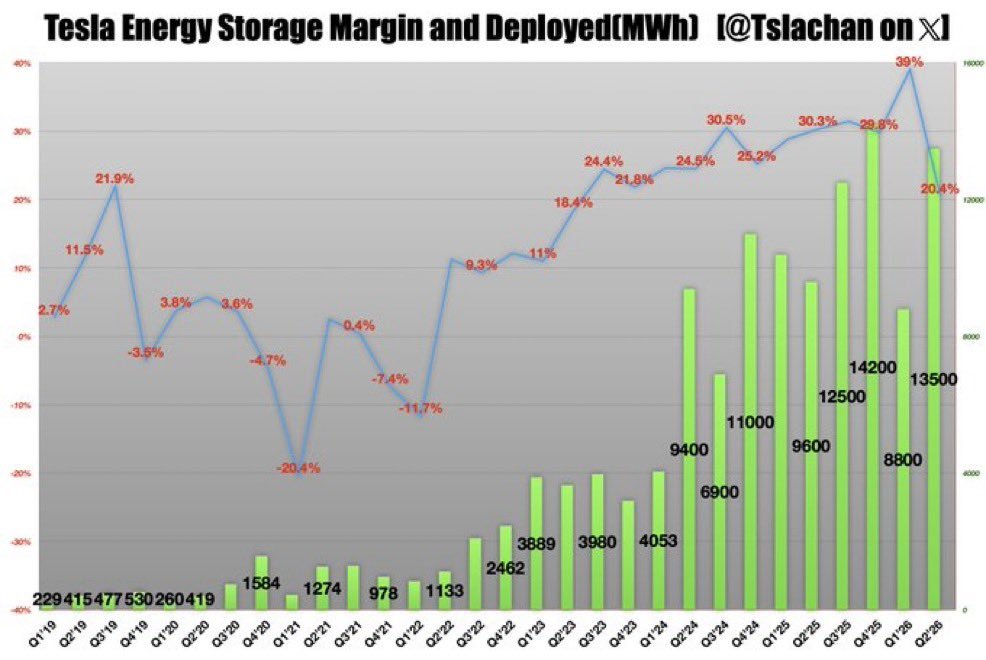
Why Texas Matters
Texas has one of the world’s largest interconnected electricity markets, but its grid faces sharp demand swings, extreme weather risks, transmission constraints, and rapidly changing renewable generation. Battery storage can respond faster than conventional power plants, absorbing electricity when supply is abundant and releasing it when demand rises.
- Store excess solar power during midday.
- Discharge electricity during evening demand peaks.
- Respond rapidly to sudden changes in wind generation.
- Provide backup capacity during equipment failures.
- Reduce renewable-energy curtailment.
- Support local reliability when transmission lines are constrained.
The twist: More batteries do not automatically mean a more reliable grid. The projects must be installed in the right locations, connected to transmission, maintained properly, and operated under sound market rules.
From Factory Output to Grid Impact
A strong article should separate manufacturing scale from deployed storage. Batteries produced in Texas may be sold to utilities, commercial customers, or projects outside the state, meaning factory output does not equal immediate Texas grid capacity.
| Question | Why it matters |
|---|---|
| How many batteries were manufactured? | Shows industrial capacity |
| Where were they installed? | Determines regional grid benefit |
| How long can they discharge? | Indicates whether they address short peaks or longer shortages |
| Who operates them? | Determines market and reliability value |
| What power source charges them? | Affects emissions and clean-energy impact |
The crucial distinction is this: manufacturing speed can reduce the global storage bottleneck, but only deployment turns batteries into grid infrastructure.
Texas Versus California and Shanghai
Frame the comparison around production speed, factory design, supply chains, and market demand, rather than presenting it as a simple winner-takes-all contest.
- Texas: Rapid scale-up, proximity to a large U.S. electricity market, and growing demand for grid storage.
- California: Mature clean-energy market, large solar fleet, and urgent need for evening peak storage.
- Shanghai: Access to China’s battery ecosystem, large-scale manufacturing networks, and export capacity.
- Global market: Increasing demand for batteries that can balance renewable generation and replace expensive peaking power.
Cliffhanger: If Texas is winning on speed, the next contest is whether its batteries can be deployed quickly enough to change grid reliability.
The Storage Bottleneck
Renewable power is often produced when demand is low: solar generation peaks during the day, while electricity consumption often rises in the evening. Without sufficient storage or transmission, clean electricity can be curtailed, forcing grid operators to rely on fossil-fuel generation or costly market purchases.
- More renewable generation: Solar and wind projects are being added faster than some grids can absorb them.
- Higher electricity demand: Data centers, manufacturing, cooling, and electrification are increasing load.
- Slow infrastructure expansion: Transmission lines and large power plants can take years to plan and build.
Battery storage offers speed and flexibility, but it is one part of a broader solution that also includes transmission, demand response, efficiency, and better grid planning.
Expert Perspective
“Does rapid battery manufacturing meaningfully improve grid reliability, or is deployment and transmission still the limiting factor?” — Energy-Storage Systems Analyst
According to leading market tracking from the U.S. Energy Information Administration, utility-scale battery storage has emerged as the fastest-growing segment of modern power infrastructure, though matching supply with regional transmission lines remains a complex hurdle.
Megapack 3 is officially rolling off the line at our newest Megafactory in Brookshire, Texas! The factory went from groundbreaking to operation in just 16 months & has a designed capacity of 50 GWh/year dedicated to Megapack 3 pic.twitter.com/PJTyboJCcp
— Tesla Megapack (@Tesla_Megapack) August 6, 2026
What Could Go Wrong?
A credible news article should address limitations rather than treating the production figure as a guaranteed grid solution.
- Factory-output uncertainty: The 50 GWh figure may refer to announced capacity, cumulative production, or a company estimate.
- Deployment delays: Batteries can remain in inventory or wait for project construction.
- Grid interconnection queues: Storage projects may face lengthy approval processes.
- Supply-chain exposure: Battery minerals, components, and manufacturing equipment remain strategic constraints.
- Degradation: Batteries lose usable capacity over time and require careful management.
The story becomes stronger when it asks not only how fast Tesla can build batteries, but whether the grid can absorb them.
Resources
To review official corporate milestones, performance data, and grid standards, explore these authoritative resources: