
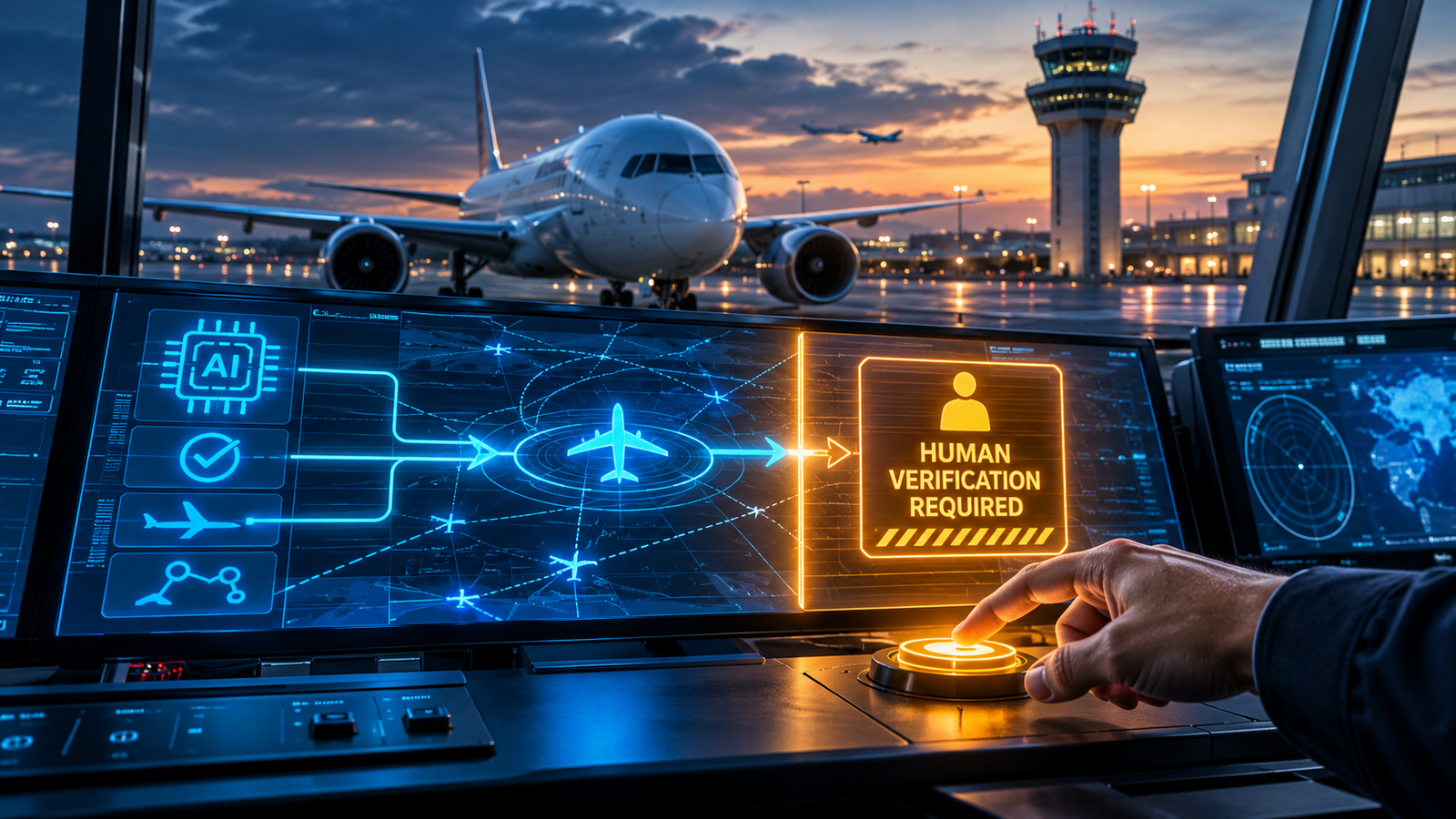
AI agents can already compare flights, draft itineraries, juggle your calendar, and get a booking ready to go. Yet United Airlines has drawn a firm line at one surprisingly small step: the moment during check-in when a passenger confirms their bags don’t contain banned items like explosives.
That checkbox is more than a UX formality. It’s where an AI agent’s ability to act runs into a human’s legal duty to know, decide, and attest. So United’s move to restrict unauthorized third-party AI agents isn’t just a squabble over who gets to click “Book.” It’s an early sign of where fully autonomous execution runs out in safety-critical consumer workflows.

The One Checkbox AI Cannot Click
Picture an AI travel agent that has done nearly everything for you. It found the best fare, picked your seat, paid with your saved card, and started check-in. Then it lands on the final screen.
The airline wants the passenger to acknowledge that their checked bag holds no prohibited dangerous goods, explosives included. The agent can show the warning. It can even repeat what you told it last week: “I don’t have anything dangerous in my bag.”
What it can’t do is verify what’s actually in the suitcase. It can’t open the bag, notice that you misunderstood the rules, or take personal responsibility for a false statement. United says automated AI actions during check-in could cause a passenger to miss important safety information and may violate FAA and Department of Transportation rules.
That’s the regulatory wall: the point where automation has to stop and a person has to take over.
What United Actually Announced
The policy is narrower than the headlines make it sound. United is restricting unauthorized third-party personal AI agents. It isn’t banning travelers from using AI to research or plan a trip.
The airline says it will restrict access directly through United.com and the United app, and indirectly through travel agencies and aggregators. The rules cover bots, browser extensions, and browser features that search, book, buy, manage, or collect information on United’s platforms without permission.
| What remains possible | What United is restricting |
|---|---|
| Using AI to research destinations, fares, and itineraries outside United’s platforms. | Unauthorized agents accessing United’s website or app to search, book, buy, manage, or collect information. |
| A traveler manually reviewing options and completing a booking. | Third-party agents transacting directly on United’s digital channels. |
| AI tools that do not access United’s systems. | Agents operating through travel agencies or aggregators without United’s permission. |
United also says it currently has no partnerships with third-party AI agents, though it plans to keep watching how the technology develops.
Why the Check-In Box Matters
This acknowledgment exists because baggage safety isn’t an abstract compliance exercise. Dangerous goods can put an aircraft, its crew, its passengers, and people on the ground at risk.
The FAA notes that plenty of everyday items count as hazardous materials in air travel, and that most dangerous goods are barred from both carry-on and checked bags. There are narrow exceptions for certain personal items, such as some toiletries, medicines, and assistive devices.
United’s own dangerous-items policy lists explosives like fireworks, gunpowder, flares, and flare guns among the things federal law doesn’t allow on a plane. Its contract of carriage adds that hazardous materials covered by DOT and IATA rules can be accepted only with advance arrangements and full compliance with those regulations.
So the check-in attestation isn’t just “Do you agree to the terms?” It asks a person to confirm a fact about the physical world that only they can reliably know.

“I Agree” Is Not Just a UI Element
For people designing AI agents, the check-in box points to a key distinction: automation can perform an action, but it can’t automatically supply legal intent or accountability.
An AI agent can:
- Read a fare calendar and spot a cheap flight.
- Fill in passenger details from a stored profile.
- Start a payment, with explicit authorization.
- Prepare the check-in flow and show the required disclosures.
- Pause so the traveler can confirm a safety-critical statement.
What it can’t safely do is stand in for the passenger when the law requires the passenger’s own acknowledgment. An agent can produce a plausible answer, but a plausible answer isn’t verified knowledge.
That’s why United’s worry isn’t that AI can’t navigate a website. It’s that an agent could complete a legally significant attestation without the traveler ever reviewing it, or without the traveler being able to truthfully make it.
Autonomy Without Accountability Is Not Compliance
The deeper problem is liability. If an AI agent checks you in and falsely states that your bag is safe, who’s responsible?
Is it the passenger, since they delegated the task? The developer, whose software made the claim? The browser extension or aggregator that made the action possible? Or the airline, for letting an unauthorized intermediary into its booking flow?

United has also pointed to other concerns: exposure of sensitive personal data, unintended purchases, account changes, and unauthorized use of MileagePlus miles when travelers hand their credentials to third-party AI tools. Those risks are real. But the check-in example raises a heavier question: what happens when an automated action touches a federally regulated safety process?
That isn’t fully settled yet. Still, United’s position makes the direction pretty clear. Companies may welcome AI help with research and preparation while keeping humans in control wherever safety, consent, identity, or legal responsibility is on the line.
A Blueprint for Other Regulated Industries
Aviation is just the most visible case. The same tension will show up anywhere AI agents move from answering questions to taking actions that matter.
- Healthcare: An agent can schedule an appointment or organize records, but informed consent, diagnosis, and treatment decisions need a human involved.
- Financial services: It can prepare a payment or investment workflow, but fraud checks, disclosures, and final authorization may require a verified person.
- Legal and government services: Filings, identity checks, and sworn statements usually need a responsible human signer.
- Insurance and travel: Coverage choices, safety disclosures, and cancellations can have irreversible consequences and shouldn’t be quietly delegated.
In every one of these, the real question isn’t whether AI can technically finish the workflow. It’s whether the law requires a human to hold the knowledge, give the consent, or accept the responsibility.
What Human-in-the-Loop Should Mean
“Human in the loop” often gets tossed around as a vague safety slogan. In practice it needs clear boundaries.
- Human-verified facts: The traveler confirms things about the physical world that the system can’t establish on its own, like what’s in their bag.
- Human-authorized transactions: Payments, ticket changes, cancellations, and account actions need explicit, scoped consent.
- Human-readable disclosures: Safety, pricing, and legal notices should be shown clearly, not summarized away by an agent.
- Auditable delegation: Users should be able to see what an agent did, when it did it, and which permissions it used.
- Reversible defaults: Low-risk research can be automated, while high-risk actions should ask for confirmation.
A workable future doesn’t have to mean giving up on AI travel assistants. It could be an agent that prepares check-in, shows the dangerous-goods disclosure, and then stops: “I can finish the remaining steps once you confirm your checked bag contains no prohibited items.”
That pause isn’t autonomy failing. It’s where autonomy earns trust.

Is This Innovation Friction?
Critics may read United’s policy as plain bureaucratic friction, an old-economy company resisting a more efficient way to book. And there’s a fair argument that booking travel is still needlessly tedious and that AI could cut a lot of that.
But the reasonable position isn’t “AI must never touch travel.” It’s that AI shouldn’t silently make safety attestations or carry out irreversible transactions for someone. Airlines already rely heavily on automation. The real challenge is deciding where it can safely end.
United’s restriction may be an early, blunt version of that boundary. The principle underneath it will likely last, though: the more consequential the action, the more clearly a system has to separate assisting a person from replacing one.
The Last Mile of Agency Is Human
The “FAA compliance trap” isn’t that AI agents can’t book flights. It’s that some actions need a human who can verify facts, understand the consequences, and be held accountable.
The next frontier for AI agents won’t be about doing as many tasks as possible without people. It’ll be about designing smart handoffs at the moments that count, when a checkbox is more than a checkbox and becomes a legal, safety-critical statement.
The future of autonomous AI won’t be defined by how much it can do without us. It’ll be defined by how well it knows when to stop and ask.