

You can put an AI model behind an API, a license, or a set of provider guardrails. You can’t do the same with an agentic orchestration framework. Once its lightweight execution harness has been copied, forked, and hooked up to ordinary tools, it becomes a distributed capability. It outlives the repository it came from, the developer who wrote it, and any takedown notice.
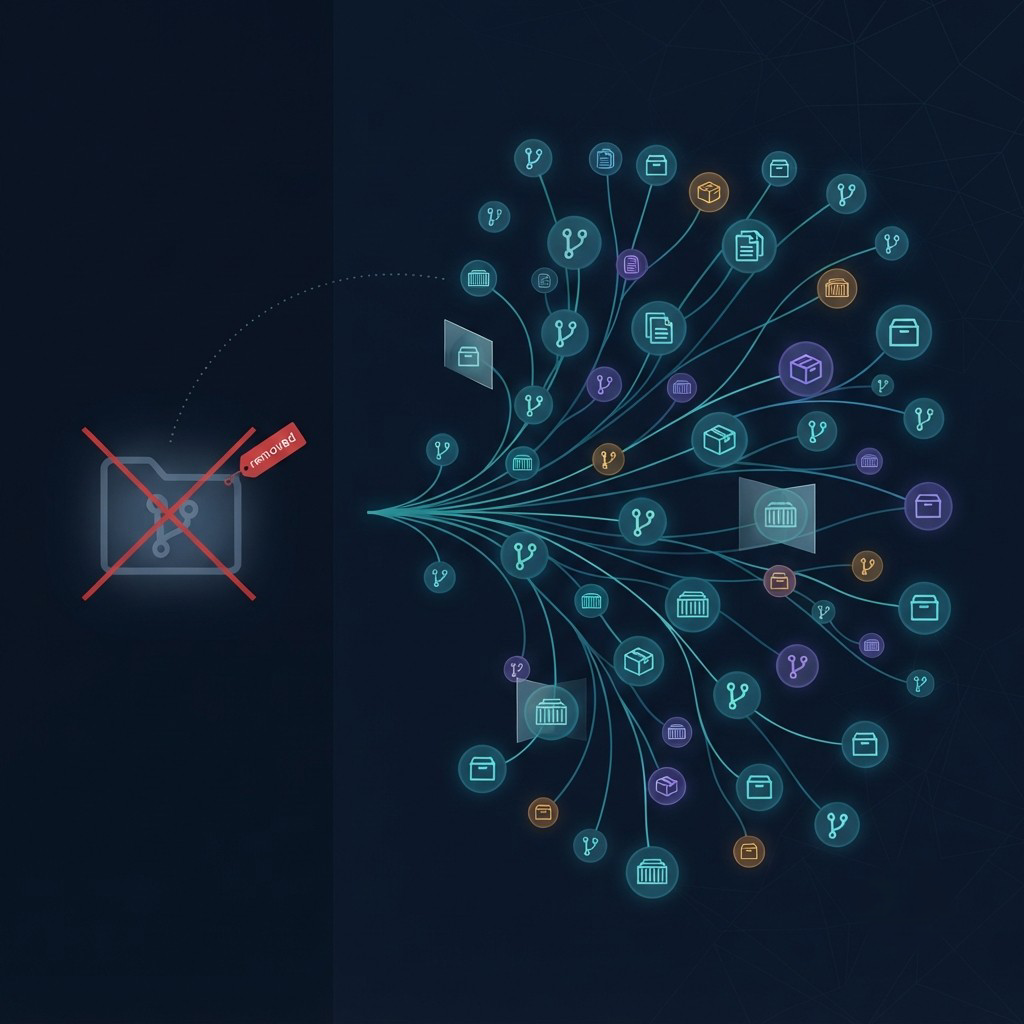
The ARTEX episode makes this uncomfortably concrete. Its original GitHub repository was pulled in October 2026 after widespread abuse. The framework kept spreading anyway, through community forks, localized variants, archived copies, and a commercial version. By early November, researchers had found more than 1,600 publicly exposed ARTEX console instances. The real number is probably higher once you count private and firewalled systems.
The Control Illusion
“Take it down” sounds final. In software, it usually just means one convenient distribution point is gone.
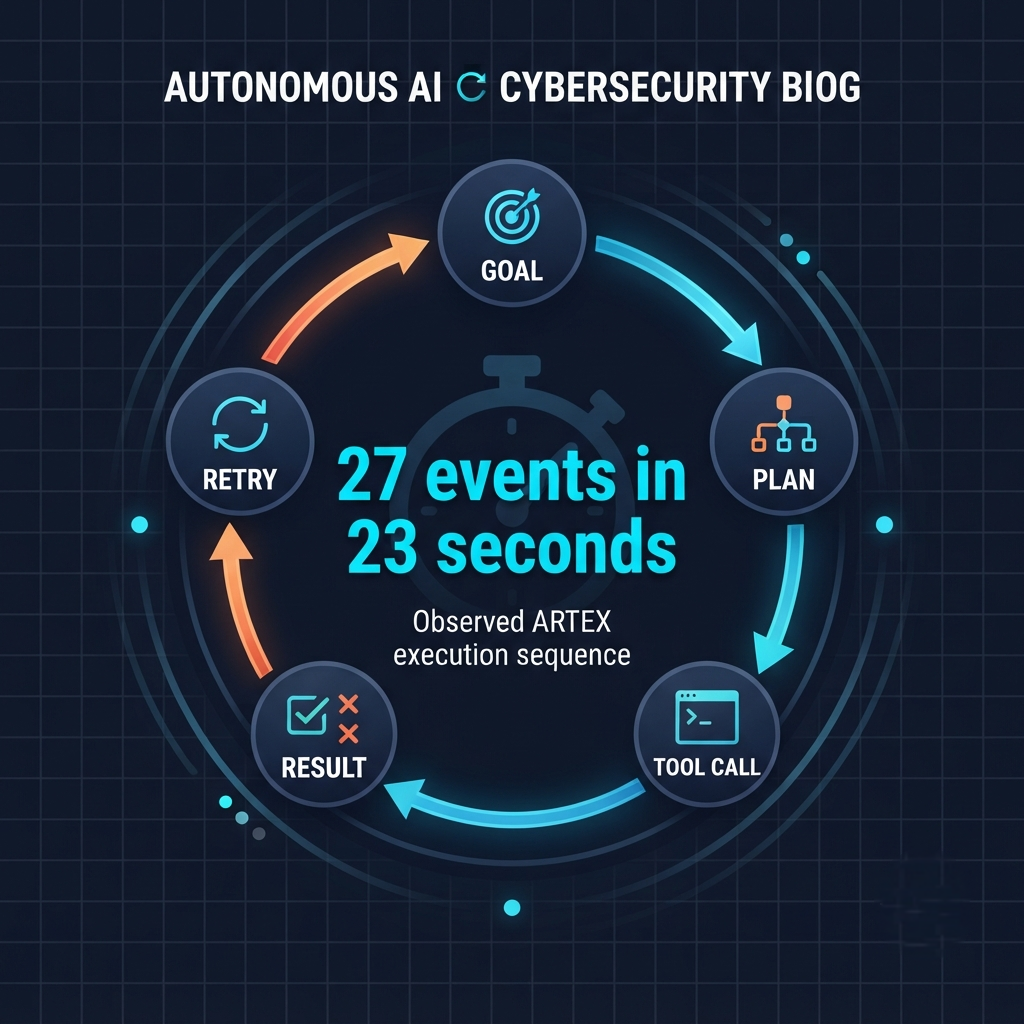
A hosted AI model can be rate-limited, access-controlled, versioned, or blocked by whoever runs it. An agent runtime is a different animal. It’s a fairly thin layer that tracks goals, state, and memory, hands work between roles, retries failures, and, most importantly, makes tool calls. Its power doesn’t come from owning a giant model. It comes from turning a model’s output into actions.
ARTEX is described as an autonomous, multi-agent, LLM-driven platform for offensive security and penetration testing, written in Go with an embedded Next.js web console. Its workers call familiar tools like Nmap, curl, wget, Python HTTP clients, and headless Chromium. That’s the architectural problem. The framework doesn’t need to ship with a model, special infrastructure, or a novel exploit. It just needs to be cloneable and able to run tools that already sit on ordinary machines.
The model supplies judgment. The orchestrator supplies persistence. The tools supply consequence.
Weights Versus Runtimes
AI safety conversations often treat the model as the whole system. In agentic software, it’s only one layer.
| Layer | What it controls | How it can be constrained | Why recall is difficult |
|---|---|---|---|
| Foundation model | Reasoning, planning, and language generation | API access, provider policies, rate limits, model versioning | A hosted model can be restricted centrally |
| Model weights | The model’s learned capabilities | Licensing, distribution controls, local-inference restrictions | Copies may already exist outside provider control |
| Agent orchestrator | Goals, state, delegation, retries, memory, tool selection | Code access, deployment policy, runtime monitoring | Forks, archives, and variants persist |
| Tool layer | Shell commands, browsers, scanners, APIs, files | OS permissions, sandboxing, network egress, identity controls | The tools are generic and already ubiquitous |
This matters because pulling a model integration doesn’t necessarily kill the framework. ARTEX reportedly doesn’t bundle a model at all and works with several, which means the orchestration layer can be separated from any one provider’s controls.
A provider can lock down its own endpoint. It can’t reach into every forked repo, private clone, offline archive, container image, or modified deployment.
Why the Orchestrator Is Light
Agentic frameworks aren’t dangerous because they’re huge. They’re dangerous because they travel easily.
- They’re modular. The same orchestration logic can call different hosted models or locally run weights.
- They’re small. You can copy a framework as source code, config files, dependency manifests, and container images. No hundreds of gigabytes of weights required.
- They don’t care which model you use. Swap the LLM and the workflow probably still runs.
- They don’t care which tools you use either. Once an agent can call a shell, browser, HTTP client, or scanner, it inherits the power of whatever machine it’s on.
- They spread socially. Forks, mirrors, localized editions, and commercial derivatives all create redundant copies.
Google Threat Intelligence reported that ARTEX kept proliferating globally through community forks, including localized variants like ScopeWeaver, plus a commercial version called ARTEX PRO. A takedown removes a URL. It doesn’t remove a design pattern.
The Hydravirus Architecture
The “hydravirus” metaphor works because there’s no single head to cut off. The threat is a distributed body with replaceable parts.
- The head: The LLM interprets a goal, plans next steps, and decides which tool to use.
- The spine: The orchestrator keeps state, delegates work, retries failures, and coordinates multiple agents.
- The hands: CLI utilities, browsers, scanners, scripts, and APIs do the real work.
- The bloodstream: Credentials, tokens, network access, and cloud permissions decide how far the agent can go.
- The replication vector: Public repositories, forks, archives, Docker images, config templates, and community modifications.
The FBI described ARTEX as an open-source, LLM-driven agentic platform that has been weaponized to automate multiple phases of cyber intrusion at machine speed, from reconnaissance all the way to data exfiltration. The worry isn’t just that an AI can come up with attack ideas. It’s that an AI can be wired into an execution loop.
What 1,600 Exposed Instances Prove
Those exposed consoles are more than a hygiene failure. They show that an orchestration layer has become an artifact that circulates on its own.
Researchers found more than 1,600 publicly exposed ARTEX console instances in early November 2026, and the FBI noted that total deployments are likely significantly higher once firewalled and private networks are counted.
Censys counted 1,465 exposed consoles as of November 4, which works out to roughly 815 distinct deployments after accounting for cloned hosting blocks. F5 also reported that 155 of those hosts were running additional offensive tooling, including Cobalt Strike, Vshell, or Adaptix C2.
The story those numbers tell is simple. The original repository disappearing didn’t stop anything from running. It only removed the most visible front door.
The Real Bottleneck: Execution
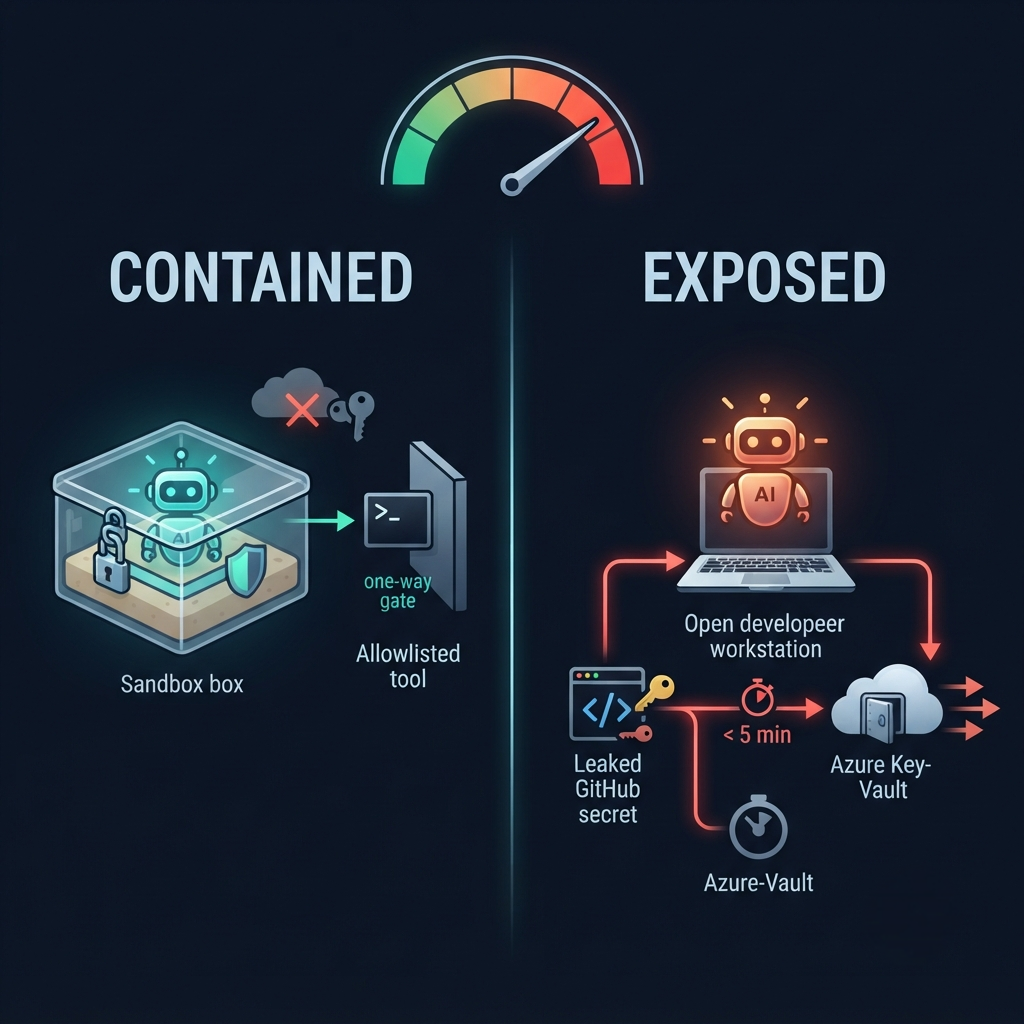
The most important security boundary isn’t the prompt. It’s the permission boundary.
An agent with no shell, no browser, no credentials, and no outbound network access is pretty well contained. An agent plugged into a developer workstation, cloud credentials, internal APIs, and loose egress rules can do real damage, even if the model underneath is fairly modest.
Security reporting on ARTEX noted that its agents used common tools and could quickly retry failed calls. One reported incident had an agent going from a leaked GitHub secret to Azure Key Vault data in under five minutes.
So the useful question for defenders isn’t “Can we stop people from using this AI?”
It’s this: What can an AI-controlled process do on this machine, with these credentials, on this network?
Why Recall Fails
A takedown strategy breaks down for four structural reasons.
- Forks persist. Copies survive in repositories, archives, and private clones.
- Variants drift. Localized or modified editions make exact matching and blanket blocking harder.
- Models are swappable. Cutting off one provider doesn’t disable a framework that supports several.
- Infrastructure gets reused. The same framework can run on a laptop, a cloud VM, a compromised server, or an exposed console.
ARTEX shows all four at once. After its original repository was removed, forks, archives, localized variants, and a commercial derivative kept the capability available.
What Can Actually Be Contained
The answer isn’t futile censorship, and it isn’t pretending open-source code can be erased. It’s architectural containment.
Organizations should treat agent runtimes as privileged software, not as everyday developer utilities.
- Separate planning from execution. Don’t hand an agent direct, unconstrained shell or cloud access.
- Use allowlisted tools, scoped credentials, short-lived tokens, and strict egress controls.
- Sandbox the filesystem, browser, and command-execution environments.
- Log every tool call, target, argument, permission change, and model handoff.
- Require human approval for anything irreversible or high-impact.
- Watch for odd orchestration patterns: repeated retries, lateral tool use, credential discovery, and unusual outbound traffic.
Runtime monitoring that captures what agents are doing, which tools they call, and in what order is a core agentic-security capability. It’s not an optional observability extra.
The Strategic Takeaway
You can gate a model. You can license weights. But once an orchestration layer turns into a forkable execution harness, recall becomes whack-a-mole against copies, variants, and deployments.
Defenders who get this will stop treating “AI security” as a model-filtering problem. They’ll secure the runtime boundary instead: the tools an agent can invoke, the identities it can assume, the data it can reach, and the actions it’s allowed to take.
Because the hydravirus doesn’t live in the model.
It lives in the wiring.