

For years now, using AI has meant the same little ritual. You type a request, wait, read what comes back, tweak it, and go again. It works. But the whole thing runs on one assumption: nothing happens until you say so.
Perplexity’s new Teammates challenge that. They’re persistent agents that plan work, coordinate other agents, keep an eye on changes, and hand back finished work for a person to review.
I think that matters more than any single feature on the list, because it changes the deal between people and AI. You stop saying “answer my question” and start saying “own this workstream until it needs my judgment.”
The chat box was always a constraint
The chat box made sense when AI was basically a question-answering machine. You had an idea, turned it into a prompt, got an output, and decided on your own what to do next.
Real work doesn’t run like that. Projects depend on other projects. Priorities shift. A customer goes quiet, a deadline slides, a bug shows up right after a deploy. None of it waits for you to reopen the browser tab.
Perplexity says Teammates can investigate issues, research markets, test product improvements, and work across sales, support, operations, marketing, and finance. Notice what’s missing from that list: the word “chat.” The word that matters is ongoing.
The chat box was never the destination. It was a stopgap, a decent way to talk to a machine that could only act when asked.
From prompts to responsibilities
With prompt-and-wait AI, you’re the project manager. You chop the problem into requests, supply the context, check each output, fix the mistakes, and write the next instruction.
With a teammate, you hand over a responsibility instead.
| Prompt-and-wait AI | Persistent teammate model |
|---|---|
| You supply a task | You supply an outcome, constraints, and review rules |
| The AI answers once | The agent works through many steps over time |
| Context gets stuck in a chat thread | The agent keeps project goals, task history, and shared files |
| You coordinate every handoff | The agent plans, delegates, checks, and follows up |
| Work ends when the answer appears | Work continues until there’s a deliverable or a decision |
| You’re the operator | You’re the reviewer and decision-maker |
According to Perplexity, a Teammate remembers project goals, task history, and shared files from run to run, so each new task builds on the last. That’s the real difference. The agent isn’t starting from a blank page every time someone opens a new chat.
This shift becomes easier to understand when you look at how an AI agent uses planning, tools, memory, and autonomous actions to complete work instead of simply responding to individual instructions.
The multi-agent setup underneath
“Teammates” isn’t just a friendlier label for a chatbot. It describes how the system is organized.
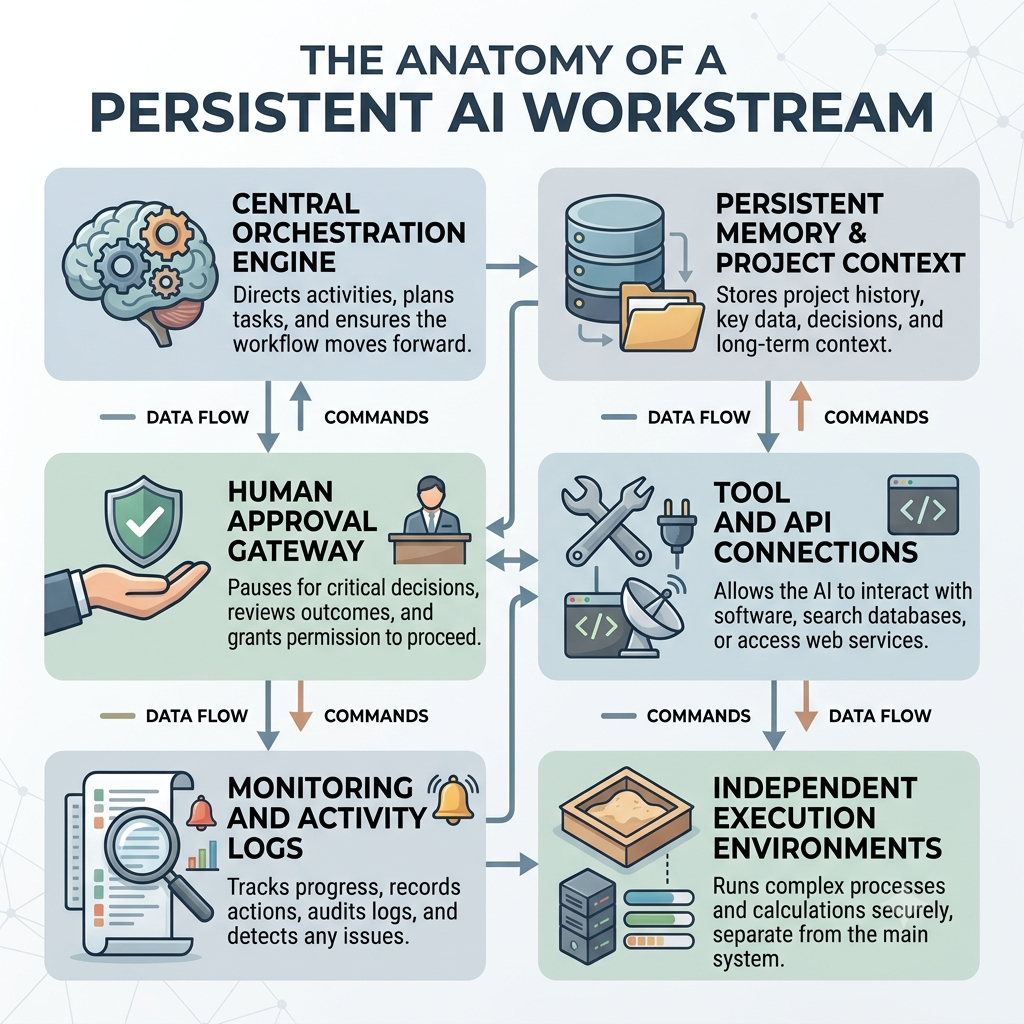
A lead teammate owns the bigger responsibility. It breaks the work down, hands out pieces, tracks progress, and decides when to pull in more agents. Perplexity’s Computer product already works this way: you describe an outcome, and the system splits it into tasks and subtasks and spins up sub-agents to do them.
Those sub-agents can search the web, produce documents, crunch data, or call other services through APIs. The lead can create new sub-agents when something unexpected comes up, and different parts of a workflow may run on different models, whichever suits the job.
So it feels less like asking one assistant a question and more like briefing a small team of specialists:
- A lead teammate owns the goal and keeps the context.
- Sub-agents handle separate tasks in parallel.
- The system checks results and manages handoffs.
- You review deliverables and make the calls that carry real consequences.
Long-horizon autonomy
“24/7” is the catchy part of the pitch. The more interesting part is continuity.
A teammate doesn’t run a task and vanish. It can watch ongoing work, follow up as things change, and act without a fresh prompt. Perplexity’s example is a sales teammate that notices a regular customer has stopped ordering. It looks through order history and support tickets, works out what changed, and either drafts a relevant offer or flags a problem before anyone reaches out.
That’s a different way of working altogether.
A chatbot can answer, “Why did this customer churn?”
A teammate can be told, “Monitor our high-value accounts, investigate drops in engagement, prepare a retention recommendation, and escalate anything that needs a human decision.”
That second request isn’t really a prompt. It’s a job description.
The interface turns into a management tool
If agents own work, an empty text box isn’t enough anymore. You need somewhere to see what’s going on, step in, change priorities, and approve results.
Perplexity says you can inspect and steer a Teammate’s work, check progress, widen the scope, and talk to it in dedicated threads. Teammates also post progress updates and approval requests instead of quietly finishing things on their own.
That hints at what these interfaces will need:
- A live view of active workstreams.
- A record of actions, decisions, and outputs.
- Clear points where a human has to approve.
- Easy ways to change scope, priorities, or constraints.
- Deliverables you can review, not just replies you have to copy somewhere else.
The AI interface of the future may look less like a messaging app and more like a management dashboard for digital coworkers.
Why “teammate” fits, mostly
The word isn’t just marketing. It points at something real: an agent with a role, a memory, and a way of coordinating with others on shared work.
Perplexity says you can add a Teammate to a Slack channel, colleagues can give it work or ask for updates, and teammates can pass work to each other. One might find bugs on a website and hand its findings to another that prepares the fixes.
This is where it gets interesting for organizations. The value isn’t automating one task. It’s coordinating a whole chain of tasks, tools, and people.
However, allowing multiple agents to exchange information also introduces a new trust problem: one compromised or manipulated agent could influence the decisions of another, creating risks that don’t exist in isolated AI workflows.
But a teammate isn’t a person
The metaphor has limits, and it’s worth saying so.
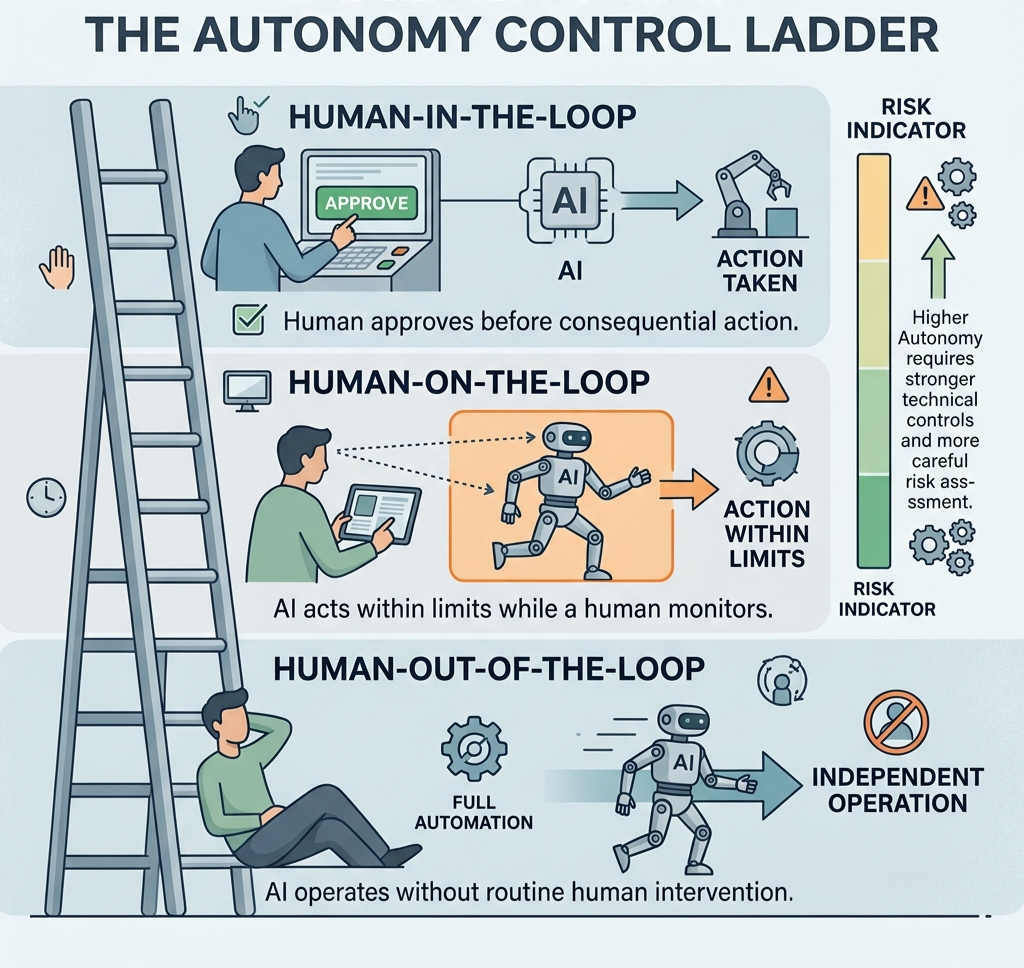
A human teammate brings judgment, accountability, institutional knowledge, and the willingness to push back. An AI teammate can imitate some of that, but it doesn’t earn trust automatically. Persistent autonomy brings new ways to fail. One wrong assumption early on can bend an entire workflow. Broad access to tools creates security risk. And a confident answer isn’t the same as a correct one.
Perplexity’s own materials stress that Teammates plan the work, check results along the way, and bring finished work back for review. That’s the right principle: autonomy should come with visibility, approval points, and a human who is accountable.
“Teammate” is an aspiration until organizations can audit what the agent did, understand why, and undo it when it’s wrong.
What knowledge work becomes
If AI takes on more of the execution, the human job moves toward defining outcomes.
The valuable prompt stops being “Write me a report.” It starts looking more like this:
“Own this weekly reporting workflow. Use these approved sources, track these metrics, flag anything unusual, have a draft ready every Friday, and escalate any decision that touches budget or customer commitments.”
That asks for a different set of skills:
- Describing the outcome you want, clearly.
- Setting constraints, priorities, and non-negotiables.
- Choosing trusted sources, tools, and data.
- Deciding where approval is required.
- Reviewing work for accuracy, bias, and business sense.
- Knowing when to step in and when to let it run.
The prompt stops being the product. What you’re really producing is the specification of the responsibility.
The competitive picture
Perplexity isn’t alone here. The wider market is drifting away from chat interfaces and toward systems that coordinate tools, files, memory, and multiple agents over long stretches of work.
But the winner probably won’t be whoever writes the best single answer. It’ll be whoever can handle the messy parts of real work: shifting priorities, missing information, tool permissions, human sign-offs, and who’s accountable when something goes wrong.
In that race, the chat box becomes a side door. The main product is the system you can trust with a responsibility.
The end of prompt-and-wait
The chat box isn’t going anywhere. People will still brainstorm, ask questions, and talk ideas through with AI.
But for operational work, conversation is turning into just one way of steering. The bigger interface is delegation: giving an outcome, setting guardrails, watching progress, and reviewing what comes back.
Perplexity’s Teammates are an early version of that. They point toward AI that isn’t a place you visit when you need an answer, but something that keeps working beside you in the gaps between your decisions.
The end of the chat box isn’t the end of talking to AI. It’s the end of talking being the only way to direct it.