
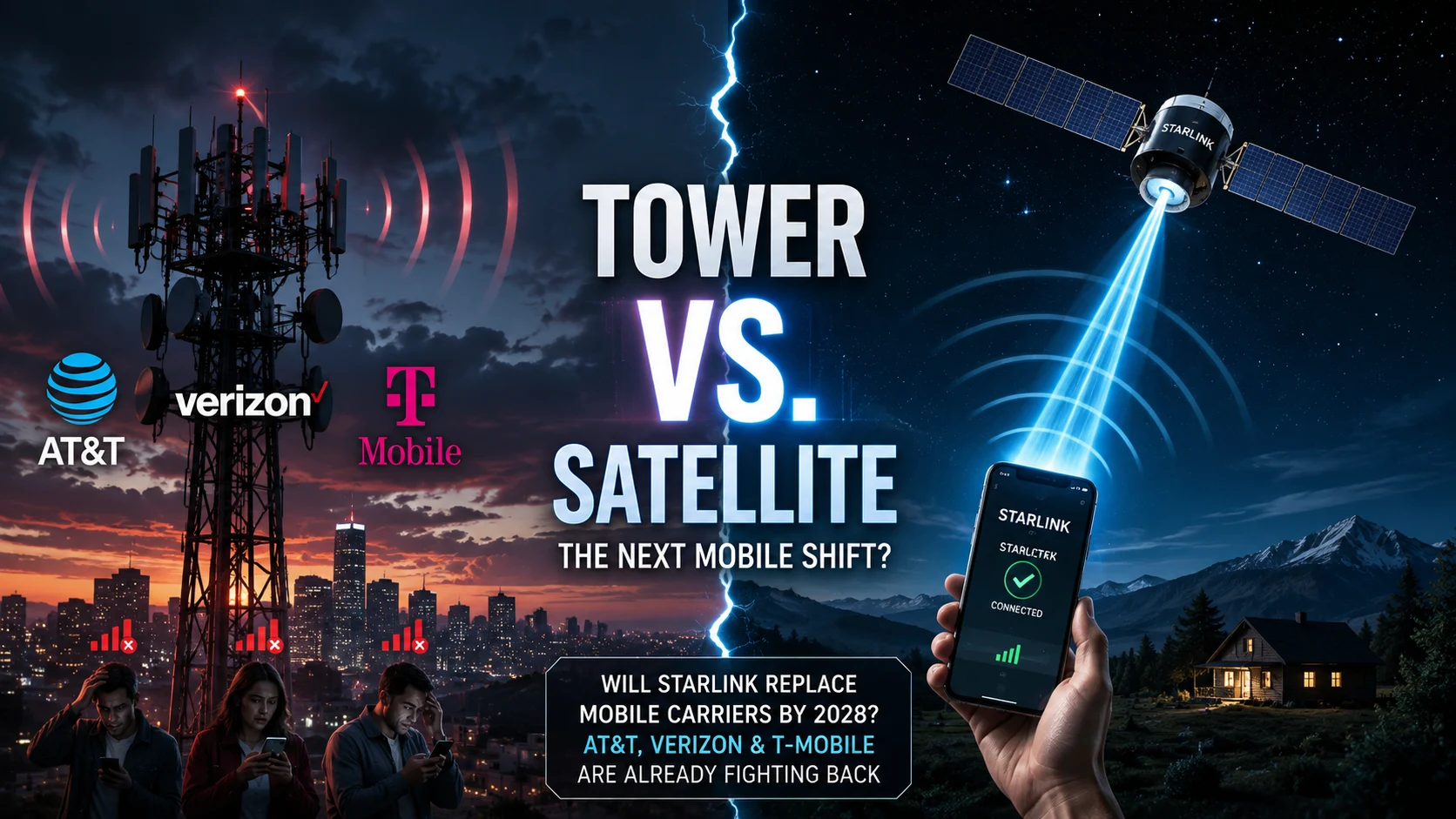
As SpaceX expands its Direct-to-Cell constellation past 650 satellites in orbit, legacy mobile carriers are racing to protect their business models—raising questions about whether traditional cell towers will become obsolete by 2028.
Starlink is shaking up mobile carriers faster than most industry executives ever expected! Over 650 direct-to-cell satellites are already orbiting Earth, bringing coverage to 400 million people across 22 countries. Will SpaceX disrupt traditional carrier models by 2028, or will wireless giants absorb the threat? With legacy operators spending billions on network defense, the high-stakes battle for your smartphone signal is accelerating right now.
Satellite-to-phone connectivity sounds futuristic, but the competition is already real. Millions still depend on AT&T, Verizon, and T-Mobile every day, but satellite beams are closing dead zones that ground towers cannot reach.
What Starlink Is Changing
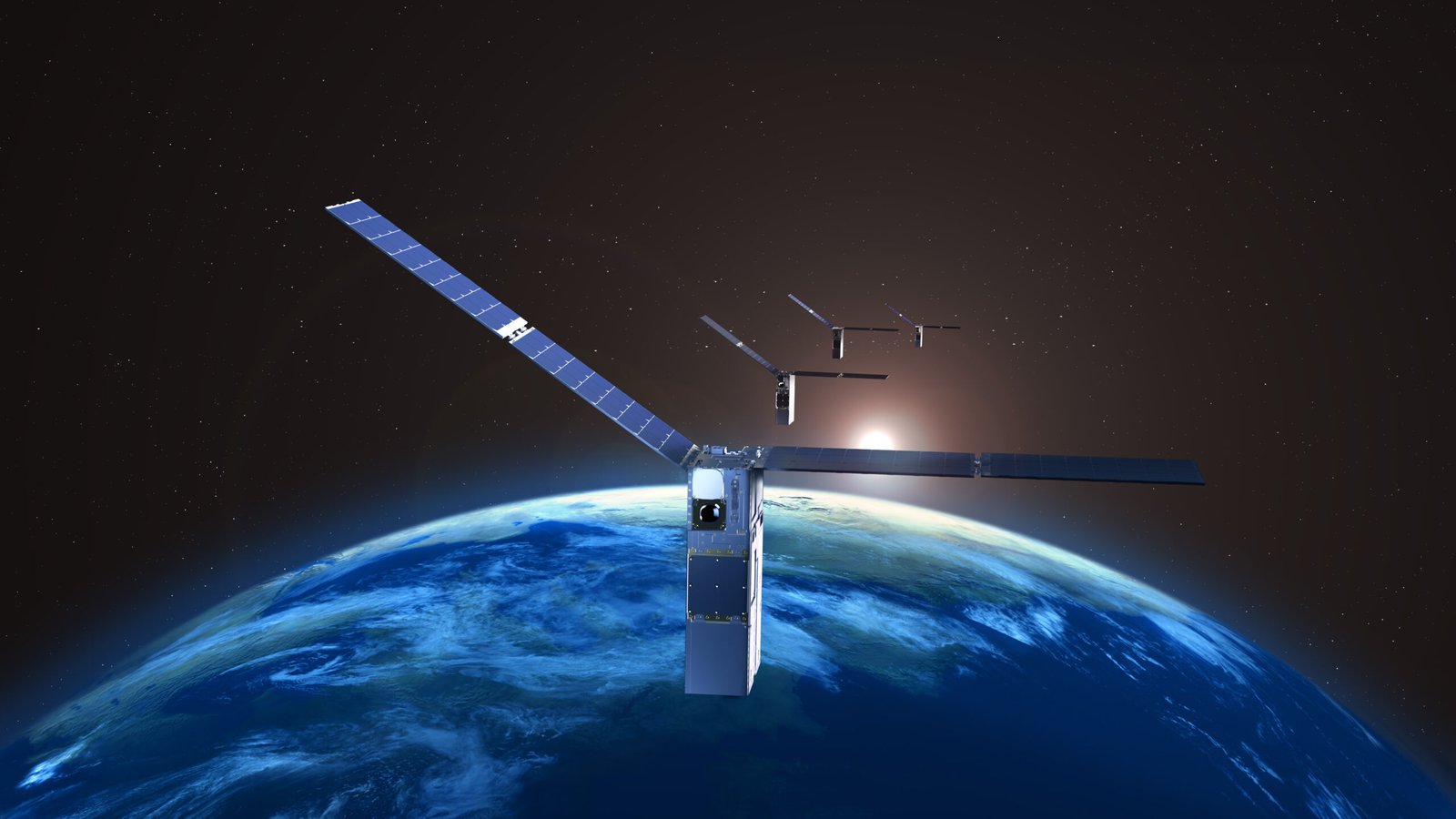
Direct-to-cell technology allows standard LTE smartphones to connect straight to satellites without extra hardware or specialized apps.
- Space cell towers: Starlink satellites use advanced phased-array antennas to act as floating cell towers in low-Earth orbit.
- Zero app setup: Supported phones recognize the satellite signal just like a standard ground tower.
- No ground dead zones: Eliminates rural signal dropouts across deserts, mountains, and oceans.
Is this the start of a total carrier replacement, or just an emergency backup network? Currently, initial connections focus on text messaging, location sharing, and emergency alerts, with voice calls rolling out gradually.
Why Carriers Are Reacting
Major telecom operators are refusing to cede control of consumer connections. T-Mobile joined forces directly with SpaceX for its T-Satellite service, while AT&T and Verizon partnered with rival satellite vendor AST SpaceMobile.
| Carrier | Likely Response | What It Means for Users |
|---|---|---|
| AT&T | Partner with AST SpaceMobile | Protect premium enterprise and rural business users |
| Verizon | Integrate Skylo & AST SpaceMobile | Preserve reputation for top-tier reliability & safety |
| T-Mobile | Deep Starlink “T-Satellite” integration | Offer zero-dead-zone perks as a core tier feature |
“Satellite connectivity is not replacing mobile networks overnight, but it is forcing carriers to rethink coverage as a product, not just physical infrastructure.” — Telecom Industry Analyst
Where Satellite Connectivity Wins
Ground-based towers cost millions to build in remote terrain, leaving vast coverage gaps across the globe.
- Dead zone elimination: Covers over 500,000 square miles of unserved U.S. land.
- Disaster recovery: Maintains active text lines when hurricanes or wildfires destroy ground towers.
- Remote travel: Connects hikers, maritime ships, and rural drivers automatically.
If Starlink solves coverage gaps faster than carriers can deploy towers, the underlying business model changes forever.
Watch: Direct-to-Cell Tech Explained
Check out this short overview of how satellite beams communicate directly with unmodified mobile devices:
What Still Limits Total Carrier Replacement
While the technology is impressive, satellite networks still face massive technical bottlenecks before replacing ground towers:
- Capacity limits: Satellites deliver 2–4 Mbps per user beam, far slower than 5G tower speeds.
- Line-of-sight required: Signals struggle through thick concrete walls and indoors.
- Device requirements: Full speed improvements require next-gen Starlink V2 satellites.
SpaceX says that “by the end of 2028, @Starlink Mobile will have already rapidly upgraded the constellation by launching thousands more satellites, providing continuous full global coverage to become the first—and most likely the only—direct-to-device provider to offer true… pic.twitter.com/BisTPbgOVj
— Sawyer Merritt (@SawyerMerritt) August 3, 2026
What Happens by 2028?
Industry projections suggest three likely scenarios as satellite networks expand:
- Hybrid backup layer: Satellites act as a safety net when you leave terrestrial 5G coverage.
- Carrier-satellite mergers: Telecom giants bundle satellite add-ons directly into standard cellular plans.
- Off-grid cord cutting: Niche rural markets ditch ground carriers entirely for satellite-first options.
The real question is not whether satellites will matter, but how much control carriers will keep.
Official Resources & Portals
Official Coverage & Portals: • T-Mobile Official T-Satellite Portal • Starlink Mobile Business Technology Overview • FCC Satellite Spectrum Authorization Notices