
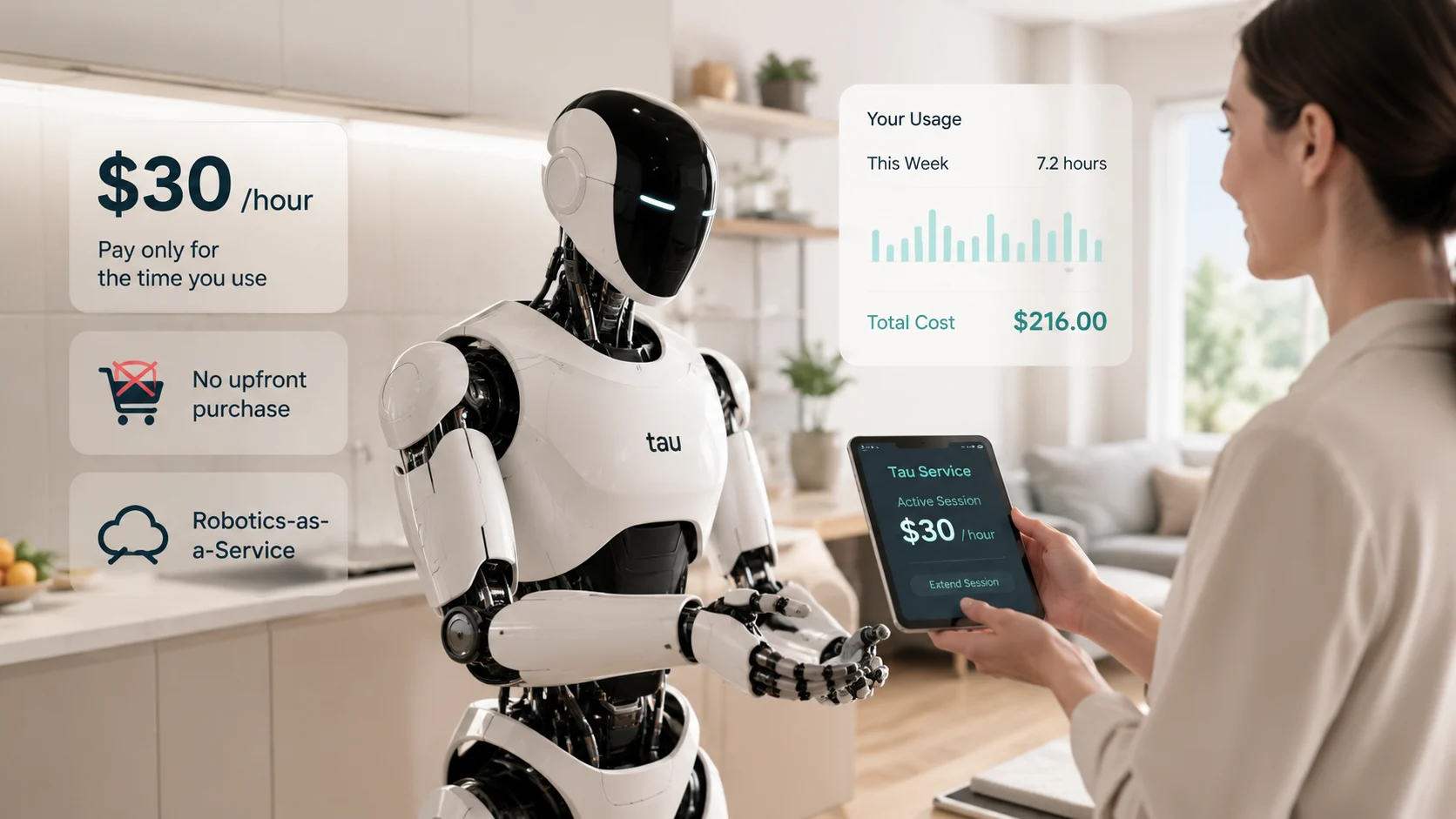
Tau Robotics is disrupting the home hardware market by turning luxury humanoid machines into a pay-as-you-go service. At a flat $30 per hour, this service bypasses the staggering $20,000+ upfront purchase price typically required for personal bipedal robots.
Could renting a teleoperated robot by the hour finally democratize domestic automation for everyday households? This unexpected utility model threatens to redefine consumer robotics forever.
What Tau Is Changing
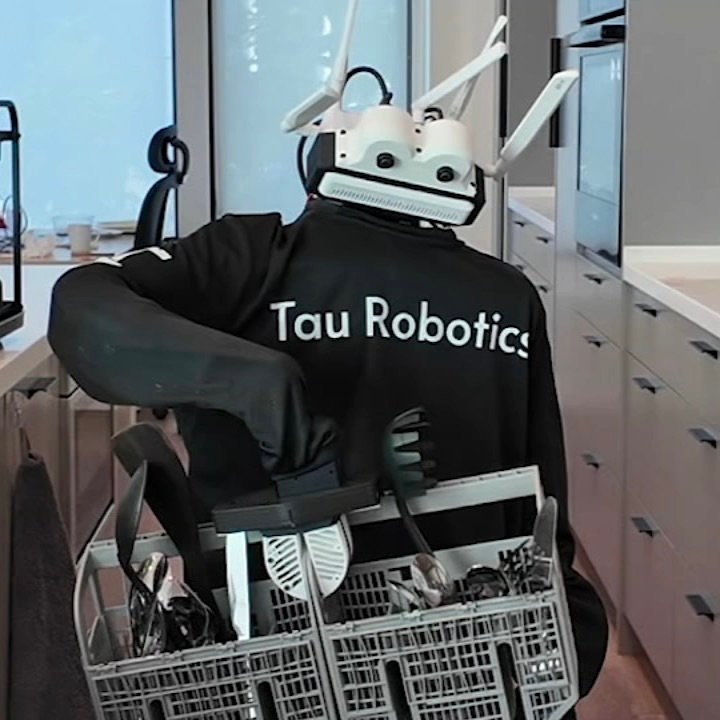
Instead of shipping a costly machine for users to own and maintain, Tau delivers a bipedal robot to your front door for a single 60-minute cleaning session. This eliminates hardware depreciation risks while letting users test advanced domestic help without long-term contracts.
- Zero Upfront Cost: No massive capital investment or steep maintenance plans required.
- On-Demand Booking: Reserve single-hour appointments via app whenever household chores pile up.
- Teleoperated Precision: A remote human pilot works alongside AI to execute complex physical tasks smoothly.
Would you rent a robot the way you rent software? Moving away from traditional hardware sales allows consumers to pay strictly for completed work rather than idle machinery.
Why Subscription Robotics Matters
For years, high production costs and fragile hardware meant ownership is the bottleneck preventing bipedal machines from entering residential neighborhoods. By offering instant subscription access, Tau shifts the industry dynamic as consumer robotics goes utility-first.
“Each robot functions as a telepresence avatar, jointly controlled by a human operator and AI.” — Alexander Koch, Founder of Tau Robotics
This human-in-the-loop strategy sidesteps major autonomous navigation failures in chaotic living spaces. It also turns every operational hour into valuable visual dataset collection for future AI training.
How the $30/Hour Model Works
Understanding Tau’s robotics-as-a-service structure reveals how it compares to traditional appliance ownership:
| Element | What it means |
|---|---|
| No Upfront Purchase | Users completely avoid multi-thousand-dollar hardware costs. |
| Usage-Based Pricing | Customers pay a flat $30 fee only when they schedule a visit. |
| Service Model | Software updates, battery maintenance, and repairs are handled by Tau. |
| Consumer Access | More households can experience bipedal assistance without financial risk. |
What Consumers Gain
Everyday households gain instant labor relief without taking on technical maintenance. Instead of spending weekends scrubbing kitchens or folding laundry, users outsource repetitive physical chores on demand.
- Flexible Housework Help: Schedule dishwashing, vacuuming, and general tidying during busy workdays.
- Predictable Hourly Rates: Avoid hidden subscription fees or surprise repair bills.
- No Storage Hassles: The robot leaves after the hour finishes, freeing up closet and living space.
Where the Risks Are
Renting an operator-controlled machine introduces notable privacy and operational tradeoffs. Because Tau relies on live remote human pilots and camera feeds, strict household rules apply.
- Privacy & Video Logging: Onboard cameras record room data to train autonomous algorithms.
- Mandatory Attendance: An adult must remain at home during the entire 60-minute cleaning session.
- Restricted Zones: Bedrooms and bathrooms are excluded by default unless explicitly unlocked.
🤖WILD: YOU CAN NOW HIRE A HUMANOID ROBOT TO CLEAN YOUR HOUSE FOR $30 AN HOUR
San Francisco startup Tau Robotics is deploying humanoid robots for home cleaning. A human operator controls each robot remotely while AI assists with navigation. pic.twitter.com/wlLXW2rm1n — Coin Bureau (@coinbureau) August 1, 2026
Will This Reach Real Homes?
The real test is not the price tag—it’s whether consumers accept remote cameras in their living rooms. If Tau successfully balances data security with reliable domestic labor, hourly robotics could rapidly expand beyond initial test markets.
Official Resources & Coverage: • Tau Robotics Official Booking Portal • Tau Robotics Terms of Service • The Gadgeteer Tau Analysis